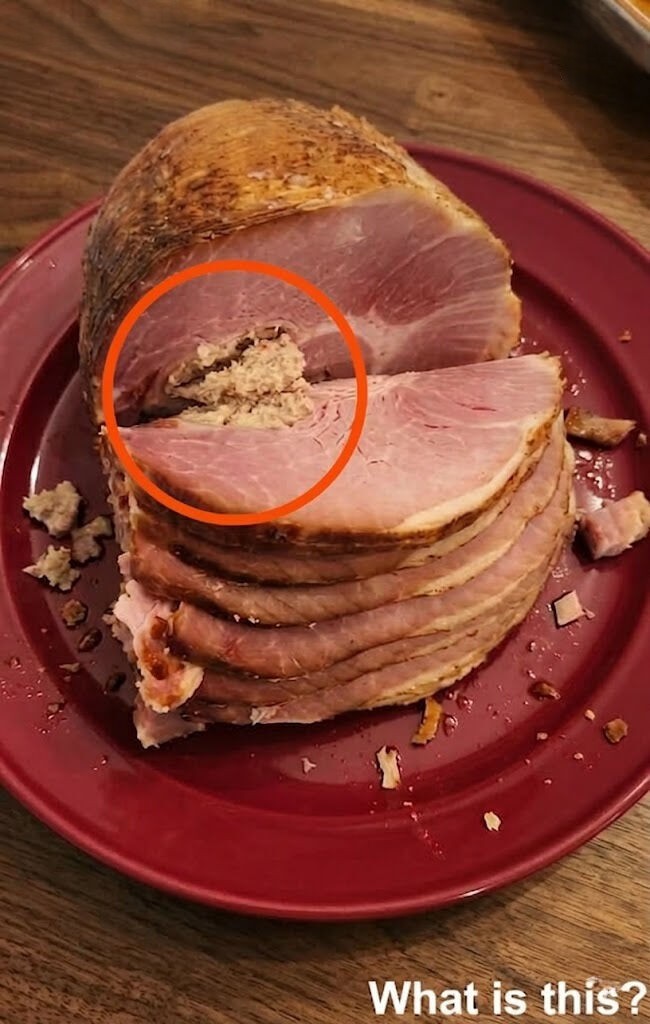
Mid-cut, the knife met resistance. As the slice opened, it revealed a dense, uneven patch buried deep inside the ham—darker, grainier, and noticeably different from the surrounding meat. It didn’t resemble regular fat or muscle. It looked like something that didn’t belong there at all.
Why Finding Something “Off” in Food Triggers Instant Panic
Humans are wired to be cautious about food. When something looks unusual—especially inside meat—our brains jump straight to worst-case scenarios: spoilage, contamination, parasites, or something that could make someone seriously sick.
And when you’ve paid good money for a family dinner, the shock hits even harder. Appetite disappears fast when the food looks “wrong.”
The Truth: It’s Often a Curing and Processing Issue (Not a Health Threat)
After researching similar cases and comparing photos, the explanation turned out to be far less alarming than it looked.
In many commercially cured hams, odd-looking internal spots can form due to the curing process itself. During production, ham is typically treated with a brine solution (often containing salt and other curing ingredients) to improve flavor, moisture retention, and shelf life. That solution is designed to move through the meat—but it doesn’t always distribute perfectly.
In some cases, a concentrated pocket can develop where salt, proteins, and fat bind together more tightly than the surrounding tissue. The result can look like a firm, grainy, discolored “cluster” that feels unnatural when you slice into it. It can be unappetizing, but it’s commonly a harmless byproduct of curing rather than a sign of parasites or toxic contamination.
Is It Safe to Eat? Use These Food Safety Checks
Even if the cause is often harmless, you should still use practical food safety rules before deciding what to do next. If you notice a strange spot inside ham (or any packaged meat), check the basics:
- Smell: A sour, sharp, or “off” odor is a red flag—discard it.
- Texture: If the surface feels slimy or sticky beyond what’s normal for that product, don’t eat it.
- Color spread: A small localized firm spot may happen with curing, but widespread discoloration or green/gray tones can signal spoilage.
- Storage and date: If it wasn’t kept properly refrigerated or it’s past the use-by date, don’t risk it.
If everything else checks out but the spot still makes you uncomfortable, it’s okay to trust your instincts. Many people choose to cut that section out or return the product to the store for a refund or exchange.
What This Teaches Us About Packaged Meat
Supermarket food feels uniform because it’s packaged to look uniform. But meat is still a natural product, and curing involves real chemical changes inside the tissue. Occasionally, those changes create odd pockets that look alarming even when they’re not dangerous.
The bigger lesson: when something seems “gross,” it doesn’t always mean it’s unsafe—but you should always rely on smell, texture, storage history, and expiration dates before making a decision.
Have you ever found something weird inside meat you bought at the grocery store? Share what happened in the comments—and if you’ve got a photo, describe what it looked like. Your experience could help another reader avoid panic (and make a smarter food safety call).