Three Little Girls, One Suitcase, and a Life I Didn’t Expect
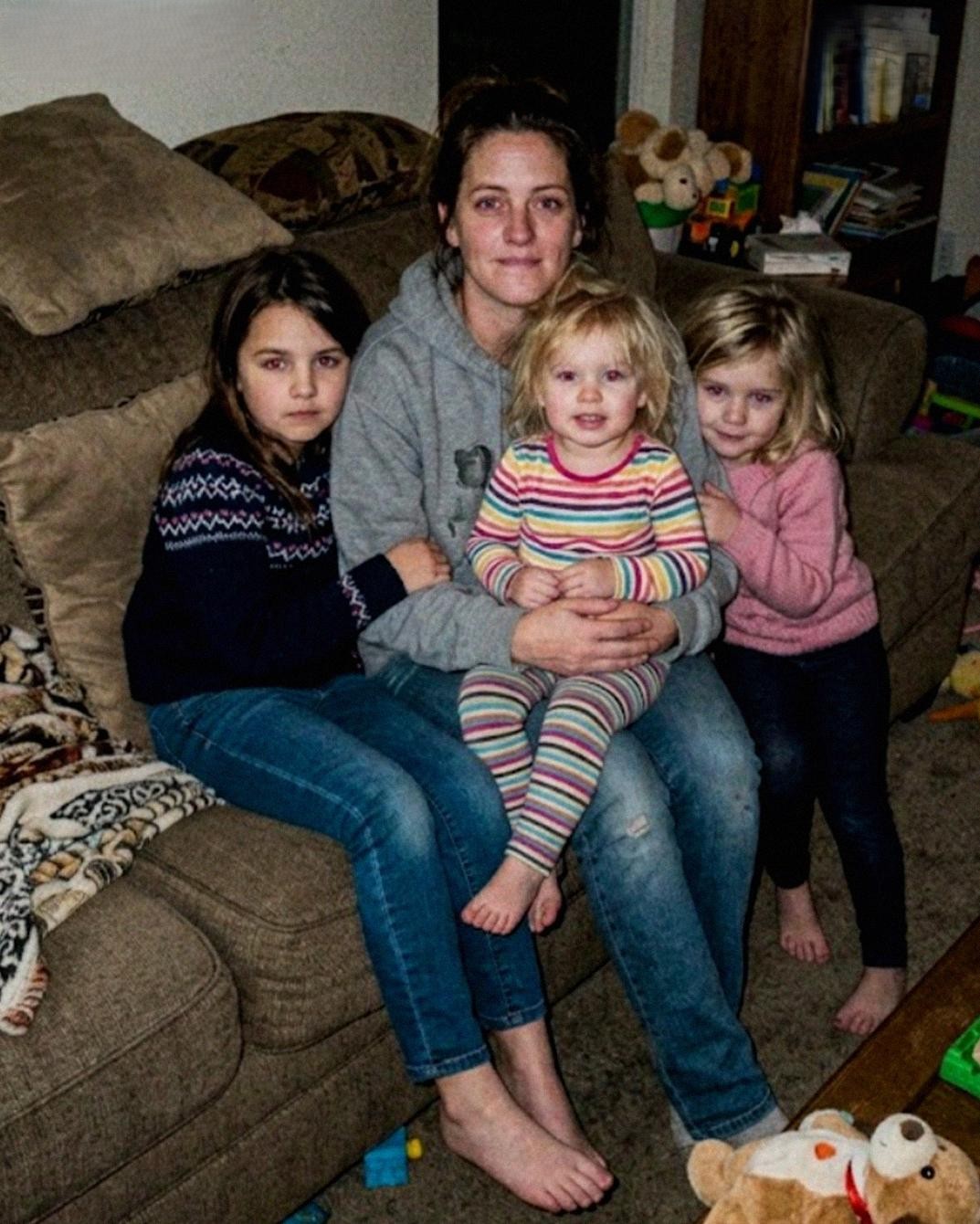
Less than two days later, a social worker knocked on my door. Standing beside her were Edwin’s three daughters—Jenny (8), Lyra (5), and Dora (3)—and a single overstuffed suitcase that looked far too small to carry everything they’d just lost.
The girls stared at me like they’d been dropped into a world with no instructions. They weren’t only grieving their mother. They were also trying to understand how a father could disappear right when they needed him most.
That first year wasn’t just hard—it was survival mode.
Dora, the youngest, asked every evening when her mom was coming home. Lyra refused to unpack for months, living out of that suitcase like she was afraid a dresser drawer meant accepting the new reality. Jenny, the oldest, stopped crying altogether. Not because she was fine—because she learned early that tears didn’t change anything.
He Never Called. He Never Wrote. And I Kept Waiting Anyway.
For a long time, I told myself Edwin would come back with a reason that made sense. A breakdown. A temporary disappearance. A job that took him away. Anything that didn’t feel like abandonment.
I kept his image alive for the girls, carefully, like holding a fragile glass ornament that could shatter if I admitted what I feared.
But weeks became months. Months became years.
And the silence became its own presence in the house—sitting at the dinner table, hovering in the hallway, showing up at every birthday where one chair stayed empty.
Somewhere Along the Way, “Aunt” Turned Into “Mom”
Life doesn’t pause for heartbreak. Bills still come. School still starts. Kids still get sick in the middle of the night.
I became the one signing permission slips, showing up to parent-teacher meetings, and sitting front-row at school plays so they wouldn’t scan the crowd hoping their dad might surprise them.
I handled teenage heartbreak, college applications, late-night anxiety, and all the quiet moments where kids test whether you’re really staying.
And slowly, the labels stopped mattering. In every way that counted, they were mine—because I was the one who stayed.
The Knock That Made My Blood Run Cold
Fifteen years after he disappeared, Edwin showed up at my door on an ordinary Tuesday afternoon.
I barely recognized him. Time had carved him down—his face looked rough, exhausted, almost scraped raw by life. He didn’t walk in like a man coming home. He stood there like someone expecting to be punished.
“Hi, Sarah,” he said.
Two words.
That’s all he had for fifteen years of missed birthdays, unanswered questions, and three daughters growing up without him.
I didn’t invite him inside. I couldn’t. Instead, he handed me a thick sealed envelope.
“Not in front of them,” he said, voice shaking.
I stepped outside and closed the door behind me, protecting the girls from a moment they didn’t choose. Then I tore the envelope open with hands that felt like they were carrying a decade and a half of rage.
The Letter Explained Everything—and Somehow Made It Worse
Inside was a letter dated fifteen years earlier, written right after his wife died. The handwriting looked frantic, like someone drowning while trying to explain why they let go of the rope.
Edwin wrote that after Laura’s death, he discovered something he hadn’t known: crushing debt. Predatory loans. Financial messes hidden in paperwork. A house that was basically worth less than what was owed. According to him, it all hit at once—grief, panic, fear.
And he made a decision.
He believed he was a sinking ship, and the only way to “save” his daughters was to push them into my care and disappear so they wouldn’t go down with him.
Even reading it, my stomach turned.
But it wasn’t the letter that stopped my heart.
It was the stack of official documents behind it—recent papers with stamps from banks and law offices. On page after page, the same words stood out like a verdict:
- Cleared
- Settled
- Reclaimed
He Wasn’t Just Hiding—He Was Building a Fortune
Edwin hadn’t disappeared to start over. He disappeared to erase everything.
For fifteen years, he worked relentlessly—tracking down creditors, settling accounts, rebuilding from nothing. And then came the part that felt unreal:
He had placed the money, property, and investments into legal trusts… in the girls’ names.
“I fixed it,” he said, searching my face like he expected that sentence to turn him back into a father.
My anger hit so fast it almost made me dizzy.
“You think money fixes this?” I said. “You think a trust fund replaces fifteen years of them wondering why they weren’t enough for you to stay?”
He didn’t argue. He just stood there and absorbed it.
And somehow that made it worse—because he’d made the decision for all of us. He decided what we could handle. He decided what the girls deserved to know. He chose a “clean break” instead of doing the messy, painful work of staying and facing life together.
Telling the Girls Was Like Dropping Glass on the Floor
When I walked back inside, the mood shifted instantly. Kids can feel it—when something big just happened and the air has changed.
“Your father was here,” I told them.
Jenny’s face went blank. Dora let out a strange laugh that didn’t sound like humor. Lyra stared at the envelope like it might bite.
I told them everything: the debt, the disappearance, the fifteen-year mission, and the inheritance waiting in their names.
Jenny didn’t even look impressed.
“I don’t care about the money,” she said quietly. “Why didn’t he come back ten years ago? Five years ago? Why was a debt more important than us?”
That question cut deeper than any accusation.
Because it exposed the truth: he traded presence for provision—and the girls never agreed to that deal.
Lyra was the one who picked up the phone. She found the number on the letter and called it with steady hands.
“Come back,” she said. “We’re waiting.”
No Movie Reunion—Just the Hard Truth
When Edwin stepped into the house, there were no dramatic hugs. No tearful apologies that magically erased the past.
There was tension so thick it felt like it had weight.
He looked at his daughters—now grown—and realized what he’d done. He didn’t come back to little girls. He came back to strangers who shared his blood but not his life.
They didn’t ask about where he lived or what he did. They asked the only thing that mattered:
Why did you think we couldn’t handle the truth?
“I thought you’d be better off,” he repeated, like a line he’d practiced for years.
“You don’t get to decide that,” Dora said, voice shaking.
And she was right.
We Started With Dinner, Not Forgiveness
Eventually, the questions slowed—not because anyone felt satisfied, but because there was only so much pain you can unpack in one day.
Then Dora, in a moment that felt oddly practical, said we should make dinner.
Not as forgiveness. Not as a fresh start wrapped in a bow.
Just… a place to begin.
So we cooked. We moved around each other in the kitchen like people learning a new language. Pots steamed. Silverware clinked. Normal sounds filled the gaps where words couldn’t.
Edwin sat at the end of the table, a man who had solved the financial crisis but returned to a family he no longer knew how to be part of.
The money was “fixed.”
But the damage wasn’t.
Still, for the first time in fifteen years, the silence had finally broken—and we were in the same room, facing the truth together.
Closing CTA
If you’ve ever dealt with family betrayal, financial hardship, or the long road to rebuilding trust, share your thoughts below: Do you believe someone can make up for lost time—no matter how much they provide? Your story might help someone else feel less alone.