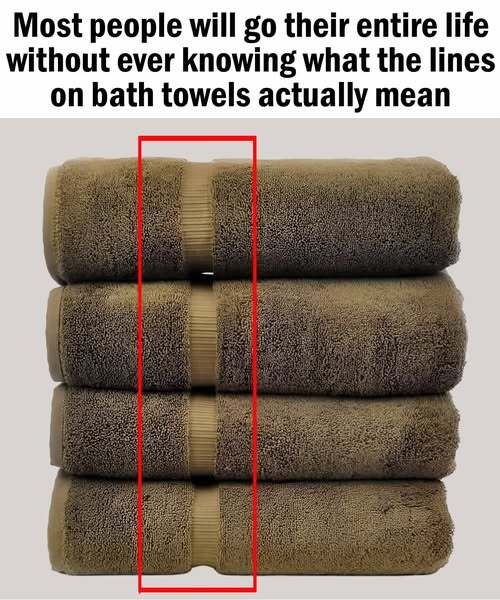
The main part of most towels is made from terry cloth loops, which are excellent for absorbency—but those loops can also be vulnerable to pulling, stretching, and wear over time. Without reinforcement, towels are more likely to:
- fray at the edges
- warp and curl after washing
- shrink unevenly
- lose their “new towel” shape faster
What the Dobby Border Actually Does
The dobby border is woven differently than the rest of the towel. Instead of looped terry, it’s a tighter, flatter weave that acts like a built-in stabilizer. Think of it as a reinforcement zone that helps the towel keep its structure.
Here’s what that means in real life:
1) Helps Prevent Fraying and Edge Damage
The ends of a towel take a beating in the washer and dryer. A dense woven border helps the towel resist unraveling and wear where it’s most likely to fail first.
2) Reduces “Puckering” From Uneven Shrinkage
Ever owned towels that look wavy or flare out at the ends after a few washes? That’s often caused by differential shrinkage, when different parts of the towel react differently to heat and agitation. A well-made dobby border helps counter that so the towel stays more evenly shaped.
3) Makes Towels Easier to Fold and Store
Because the border helps the towel keep a clean rectangle, you get neater stacks in the linen closet and a more “hotel-style” fold—without the bulky, distorted ends that cheaper towels often develop.
It’s Also Where Brands Add Style Without Ruining Absorbency
Another reason manufacturers love the dobby border: it’s the perfect place to add texture, patterns, or subtle branding without messing with the towel’s main job—drying you off.
Since the decorative weave stays in the border area, the towel’s center can remain focused on maximum absorbency, while the edges provide strength and design.
How This Can Save You Money Over Time
When towels lose shape, fray, or feel “done” after a short period, people replace them sooner than necessary. Buying better-constructed towels—often identified by features like a sturdy dobby border, solid stitching, and consistent weave—can mean:
- fewer replacements over the year
- better performance after repeated laundry cycles
- more value from higher-quality bath linens
In other words, that stripe isn’t a gimmick—it’s one of the small details that can separate a towel that lasts from one that falls apart early.
The Bottom Line
The next time you grab a towel, take another look at that textured band. It’s not a “mystery stripe” at all—it’s a practical design feature that helps your towel stay soft, strong, and good-looking through countless washes.
Quick question: Have you noticed certain towels in your home wearing out faster than others? Share what brand or type you’ve had the best luck with—and if you want more simple home tips like this, bookmark the page and check back for the next deep-dive.