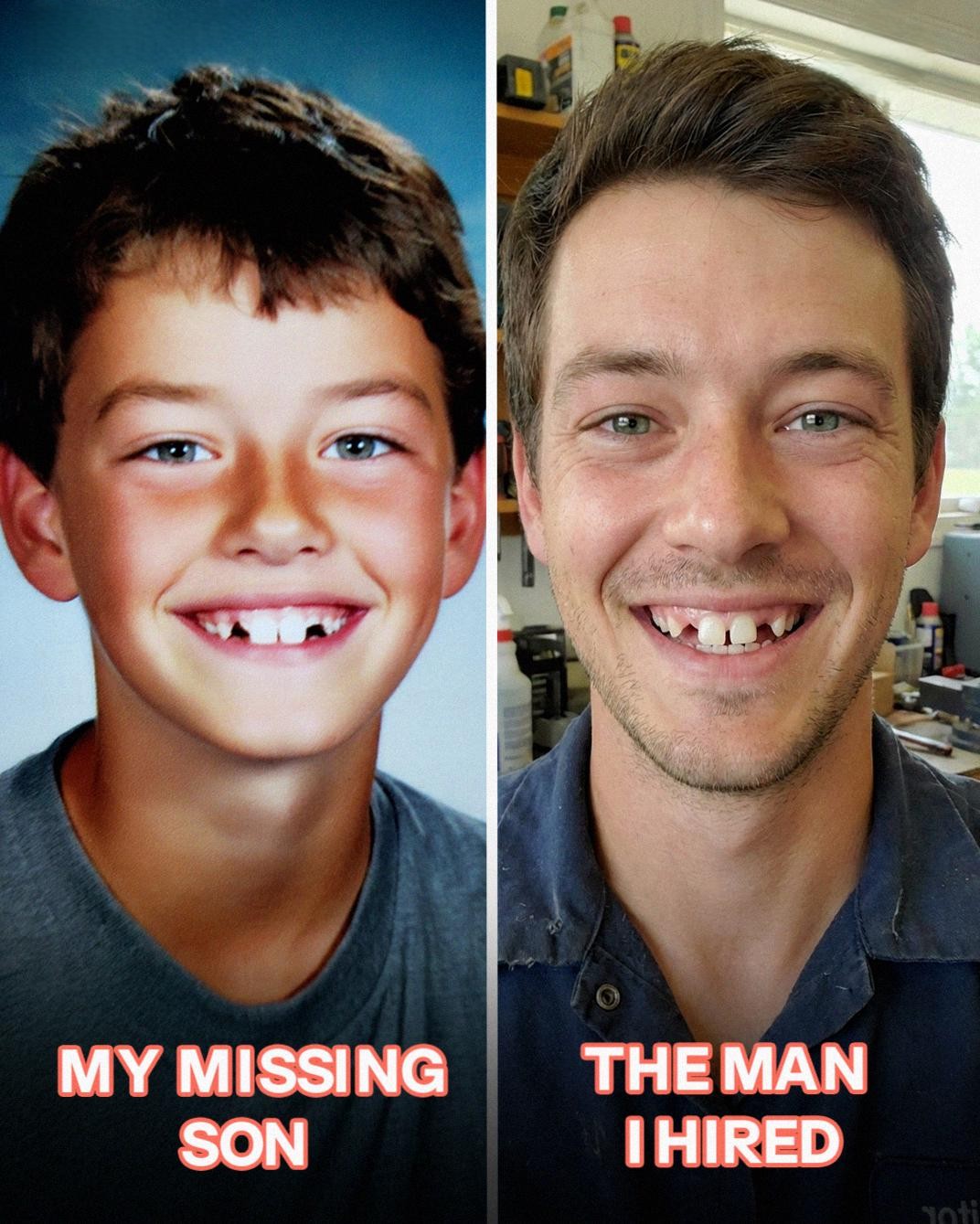
It wasn’t just the name. It was the photo.
The applicant was twenty-six, older and rougher around the edges, but the resemblance hit me like a physical blow. The shape of his face. The familiar grin. The same look my son would have had if life had allowed him to grow up.
I tried to talk myself out of it. Coincidence. Wishful thinking. Grief playing tricks.
But I couldn’t ignore the pull in my chest, so I called him in for an interview.
He Walked In… and It Felt Like the Past Opened Its Door
The next day, he stepped into my office, and the similarity became even harder to dismiss. He spoke respectfully, answered questions directly, and didn’t hide the messy parts of his history. There was a gap in his life—years marked by incarceration. He admitted he’d made serious mistakes when he was younger and said he was trying to rebuild from the ground up.
Karen was firmly against it the moment she heard. Bringing an ex-convict into our business—and our orbit—felt risky to her. She worried about safety, about reputation, about what people would say.
I understood her concerns. But something in me refused to turn him away.
So I hired him.
From Employee to Family Fixture
In the months that followed, Barry became the kind of worker every small business owner hopes to find. He showed up early, stayed busy, treated customers with patience, and never acted entitled. People started complimenting him without being prompted.
Before I realized it, he wasn’t just cleaning aisles and restocking shelves—he was part of our routine. He joined us for dinner. He sat through weekend games on the couch. He listened more than he talked. And somehow, without planning it, I felt something I hadn’t felt in years:
Relief.
Not because my son was back—deep down I knew that wasn’t possible—but because the constant heaviness in my chest seemed to loosen when Barry was around.
Karen, however, went the opposite direction.
The closer I grew to Barry, the more guarded she became. Her suspicion didn’t fade with time—it sharpened. She watched him like she was waiting for something to slip.
The Dinner That Turned Everything Upside Down
On a Sunday night, the tension finally snapped.
Barry barely touched his food. His hands shook. His fork clattered loudly against the plate, and the sound seemed to echo in the silence between us.
Karen’s eyes narrowed. Then she looked straight at him and said, cold and certain, that he needed to stop pretending and tell me the truth—the truth she claimed she’d uncovered after confronting him privately.
Barry went pale. He stared down at the table like it might swallow him. And then, in a voice that didn’t sound like a grown man at all, he started to confess.
The Dark Truth He Had Been Carrying for 15 Years
Barry wasn’t my son.
He was connected to my son’s disappearance in the worst possible way.
Fifteen years earlier, when he was just a kid himself, Barry had been desperate to fit in with older boys—boys who treated cruelty like entertainment. Trying to earn their approval, he invited my son to come along to the quarry.
According to Barry, the older boys dared them to walk a narrow ledge high above the water—a strip of loose gravel and fear. When it was Barry’s turn, he panicked. He ran.
My son stayed behind.
Barry didn’t see exactly what happened next, but he lived with the knowledge that his choice—his cowardice, as he called it—had left my son alone with those boys. Years later, he confronted one of them and learned what he’d already suspected: the day ended in tragedy.
That revelation destroyed whatever peace he had managed to build. It led to violence, to bad decisions, and eventually to prison.
And when he got out, he didn’t apply at my store by accident.
He came looking for us.
He wanted to confess. He wanted to face the people who had spent fifteen years living with unanswered questions. But once he met us—once he saw our kindness, our normal dinners, the way I treated him like he mattered—he couldn’t get the words out.
So he stayed quiet… until Karen forced the truth into the open.
Forgiveness Wasn’t Easy—But It Was the Only Way Forward
That night, I didn’t sleep. I walked through the house like a stranger, replaying every memory of my son and every moment I’d spent bonding with Barry.
I wasn’t just angry. I was shattered all over again.
But somewhere in the middle of that grief, a hard realization surfaced: Barry had been trapped in that day too. Not in the same way we were—but in a way that still stole his life. Guilt had followed him into adulthood, into prison, into every attempt at starting over.
The next morning, I asked him to meet me at the store.
When he arrived, he looked like a man bracing for punishment. I told him the truth of my own: he wasn’t my biological son, and he never would be. Nothing could change what happened.
But I also told him this:
He didn’t have to keep paying forever for the terrified child he used to be.
Forgiving him didn’t erase my son. It didn’t rewrite the past. It didn’t excuse what led to that day.
It simply ended the cycle of suffering that had kept all of us stuck in the same moment for fifteen years.
We hugged—awkward at first, then real. And for the first time since my son vanished, the silence inside me didn’t feel hollow.
It felt peaceful.
If this story moved you, share your thoughts in the comments—have you ever had to forgive something that felt unforgivable? And if you want more real-life, emotional stories about family, second chances, and healing, subscribe and come back for the next one.