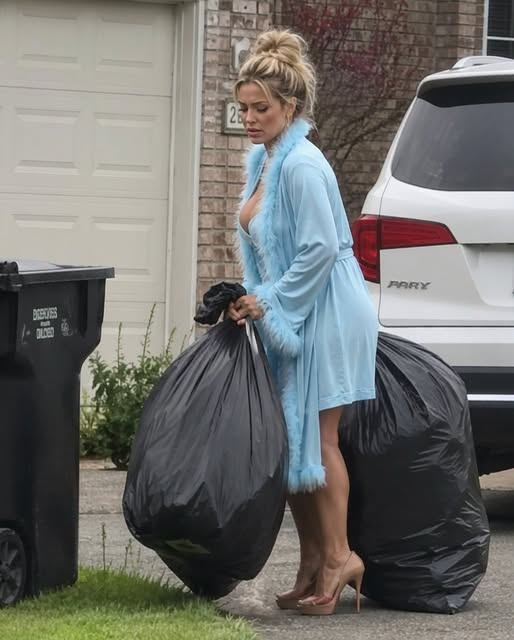
Inside were folded blankets, clean towels, unopened toiletries, canned food, children’s books, and labeled containers. Everything looked organized. Nothing looked like trash.
I closed the bag quickly, feeling embarrassed and confused. The next morning, Barbara carried out four more bags, just as heavy as the others, and drove away before the truck arrived.
The Question I Finally Asked
After another day of wondering, I asked a neighbor whether he had noticed Barbara’s unusual routine.
He had. He simply said it seemed strange, but he did not think it was his business.
The following morning, I decided not to snoop again. Instead, I waited until Barbara came outside and asked her directly, as politely as I could, about the bags.
Her expression changed immediately.
“I was wondering when someone would ask,” she said quietly.
Then she invited me inside.
Her home was spotless, but what caught my attention was the setup along one wall: industrial shelving, boxes, supplies, and stacks of the same large contractor bags I had seen outside. This was not clutter. It was a system.
Barbara explained that she was not throwing the bags away at all. They were being picked up before the garbage truck arrived.
Volunteers from local charities knew her schedule. They came through the neighborhood on weekday mornings, collected the bags, and took the items where they were needed.
What Was Really Inside the Bags
Barbara told me the idea started years earlier, after she cleared out her late parents’ home. She was struck by how many usable things people discard simply because they do not know where to take them.
Instead of opening a shop or formally launching a nonprofit, she built a quiet donation network.
Friends, neighbors, coworkers, grocery stores, hotels, local businesses, and other people she knew began giving her items that still had use left in them. Some grocery stores provided unsold food that was still safe. Hotels replaced towels before they were worn out. Neighbors left gently used clothing on her porch after dark.
Barbara cleaned, sorted, packed, and labeled what came in. The black bags protected donations from rain and made them easier for volunteers to carry.
She admitted she preferred that people assumed it was garbage.
“If people think I’m just taking out trash, they leave me alone,” she said.
Beside the shelves was a whiteboard with each weekday assigned to a different pickup or destination. What looked like a strange habit from the sidewalk was actually a small, efficient supply chain for local giving.
The Bigger Picture
What stayed with me was not just Barbara’s kindness. It was how practical the whole operation was.
Every blanket, towel, book, can of food, or working household item that found a new home represented something that did not end up in a landfill. It also meant another family or charity did not have to spend money replacing it. In a time when household costs can stretch budgets thin, useful donations can make a real difference.
That weekend, my wife and I cleaned out our closets. Barbara showed us how to pack the bags so volunteers could sort them quickly.
Then other neighbors joined in. One family donated children’s bicycles. Another offered small kitchen appliances. A local bookstore contributed unsold books.
Before long, our quiet street had become an unofficial collection point.
Barbara still carried those giant black bags to the curb every morning. To anyone passing by, they probably still looked like ordinary trash.
But I knew better.
Sometimes the most meaningful work in a neighborhood is happening in plain sight, hidden inside something as ordinary as a black bag at the curb.