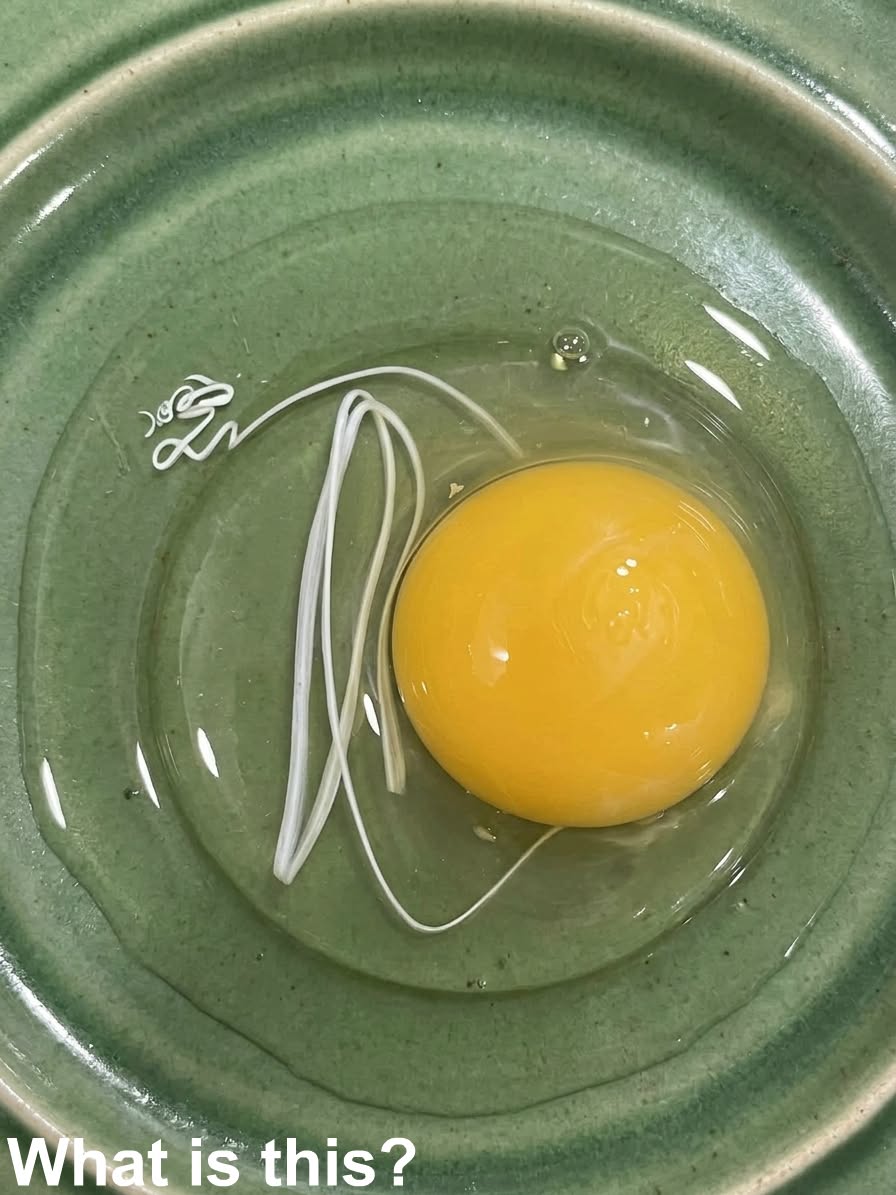
Its job is simple: it helps hold the yolk in place inside the egg white. In many eggs, the chalaza is visible as a cloudy or rope-like bit attached near the yolk. It can look unpleasant if you are not expecting it, but it is harmless.
In fact, a more noticeable chalaza is often associated with a fresher egg. As eggs age, the internal structure can loosen, making that strand less obvious.
What Readers Should Know
Seeing a chalaza does not mean the egg needs to be thrown away. If the egg otherwise looks and smells normal, that white strand alone is not a food safety warning.
For everyday kitchen safety, the usual checks still matter. Eggs that smell bad, have unusual discoloration, or appear spoiled should not be eaten. But the chalaza by itself is simply part of how an egg is built.
This is also a useful reminder for grocery shoppers. Egg quality, freshness, storage, and safe handling all affect what ends up on the breakfast plate. Keeping eggs refrigerated and checking them before cooking remains a smart habit.
The Bigger Picture
Food can look strange without being dangerous. The problem is that many natural features of common ingredients are easy to misread when we do not know what they are.
In this case, the detail that first looks alarming is actually one of the most ordinary parts of a fresh egg.
So the next time a white strand appears in your cracked egg, there is no need to panic. Sometimes the weirdest-looking thing in the pan is just breakfast doing exactly what it is supposed to do.