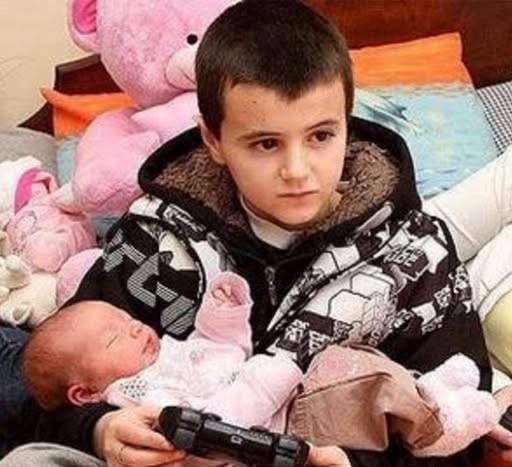
Maisie weighed 7 pounds 3 ounces at birth, and photographs of Alfie with the newborn quickly became central to the coverage. The images helped turn a private family situation into a major public story.
Because Alfie was only 13, the reports attracted intense attention in Britain and abroad. Newspapers, including The Sun, covered the story prominently, and the case was soon being discussed far beyond the families involved.
The coverage did not remain limited to one household. Politicians and commentators used the case to talk about teenage pregnancy, sex education, parenting, relationships, and the pressures facing young people.
Nigel Waterson, then the Member of Parliament for Eastbourne, raised questions at the time about relationship and sex education in schools. The story became part of a broader national conversation, even though it involved children whose privacy and welfare required care.
The DNA Test That Changed the Story
Before the test, Alfie reportedly believed he was Maisie’s father. He was said to have visited the hospital and spent time with the baby after her birth. His family also described him as wanting to remain involved rather than walk away.
That detail matters because the story was not simply about a headline. Alfie was still a child himself, trying to process a situation that adults across the country were suddenly debating.
Questions about paternity later emerged within Alfie’s family. Around six weeks after the birth, a DNA test established that Alfie was not Maisie’s biological father.
Reports later identified another teenager, Tyler Barker, as Maisie’s biological father. The finding corrected the central fact of the story, but it could not erase what had already happened.
By then, Alfie and his family had been photographed, discussed, and recognized by strangers. Reports at the time said he was deeply upset by the DNA result. A correction could clarify the record, but it could not give the family back the privacy they had lost.
The Bigger Picture
The Alfie Patten case is still remembered because it shows how quickly a powerful image can shape public belief. The original version of the story spread because it was striking and emotionally direct. Once it became widely accepted, the later correction had to work against a narrative already fixed in people’s minds.
The case also raised questions about media responsibility. The Press Complaints Commission, which was then the UK’s newspaper and magazine industry complaints body, examined aspects of the coverage. Questions included how the story had been obtained and how the family had been involved in media reporting.
The newspaper involved defended its work and argued that the story was in the public interest. Even so, the controversy highlighted a difficult balance: journalists may report on matters of public concern, but children caught in those stories can face consequences long after the attention fades.
In later years, Alfie appeared occasionally in news reports connected to personal challenges and legal difficulties. Those reports should be treated separately from the 2009 paternity story, rather than as one continuous narrative.
Today, the most important lesson from the case is not the original headline. It is the need to separate assumption from verified fact, especially when reporting involves minors, families, and deeply personal circumstances.
Alfie Patten’s story remains a reminder that real people live with the impact of headlines long after the public has moved on.