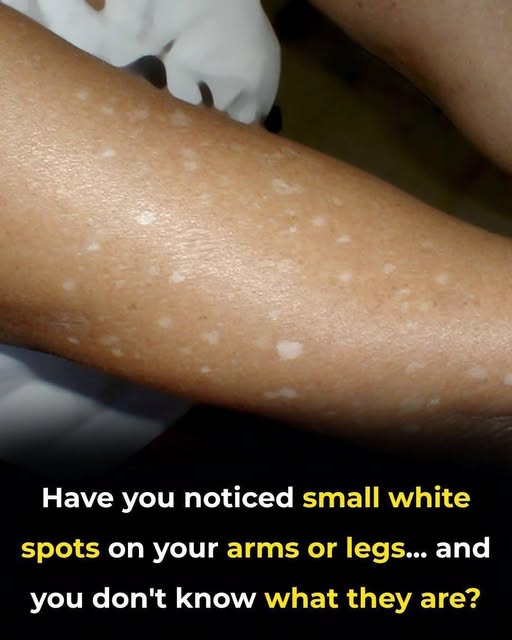
As the warm, sun-drenched days of summer finally fade and your deep tan begins to wash away, you might suddenly notice small, pale, ghost-like dots scattered across your arms and legs. Standing out starkly against the slightly darker surrounding skin, these tiny white marks can be deeply unsettling. For many people, watching them multiply with age triggers instant panic, leading to terrifying fears about hidden illnesses, spreading infections, or permanent skin damage. Before you spiral into anxiety or waste money on aggressive, unproven treatments, you need to know the surprising medical truth behind these mysterious spots.Spot removal creams
For decades, millions of people have panicked upon discovering these pale patches, often assuming they are the early warning signs of a serious, degenerative medical condition or an aggressive spreading fungus. However, medical experts reassure us that these common blemishes are scientifically known as idiopathic guttate hypomelanosis—or IGH for short. Despite the intimidating, complex medical terminology, the condition itself is entirely harmless, non-contagious, and remarkably common.
IGH manifests as small, flat, smooth white patches of skin that develop due to a localized reduction or total loss of melanin, which is the natural pigment responsible for giving your skin its rich color. These stubborn little spots usually measure just a few millimeters across and can appear on individuals of all skin tones, ethnicities, and backgrounds. Most frequently, they crop up on parts of the body that bear the brunt of everyday environmental exposure—most notably the arms, legs, and sometimes the face.
Continue reading next page…