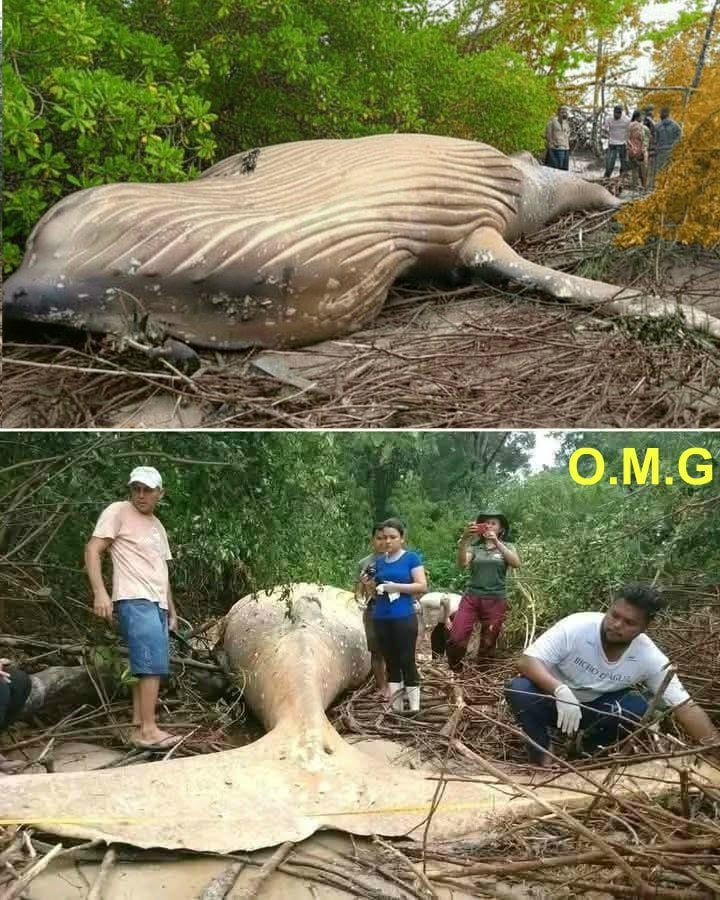
What Experts Say Happened: Extreme Tides and Coastal Geography
According to biologists, the most likely cause wasn’t paranormal or mysterious—it was the power of nature in a region shaped by strong tides and shifting waterlines.
The leading theory is that an unusually forceful ocean tide pushed the whale ashore and carried it inland before the water receded. When the tide retreated, it left the calf stranded roughly fifteen meters from the shoreline, in an area that can look like “jungle” when vegetation is dense and the terrain is low-lying.
Importantly, early observations reported no obvious external injuries—no clear signs of a boat strike or entanglement. That doesn’t automatically reveal the true cause of death, but it does support the idea that the whale may have already been weak, disoriented, or ill before the tides moved it.
What Happens Next: Natural Decomposition and a Museum Skeleton
Officials say the carcass will be left to decompose naturally, which is standard practice in many remote or environmentally sensitive areas. Over time, the skeleton can be recovered and preserved for scientific study and public education.
Once displayed in a museum, the whale’s bones will tell a clearer story—its age, growth patterns, and possible health issues. Even without sensational explanations, the image of a whale in the forest remains unforgettable: a reminder that coastal ecosystems can change fast, and extreme tides can move more than just driftwood.
Final Thought
In a world mapped down to the last satellite image, nature still finds ways to surprise us—sometimes in unsettling, impossible-looking ways.
Want more real-world wildlife mysteries explained with science? Share your thoughts in the comments and follow for the next story.