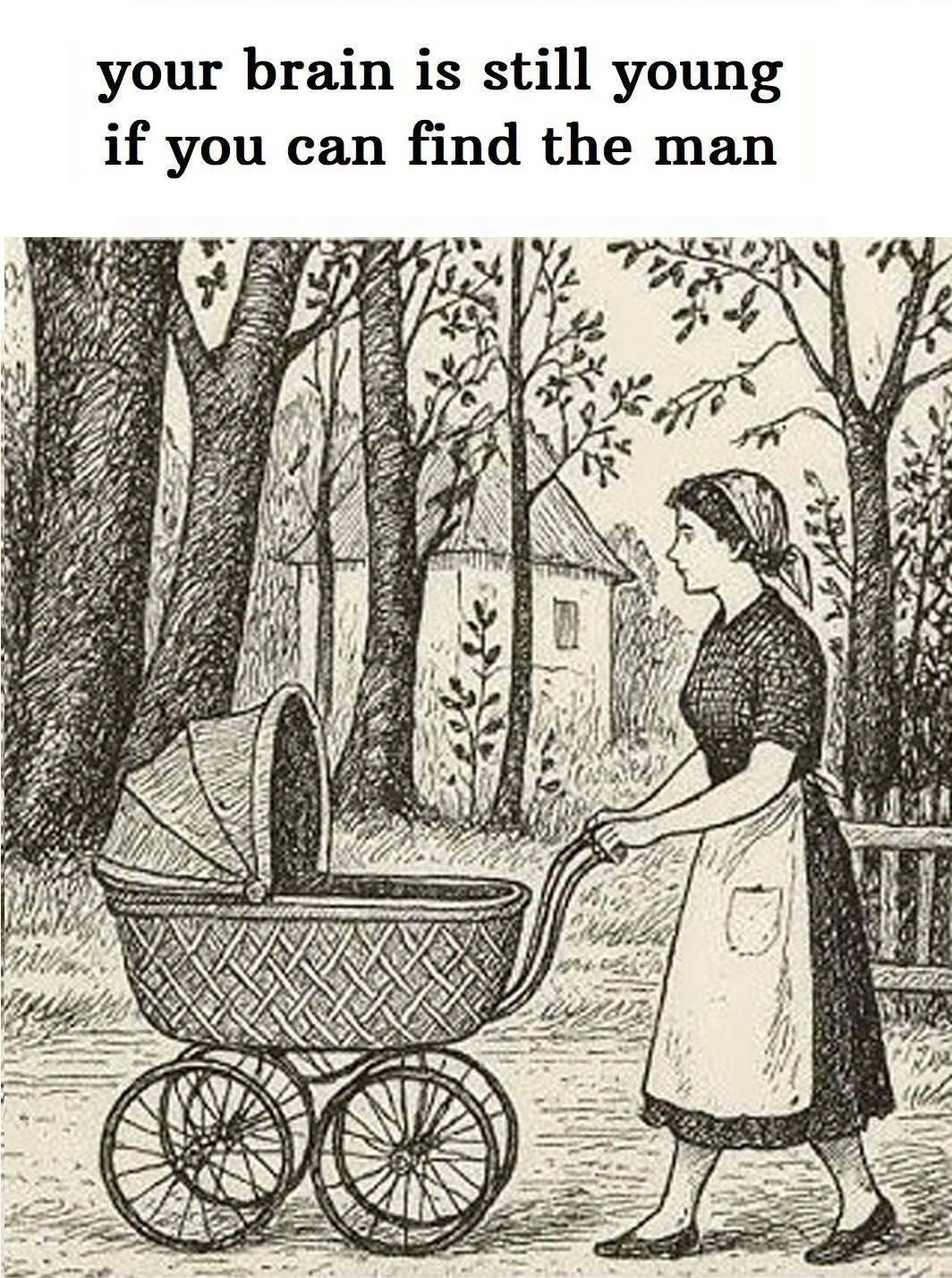
If you are trying to find it, avoid staring at only one section of the image. Scan the full picture slowly and pay attention to the spaces between the trees, the darker areas of shading, and any shapes that seem slightly unusual for a natural landscape.
Why These Illusions Can Be So Tricky
Optical illusions work because the brain is constantly organizing visual information. When a scene looks familiar, we often focus on the most recognizable objects and ignore smaller patterns in the background.
That is what makes hidden-image puzzles so satisfying. Once the face appears, it can be hard to stop seeing it. What looked like a normal wooded scene suddenly becomes a layered drawing with more than one way to view it.
One simple trick is to step back from the image or look at it from a slight distance. Changing your perspective can make the larger outline easier to recognize, especially when the hidden shape depends on contrast and spacing.
The Bigger Picture
Vintage optical illusions remain popular because they reward patience. They are not about speed as much as attention, and they show how easily the eye can be guided by familiar scenes.
Take another careful look at the picture and see whether the hidden face starts to emerge. Once you spot it, the entire scene may look different.