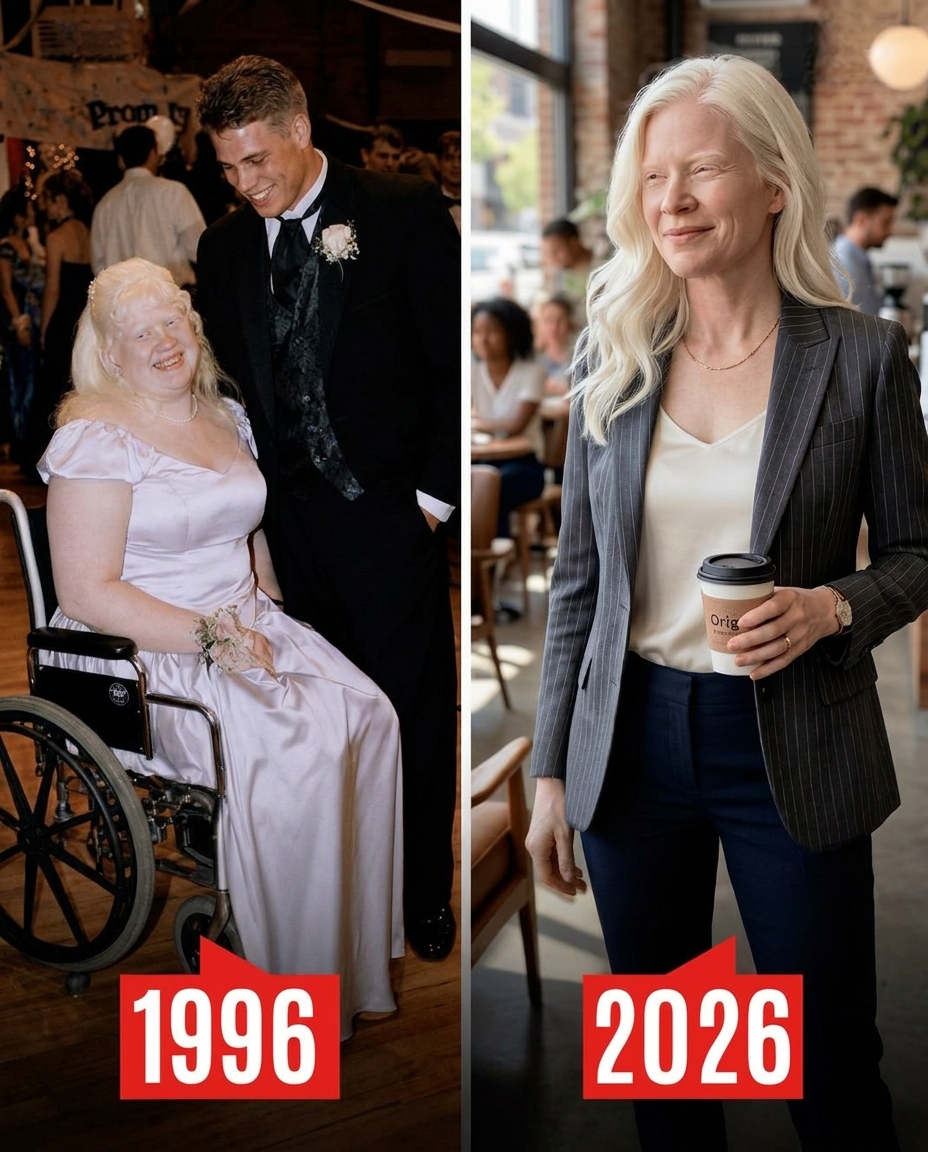
He was not someone who made a big scene. He simply crossed the gym, stopped in front of me, and held out his hand.
“Do you want to dance?” he asked.
I remember looking at him like he had misunderstood the situation. I told him I couldn’t.
He smiled and said, “Then we’ll figure out what dancing looks like.”
A Prom Night I Never Forgot
Marcus wheeled me onto the dance floor without making it feel like an act of pity. He did not treat me like I was fragile or embarrassing. He moved with me, gently turned my chair, laughed when I laughed, and gave me a few minutes where I felt like a person again instead of a problem everyone was trying politely not to mention.
For the first time in months, I forgot to be self-conscious.
Later, I asked him why he had done it. He gave the simplest answer.
“Because nobody else asked.”
That sentence stayed with me.
After graduation, my family moved so I could continue rehabilitation. There were surgeries, therapy appointments, and long stretches of learning how to live inside a body that no longer worked the way I expected. Marcus and I lost touch, as people often do when life changes too quickly.
But I carried that night with me.
Years later, I became an architect. More specifically, I became the kind of architect who thought constantly about access, dignity, and the hidden messages built into public spaces. A ramp may meet requirements on paper, but that does not always mean a space feels welcoming. A side entrance may technically provide access, but it can still make someone feel like an afterthought.
I knew that feeling because I had lived it.
An Unexpected Meeting in a Small Café
Thirty years after prom, I stopped at a small café near one of my firm’s job sites. I was tired, distracted, and apparently not very graceful with my coffee. Within seconds, I had spilled it across the counter.
A man in an apron hurried over with a mop. He moved with a limp, but there was something familiar in the way he handled the moment: calm, gentle, never making me feel foolish.
At first, I could not place him. He looked at me with the same uncertainty.
I went back the next day. This time, I mentioned a prom dance from thirty years earlier.
He froze. Then he looked up and said my name.
It was Marcus.
His life had taken turns I never knew about. After high school, his mother became ill, and his plans changed. He worked whatever jobs he could find to support her. Somewhere along the way, a knee injury went untreated, leaving him in ongoing pain.
When I first offered help, he refused. I understood why. Pride is not always stubbornness. Sometimes it is the last thing a person feels they still own.
So I stopped offering charity and offered work instead.
My firm was designing an adaptive recreation center, and I asked Marcus to join as a paid consultant. He hesitated, but eventually agreed.
The Bigger Picture
Marcus saw things even experienced designers could miss. He understood how a building could be legally accessible and still emotionally unwelcoming. He pointed out where an entrance would make someone feel separated from everyone else. He noticed how a recreation center could either restore confidence or quietly remind people of their limitations.
His insight changed the project.
Adaptive design is not just about measurements, ramps, door widths, or compliance. Those details matter, but so does the lived experience of the people using the space. Good public design can affect healthcare recovery, community participation, employment opportunities, and the basic ability to move through the world without feeling excluded.
Marcus became a regular part of our work. He connected especially well with injured athletes and young people learning to trust themselves again. Over time, he accepted medical care for his knee and found steady purpose at the center.
One day, he saw an old photo of us from prom. I had kept it all those years.
He admitted he had tried to find me after high school. I told him I thought he had forgotten me.
He said I was the only girl he had wanted to find.
We did not pretend the lost years had not happened. We had both lived full, difficult, separate lives. But slowly, honestly, we began building something new.
At the opening of the community center, music started to play. Marcus turned toward me, held out his hand, and asked, “Would you like to dance?”
This time, I smiled.
“We already know how.”
Some moments do not end when the music stops. They wait, quietly, for the right time to return.