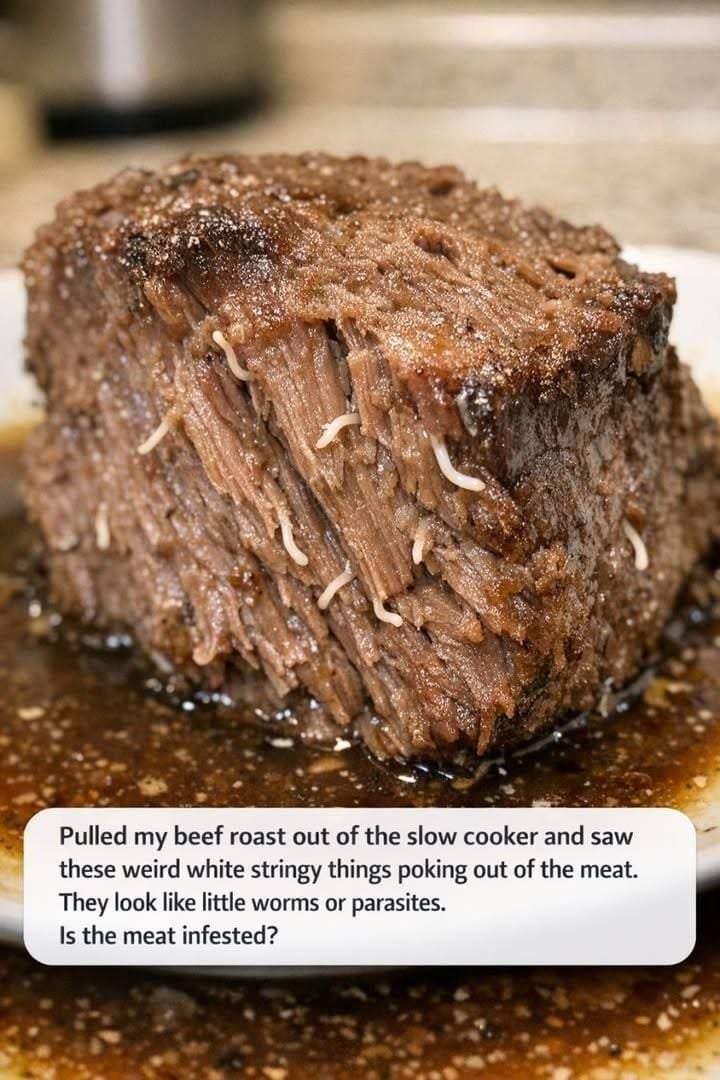
That may look unpleasant at first glance, but it is usually part of the same process that makes a roast tender, juicy, and easier to pull apart.
How It Differs From Something Unsafe
Actual parasites in beef are considered very rare in places with modern meat inspection systems. They also do not survive when meat is cooked to recommended safe temperatures.
Normal connective tissue tends to feel soft, slick, and easy to separate. It may stretch or pull apart with the meat. A parasite would typically look more distinct, firm, and uniform rather than like melted tissue running through the roast.
If the beef smelled normal before cooking, was stored safely, and reached a safe internal temperature, those white strands are almost certainly harmless collagen and connective tissue.
What Readers Should Know
Food safety still matters. Beef should be refrigerated properly before cooking, handled with clean utensils and surfaces, and cooked thoroughly according to recommended temperature guidance. A basic kitchen thermometer is one of the simplest ways to avoid guessing, especially with large roasts.
Slow cooking can make tougher, often more affordable cuts of beef taste rich and tender, which is part of why it remains popular for family meals and meal prep. The same connective tissue that looks odd on the plate is often what gives the finished roast its texture and flavor.
So if your slow-cooked beef has pale stringy bits but otherwise looks, smells, and cooks normally, it is likely just meat science at work — not an infestation.