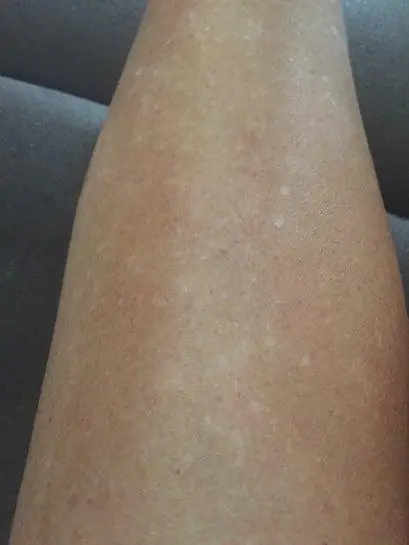
Another possible cause is tinea versicolor, a superficial fungal condition caused by an overgrowth of yeast that naturally lives on the skin. It may appear as lighter or darker patches, depending on a person’s skin tone, and it is more likely to affect the chest, back, shoulders, or upper arms. Some patches can feel slightly scaly or itchy.
Tinea versicolor is commonly treated with antifungal creams, washes, or shampoos. The fungal overgrowth may clear within weeks, but the skin’s normal color can take longer to return.
When White Spots May Point to Something Else
Some people worry that white spots are a sign of a vitamin deficiency. In rare cases, deficiencies involving nutrients such as vitamin B12, copper, or zinc may be associated with changes in pigmentation. However, these deficiencies are not the most common reason for tiny white dots on the arms or legs.
A balanced diet that includes fruits, vegetables, lean protein, whole grains, and healthy fats generally supports skin health. If skin changes appear along with symptoms such as unusual fatigue, numbness, unexplained weight loss, or other health concerns, a healthcare provider may recommend blood tests to check for nutritional or medical issues.
Vitiligo can also cause loss of pigment, but it usually looks different from tiny scattered white dots. Vitiligo often creates larger, clearly defined white patches that may slowly expand. It happens when the immune system attacks pigment-producing cells. The condition is not contagious or dangerous, but many people seek medical care for treatment options, appearance-related concerns, or emotional well-being.
A dermatologist can help tell the difference between vitiligo, IGH, fungal conditions, and other causes of pigment changes. In some cases, the doctor may use a Wood’s lamp examination or, less commonly, a skin biopsy.
What Readers Should Know
Sun protection is one of the most practical steps for managing visible pigment changes. Wearing protective clothing, seeking shade during peak sunlight, and using broad-spectrum sunscreen can help reduce sun damage and may make lighter spots less noticeable by limiting tanning of the surrounding skin.
Gentle moisturizers can also support the skin barrier and improve overall texture, though they will not restore pigment loss caused by conditions such as IGH or vitiligo.
Medical evaluation is a good idea if the spots are spreading quickly, changing shape, becoming itchy or scaly, appearing with other symptoms, or causing concern. It is also worth seeing a dermatologist if the patches are sharply defined, growing larger, or affecting the face, hands, or other highly visible areas.
Most tiny white spots are not dangerous, but your skin can offer useful clues about your overall health. If something looks new, persistent, or unusual, getting a professional opinion can provide reassurance and help you choose the right next step.