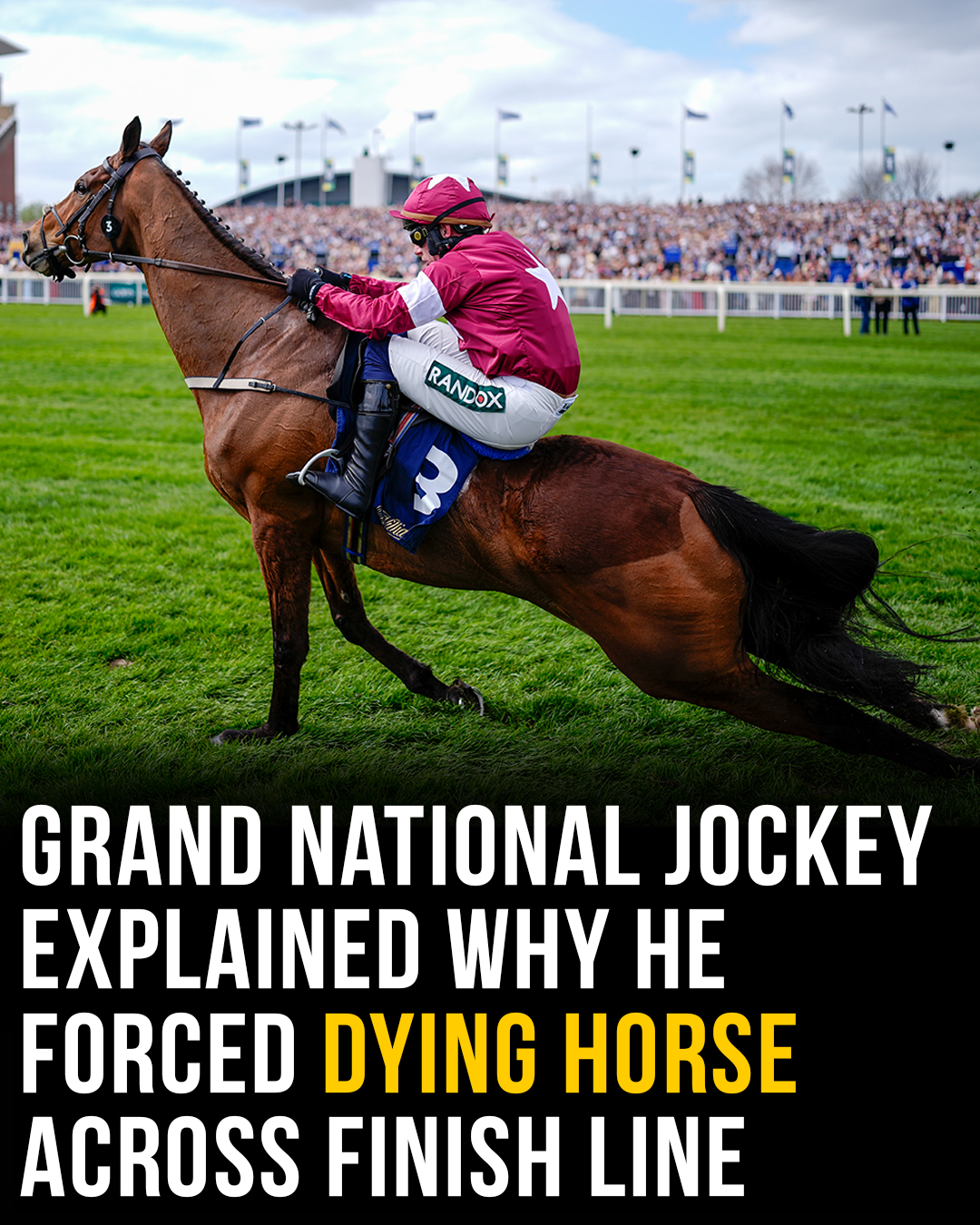
Officials later confirmed the worst-case outcome: Gold Dancer had suffered a catastrophic injury to the lumbar region. The condition was not treatable, and the horse was euthanized on site to prevent further suffering.
The most heated part of the debate has centered on this: could the jockey have known? Racing authorities stated that the horse ran straight in the closing strides and did not show obvious signs that would clearly indicate a spinal injury while still at full speed. The owners’ representative also said the rider reported the horse felt balanced until after the finish, when he began to slow and shift position.
Animal Welfare Groups Demand Stronger Action
Despite those explanations, the public reaction has been intense. animal welfare organizations have argued that the incident reflects the inherent danger of jump racing—where speed, distance, and large fences can combine into a high-risk environment. Critics say the sport’s structure can encourage horses to push through pain until it becomes impossible to continue.
Activist groups have also pointed to long-term fatality figures at major meetings, arguing that repeated deaths at the same high-profile venues cannot be dismissed as rare misfortune. Their message is blunt: if a sport repeatedly produces catastrophic injuries, then the system—not just individual decisions—must be examined.
The Bigger Issue: Jump Racing Risk vs. Tradition
This tragedy happened against a grim backdrop. It came just one day before another horse, Get on George, reportedly died at the same venue—adding to a wider conversation about how often these events end in loss.
The racing industry has emphasized improvements over time, including changes to course design, veterinary protocols, and screening procedures. At the same time, critics argue that even with reforms, the core format of jump racing still carries a level of risk that many people no longer accept—especially as public expectations around animal welfare standards continue to rise.
For many viewers, the most haunting part wasn’t the post-race response—it was the sight of a horse giving everything in the final seconds, only for the outcome to reveal a devastating injury. The moment has become a flashpoint for calls to improve real-time injury detection, review whip rules, and consider whether certain fences or race conditions need more fundamental change.
Where the Sport Goes From Here
Gold Dancer’s death has become more than a single heartbreaking headline. It’s now part of a growing argument about whether jump racing can truly balance tradition, entertainment, and horse welfare—or whether the cost is simply too high.
The coming months are likely to bring renewed scrutiny, stronger reform proposals, and louder calls—both from within and outside the sport—for meaningful change that prevents another finish like this from ever happening again.
What do you think needs to change most—course design, welfare rules, or how races are stopped when something looks wrong? Share your thoughts in the comments, and if you want more updates on major racing stories and safety reforms, consider bookmarking this page and checking back soon.