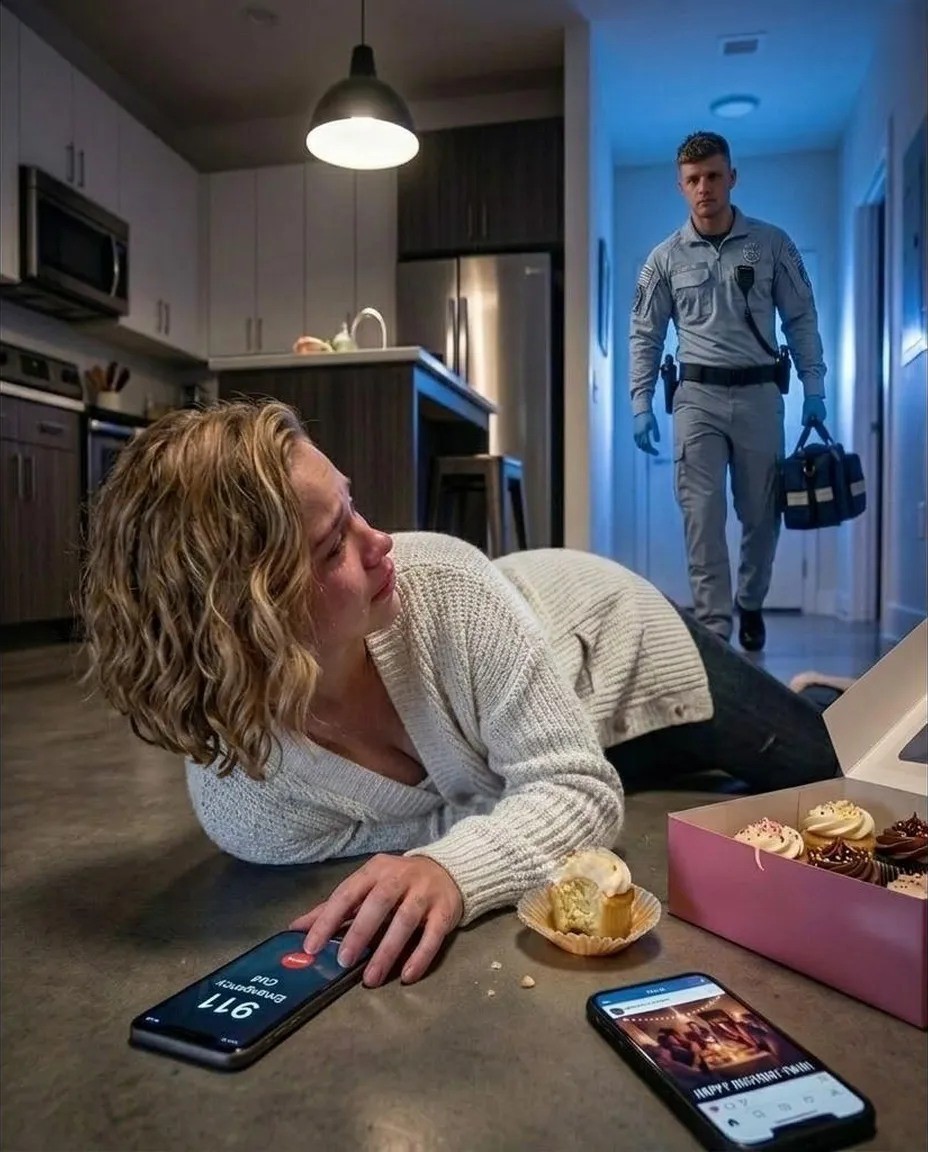
“We already received a call about you earlier.”
My twin sister had contacted emergency services before my call—or at least before my situation was fully understood—and told them I had a “pattern” of exaggerating allergic reactions for attention. She framed it as drama, not danger. She planted the idea that what I was experiencing might be anxiety or manipulation, not a medical emergency.
I couldn’t argue. I could barely speak. I just knew one thing with absolute clarity: this wasn’t panic. This was anaphylaxis, and I was losing time.
Paramedics Confirmed It Was Life-Threatening
By the time I heard sirens, my body was fading in and out. The paramedics moved fast—oxygen, assessment, then the sharp burn of epinephrine. The world snapped into focus just enough for me to realize how close I’d come to not waking up.
In the ambulance, an EMT explained what had happened: a severe allergic reaction triggered by an ingredient hidden in the frosting. My airway had been closing. It was medically serious and could have turned fatal.
What haunted me wasn’t just the allergen. It was the fact that someone had tried to make professionals second-guess whether I deserved urgent care.
The Birthday Dinner I Wasn’t Invited To
In the hospital, there was too much quiet and too much time to replay the days leading up to it. The exclusion wasn’t new. My twin had a birthday dinner that night—lavish, planned, and attended by everyone who mattered in our family.
Except me.
I called. No one answered. I texted. Nothing. The cupcake wasn’t a kind gesture—it was a way to look generous while keeping me out of sight.
And that’s when the bigger pattern became impossible to ignore.
Grandma Was Sick—But They Only Talked About Money
Our grandmother had been declining for a while, and I was the one showing up—helping with meals, sitting at her bedside, holding her hand when she was scared, making sure she wasn’t alone.
Meanwhile, my mother and my twin sister had a different focus. Their conversations didn’t revolve around comfort, medical care, or quality of life. They revolved around paperwork, assets, legal documents, and what would happen “when the time comes.”
It wasn’t just upsetting. It was revealing.
The family atmosphere had been tense for months, like something rotten was sitting underneath the surface—smiling on the outside, calculating on the inside.
The Cupcake Didn’t Feel Like a Mistake Anymore
Once I stabilized, the questions started stacking up in a way I couldn’t dismiss:
- Why would my sister call emergency services ahead of time to discredit me?
- How did she know I was alone when the reaction hit?
- Why describe my symptoms in a way that minimized the danger?
Even the cupcake itself started to feel less like a “thoughtful delivery” and more like a calculated risk—something that could be brushed off as an accident if I survived, and something no one could challenge if I didn’t.
I’m careful with what I claim. I’m not here to make legal accusations in a blog post. But I am saying this: the timing, the phone call, and the way the situation was framed to professionals didn’t look like love. It looked like a setup.
Recovery Wasn’t Just Physical—It Was Legal and Emotional Too
After I was discharged, I treated my recovery like a full-time job. My body needed time to heal, but my life needed a new structure.
I stopped trying to “keep the peace” with people who benefited from my silence. I set boundaries that didn’t require permission. I documented what happened while it was fresh. And I sought professional guidance to understand my options—medical records, family dynamics, and how to protect myself moving forward.
For the first time, I made decisions based on safety instead of guilt.
Confrontation Changed Everything
When I finally brought up the 911 call and the cupcake, I wasn’t met with concern. I was met with defensiveness—carefully worded outrage, denial, and the kind of anger that shows up when someone feels exposed.
Some relationships cracked on the spot. Others ended slowly, with distance replacing forced conversation.
And strangely, the distance didn’t feel like loss.
It felt like relief.
What I Learned About Strength
I used to think strength meant proving your point, winning the argument, demanding an apology. Now I see it differently.
Strength is building a life where you’re not dependent on people who don’t protect you. It’s choosing peace without pretending everything was fine. It’s accepting that sometimes the safest “closure” is simply stepping away.
I didn’t move forward with noise. I moved forward with clarity.
If this story hit close to home—whether it’s family betrayal, a medical scare, or learning to set boundaries—share your thoughts in the comments. And if you want more real-life stories about healing, personal safety, and rebuilding after toxic relationships, subscribe and check back for the next post.