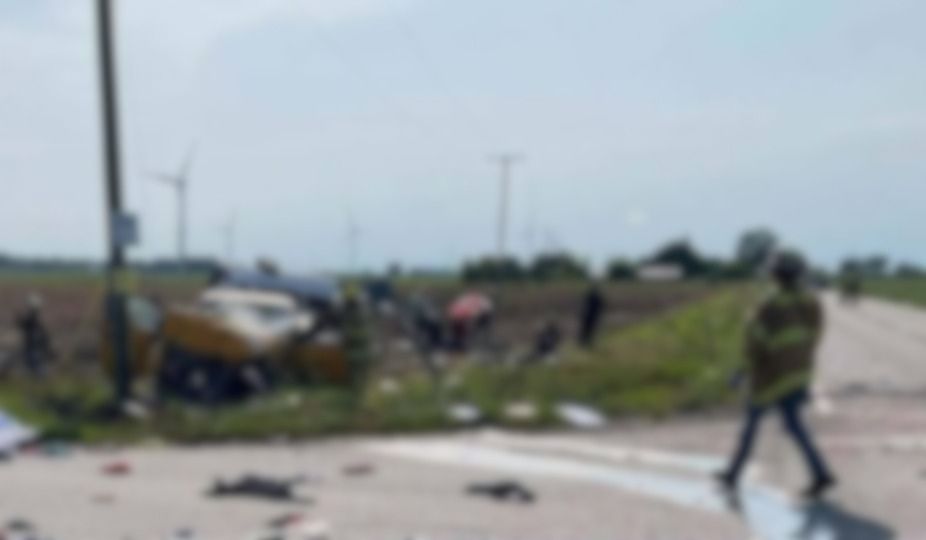
Within moments, the scene escalated from a crash investigation to a full-scale highway emergency.
Fire, Smoke, and a Dangerous Rescue Operation
Because the tanker was carrying fuel, the danger didn’t end with the collision. Witnesses described towering flames and thick black smoke spreading across lanes, reducing visibility and making it harder for drivers to escape and for first responders to reach those trapped.
Emergency crews arrived to find twisted wreckage, shattered glass, and burning debris scattered across the roadway. With fuel involved, responders had to work with extreme caution to prevent secondary explosions and contain any potential leaks—an added risk that can slow rescue efforts but is critical for protecting survivors and nearby communities.
Witness Accounts Describe a Sudden Explosion and Panic
People near the highway reported hearing a loud blast, followed by a brief, unsettling silence before panic spread. Calls to emergency lines surged as survivors and bystanders tried to describe what they were seeing—fire, blocked lanes, and vehicles caught in the aftermath.
For families waiting for updates, the uncertainty was agonizing. Minutes felt like hours as loved ones searched for information and hoped for good news in the middle of a rapidly unfolding tragedy.
Why So Many People Are Searching for Answers
Major roadway disasters like this raise urgent questions about road safety, commercial transport regulations, and emergency readiness on high-traffic routes. As officials work to determine what caused the crash—whether speed, visibility, mechanical failure, driver fatigue, or other factors—the public is left processing the human cost and the sobering reality of how quickly an ordinary day can change.
Investigations in incidents involving a bus and a fuel tanker are typically complex, often requiring crash reconstruction, vehicle inspections, and review of dispatch logs and roadway conditions.
Stay connected: If you want updates as more verified details emerge, share your thoughts in the comments—what safety changes do you think could help prevent tragedies like this?