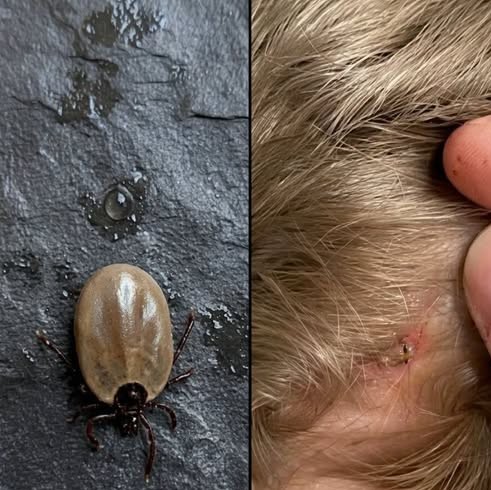
The Real Danger Begins After the Bite
For some people, the bite itself causes little more than redness or itching.
But certain ticks can carry bacteria, viruses, or parasites capable of triggering serious illness if left untreated.
As the body reacts, symptoms may begin developing gradually:
Fatigue
Fever
Muscle aches
Headaches
Joint pain
Expanding skin redness
Flu-like exhaustion
Because these symptoms resemble common illnesses, many people initially dismiss them or mistake them for seasonal infections.
Lyme Disease Remains One of the Biggest Concerns
One of the most recognized tick-borne illnesses is Lyme disease, caused by bacteria transmitted through infected ticks.
Early treatment is often highly effective, but delayed diagnosis can allow symptoms to become far more serious over time.
Health experts warn that untreated Lyme disease may eventually affect:
Joints
The nervous system
Heart rhythm
Cognitive function
This is why early detection matters so much after possible tick exposure.
Not Every Tick Carries Disease — But Caution Matters
It is important to remember that not every tick bite leads to illness.
However, medical professionals recommend monitoring symptoms carefully after any known tick attachment, especially in wooded, grassy, or high-risk outdoor areas.
The earlier unusual symptoms are recognized, the easier treatment often becomes.
Outdoor Activities Increase Exposure Risk
Ticks are commonly found in:
Tall grass
Wooded trails
Leaf piles
Parks
Camping areas
Areas with deer or wildlife activity
Outdoor enthusiasts, hikers, pet owners, gardeners, and families spending time in nature face increased exposure risk during warmer months.
Even short walks through grassy areas can sometimes result in unnoticed attachment.
Prevention Is Often the Best Protection
Health experts recommend several simple precautions to reduce tick exposure:
Wear long sleeves and pants in wooded areas
Use insect repellents approved for tick prevention
Check clothing and skin after outdoor activities
Inspect pets carefully after walks
Shower soon after returning indoors
Early removal dramatically reduces the likelihood of disease transmission in many cases.
Proper Tick Removal Matters
If a tick is discovered attached to the skin, experts recommend removing it carefully using fine-tipped tweezers.
The tick should be pulled upward steadily without twisting or crushing the body.
After removal, the area should be cleaned thoroughly and monitored for signs of rash, fever, or unusual symptoms.
If concerning symptoms develop, medical evaluation is strongly recommended.
The Body Often Gives Warning Signs
One of the most important lessons about tick-borne illness is this:
The body usually signals when something is wrong.
Persistent fatigue, unexplained fever, expanding redness, or unusual aches following outdoor exposure should never be ignored.
Listening early can make a major difference.
Final Thoughts
Ticks may be tiny, but the illnesses they can carry deserve serious attention.
Most bites do not become dangerous, but awareness, prevention, and early action remain incredibly important when symptoms appear.
Nature should still be enjoyed — but understanding the risks helps people stay safer while spending time outdoors.
If you found this information helpful, share it with friends and family who enjoy hiking, camping, gardening, or outdoor activities.