The Eagle’s Surprisingly Strategic Route
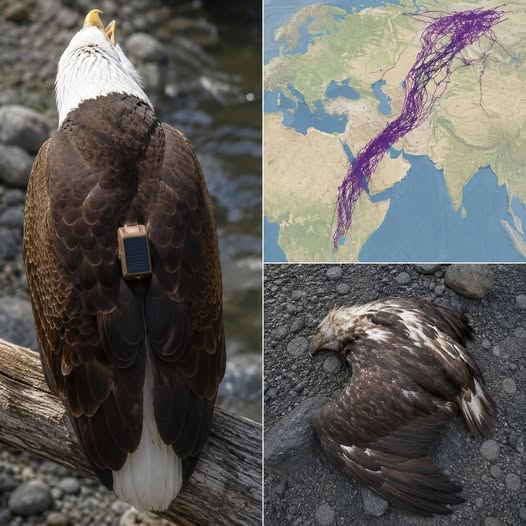
One of the most fascinating discoveries was that the tracked eagle consistently avoided taking the shortest route between destinations.
Rather than flying directly across large bodies of water, it repeatedly followed coastlines, mountain ranges, and stretches of land that provided more favorable flying conditions.
At first glance, these detours might seem inefficient. In reality, they reflected an advanced survival strategy designed to conserve energy over thousands of miles.
The bird was choosing the smartest path—not necessarily the fastest one.
The Secret Is in the Sky
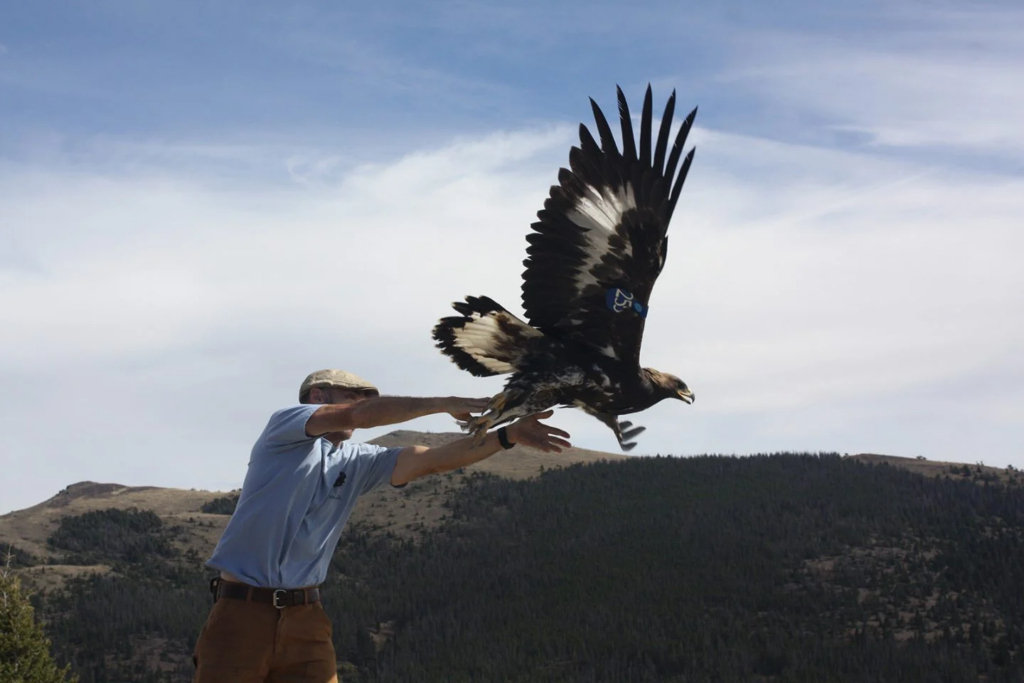
Large soaring birds rely heavily on thermals, rising columns of warm air created when the sun heats the earth’s surface.
By circling within these invisible currents, an eagle can gain altitude with very little effort before gliding long distances without constantly flapping its wings. This technique dramatically reduces energy expenditure during migration.
Open water presents a different challenge. Because lakes and oceans heat differently than land, they produce weaker and less predictable thermals. As a result, soaring birds often avoid long crossings whenever alternative routes are available.
The GPS data clearly reflected this natural preference.
How Birds Find Their Way
Scientists believe migrating birds combine several navigation methods simultaneously.
Research suggests they may use:
- Familiar visual landmarks such as rivers and mountain ranges.
- The position of the sun during daylight hours.
- Earth’s magnetic field as a natural compass.
- Wind patterns and weather conditions.
- Memory developed through repeated migrations.
Younger birds may rely more heavily on instinct, while older individuals refine their routes through experience, gradually improving efficiency over time.
The long-term tracking of this eagle provided researchers with rare evidence of how these abilities evolve across multiple journeys.
More Than Science—A Story That Inspired Millions
Although the migration study produced valuable ecological data, it resonated with the public because it symbolized something deeply human.
The eagle repeatedly rejected risky shortcuts in favor of stable, reliable paths that increased its chances of success. Rather than forcing its way through unfavorable conditions, it adapted to the environment and worked with nature instead of against it.
Many people saw parallels to everyday life, where patience, preparation, and thoughtful decision-making often lead to better outcomes than speed alone.
Eagles and Their Enduring Symbolism
Throughout history, eagles have represented vision, courage, strength, wisdom, and freedom in cultures around the world.
Their ability to soar high above the landscape has made them symbols of perspective and resilience, while their powerful presence has inspired countless myths, traditions, and national emblems.
The migration story reinforced those associations, reminding people that nature’s most impressive achievements often arise from consistency and adaptation rather than dramatic displays.
Technology Driving Conservation
Modern GPS devices have become essential tools for protecting wildlife. By revealing exactly where animals travel and which habitats they depend upon, researchers can identify areas that deserve greater conservation efforts.
Migration studies also demonstrate how interconnected ecosystems truly are. A single eagle may rely on healthy habitats across multiple countries, highlighting the importance of international cooperation in preserving biodiversity.
Ultimately, this remarkable bird’s journey serves as a powerful reminder that the natural world still holds countless mysteries waiting to be understood.
Its flight across continents wasn’t simply about reaching a destination—it was about navigating wisely, adapting continuously, and surviving through intelligent choices shaped over generations.
What lesson do you think humans can learn from the eagle’s migration strategy? Share your thoughts in the comments and join the conversation about the incredible intelligence found in nature.