Why Smallpox Was So Feared
Smallpox typically started with severe flu-like symptoms such as high fever, exhaustion, and body aches. Soon after, a rash appeared and progressed into fluid-filled sores. Many survivors were left with permanent scarring, and in severe cases the disease was fatal. Public health sources, including the CDC, have long documented how deadly smallpox could be, particularly in people who weren’t vaccinated.
Because of its devastating impact, smallpox became a major target for international public health efforts.
The Global Health Victory That Changed Everything
One of the greatest achievements in modern medicine was the worldwide vaccination campaign coordinated by the World Health Organization (WHO). Through mass immunization and careful tracking of outbreaks, smallpox transmission was gradually eliminated. In 1980, the WHO officially declared smallpox eradicated—the first human disease ever wiped out through global cooperation.
Once eradication was confirmed, routine smallpox vaccination programs were phased out in many countries. In the U.S., for example, smallpox vaccination for the general public largely stopped by the early 1970s because the risk of natural exposure had become extremely low.
Why the Smallpox Vaccine Left a Noticeable Scar
Unlike many modern vaccines that are given as a single injection, the smallpox vaccine used a different method. It relied on a live virus called vaccinia (related to smallpox but far less dangerous) to train the immune system.
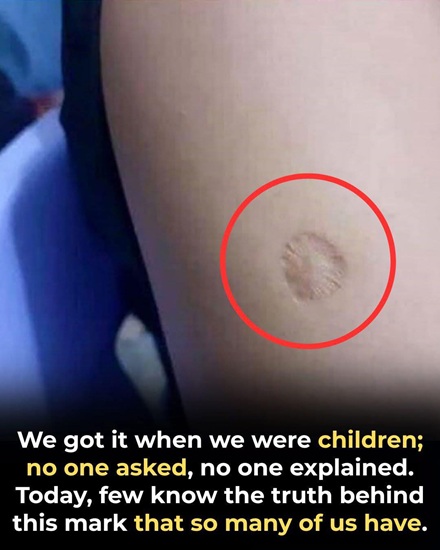
The vaccine was administered using a special two-pronged tool known as a bifurcated needle. Instead of one puncture, the skin was tapped multiple times in a small area. That technique caused a localized reaction that often followed a familiar pattern:
- A raised bump formed
- It developed into a blister
- The blister dried out and scabbed over
- After healing, a small round or slightly indented scar remained
That’s why the mark is so recognizable—and why it appears in roughly the same place on many people: the upper arm was a common vaccination site.
More Than a Mark: A Reminder of Medical History
Today, smallpox doesn’t circulate naturally, and routine vaccination isn’t part of standard immunization schedules for most people. So when you spot that small round scar on someone’s arm, you may be seeing a subtle reminder of a time when vaccination campaigns were essential to protecting entire populations from a deadly threat.
What once looked like a random blemish now feels like a link between personal memory and world history—proof that huge public health victories can leave behind the smallest, quietest signs.
Quick Note
This article is for informational purposes only and isn’t medical advice. If you’re unsure about a scar or skin change, it’s best to consult a qualified healthcare professional.
Have you seen (or have) this small circular arm scar? Share your story in the comments—and if you found this interesting, consider sending it to a friend or family member who might recognize it, too.