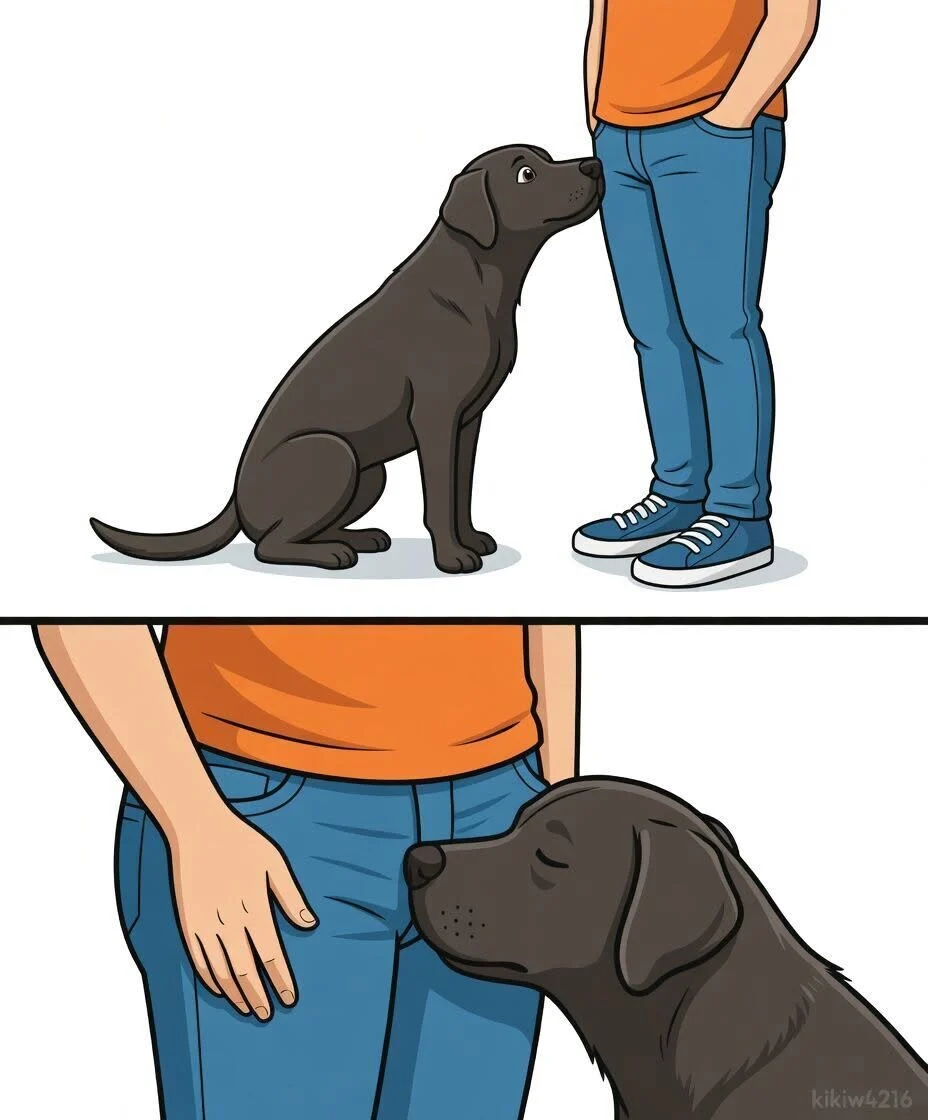
That does not mean a dog is making a medical diagnosis. It means the dog is detecting odor changes with a sense of smell far more sensitive than ours.
How to Handle It Without Scolding the Dog
Even though the behavior is natural, people are still allowed to set boundaries. A dog can learn that sniffing a person’s private area is not acceptable in human social settings.
The best response is usually calm redirection. Offer your hand for the dog to sniff instead, step back gently, or use a familiar cue such as “sit” or “leave it.” Rewarding polite greetings helps the dog understand what behavior is welcome.
Shouting or punishing may confuse the dog, because the instinct itself is normal. Consistent training, especially around visitors, can make greetings more comfortable for everyone.
What Readers Should Know
This behavior is a reminder that dogs are constantly reading the world in ways humans often miss. Their sense of smell helps them identify people, track emotional changes, and respond to their environment.
For pet owners, understanding the reason behind the sniffing can make it easier to respond with patience instead of embarrassment. The goal is not to shame the dog, but to teach better manners while respecting how dogs naturally communicate.
So the next time a dog gets a little too curious, remember: it is not trying to be impolite. It is using its strongest sense to learn who you are.