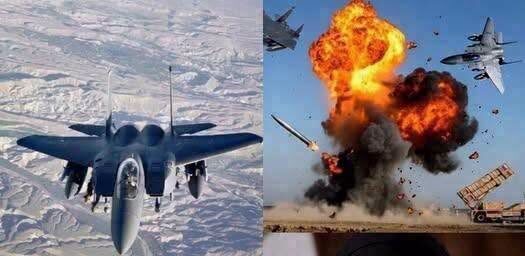
Israel is also central to the security picture. Its close strategic relationship with the United States, along with its concerns about Iranian military capabilities and regional armed groups, means developments involving Israel can draw attention far beyond its borders.
That interconnectedness is one reason analysts study even smaller incidents carefully. A strike, warning, cyber incident, disputed intelligence claim, or misread signal can create pressure for a response. In a tense environment, escalation does not always begin with a plan for a major war.
The risk is often uncertainty. Leaders may have to make decisions quickly, sometimes with incomplete information, while public pressure builds in real time.
Technology Has Changed the Security Equation
Modern conflict is not only about aircraft, missiles, ships, and bases. Information has become part of the battlefield. A claim posted online can create fear before officials, journalists, or independent analysts can confirm whether it is accurate.
That makes media literacy especially important. When a major national-security claim appears, readers should ask whether it comes from a reliable source, whether multiple credible outlets have confirmed it, and whether official statements support the claim. Dramatic language is not the same as verified information.
Military technology is also evolving quickly. Israel has invested for years in layered air-defense systems designed for different types of threats. Iron Dome is widely associated with short-range rocket interception, while other systems are intended for longer-range missiles and higher-altitude threats.
Israel and its allies have also explored newer capabilities, including improved radar, artificial intelligence, autonomous systems, and directed-energy concepts. These developments matter, but they do not remove the risk of conflict. Every defense system has limits, including cost, capacity, geography, warning time, and the scale or type of incoming threat.
The Bigger Picture
The United States has longstanding military, diplomatic, and economic interests in the Middle East. American forces and facilities in the region support missions that include deterrence, maritime security, counterterrorism, intelligence cooperation, and protection of strategic interests.
Washington also has to balance several relationships at once. Its ties with Israel are significant, while the United States also works with several Arab countries. That creates a difficult policy environment, especially if tensions rise and the costs of deeper involvement become harder to ignore.
The economic stakes extend well beyond defense policy. The region includes major energy producers and sits near key shipping corridors. Disruption to oil infrastructure, commercial shipping, or major maritime routes could affect energy prices, transportation costs, inflation expectations, and financial markets.
For businesses, that can quickly become a planning issue. Higher energy costs can raise expenses for manufacturing, logistics, travel, and household budgets. Investors often monitor geopolitical developments alongside interest rates, inflation data, and corporate earnings because conflict risk can influence markets quickly.
No careful assessment can say with certainty whether today’s tensions will escalate, stabilize, or move back toward diplomacy. Diplomatic channels can reopen after serious confrontation, but conditions can also worsen with little warning.
The most useful approach is to focus on confirmed facts, credible reporting, and the difference between warning signs and predictions. In a region where security, technology, energy, and diplomacy are tightly linked, information itself is one of the most important things to handle carefully.
For readers, the best next step is simple: slow down, verify before sharing, and keep watching the facts rather than the loudest headline.