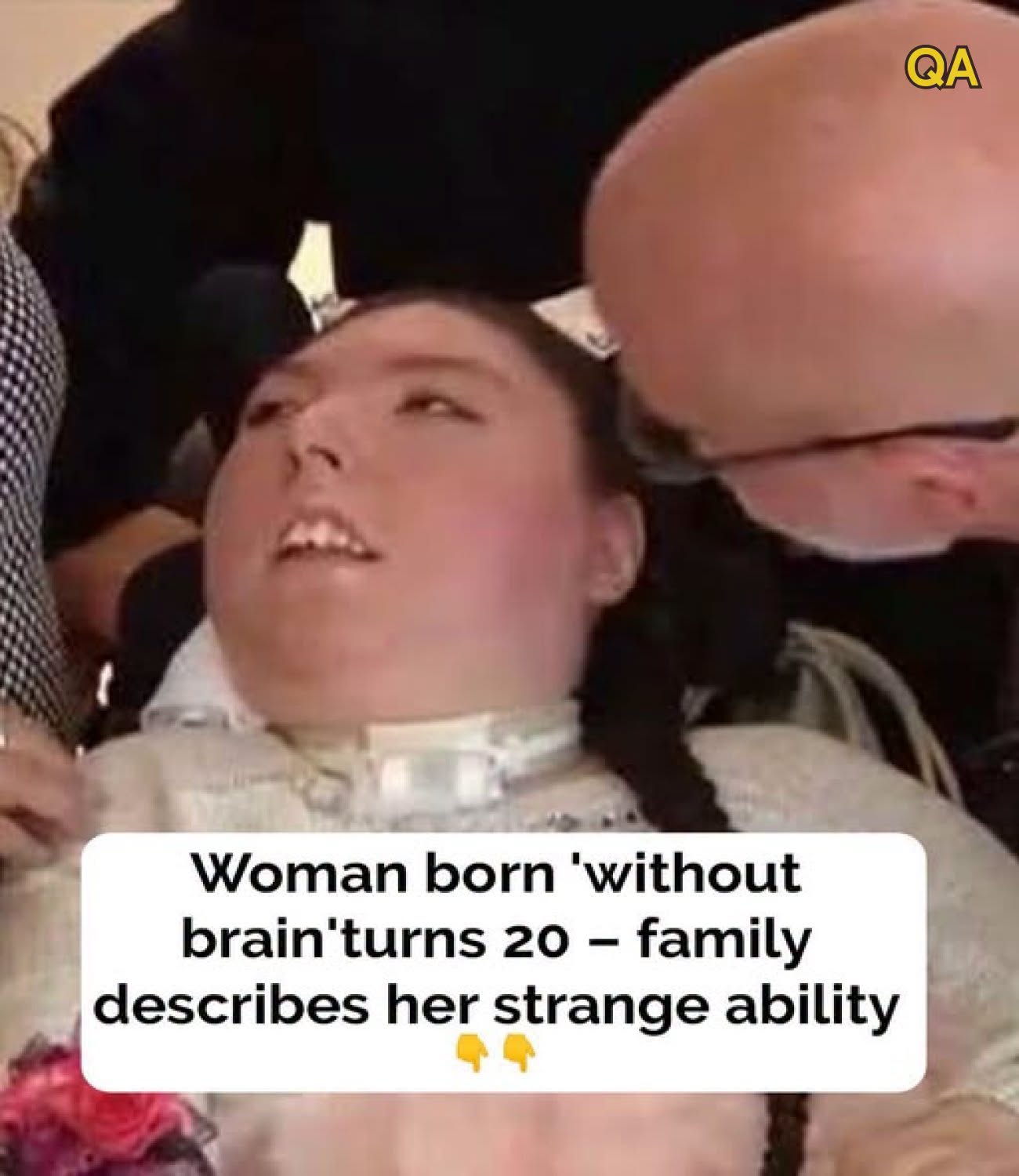
When Alex Simpson was just two months old, her parents received news that would change their lives forever.
Their daughter had been born with hydranencephaly, a rare neurological condition in which much of the brain’s cerebral hemispheres are absent and replaced by fluid.
Doctors gave Alex’s parents, Shawn and Lorena Simpson, an extremely difficult prognosis. According to the family’s account, they were told their daughter was unlikely to survive beyond early childhood.
But Alex continued to surprise them.
Years passed.
Then birthdays.
And in 2025, Alex reached a milestone her family once feared they would never see:
Her 20th birthday.
A Diagnosis Her Parents Never Expected
Alex was born in Nebraska and initially appeared healthy.
Two months later, however, her family learned she had hydranencephaly.
The condition affects brain development before birth and is exceptionally serious. The cerebral hemispheres—which normally make up a large portion of the brain—are largely absent in people with the condition.
For Shawn and Lorena, understanding the diagnosis was only the beginning.
They also had to confront enormous uncertainty about how long their daughter might live.
According to the family, doctors warned them not to expect Alex to survive beyond approximately four years old.
For new parents, it was devastating news.
Her Parents Focused on One Day at a Time
Instead of knowing what the future would bring, the Simpsons concentrated on caring for their daughter.
When Alex reached her 20th birthday, her parents were asked how they believed she had survived for so long.
Their answer was simple:
Love.
Shawn has also spoken about the role their faith played in helping the family through years of uncertainty.
Looking back on the beginning of their journey, he recalled how frightened they had been.
They couldn’t know whether Alex would reach another birthday, much less adulthood.
Her Mother Remembered Sleepless Nights
When Alex was younger, Lorena described just how frightening those early years had been.
At night, she would stay close to her daughter, repeatedly checking that she was breathing and moving.
The uncertainty continued for years.
For many families dealing with a serious medical diagnosis, milestones that others take for granted can carry an entirely different meaning.
A birthday isn’t simply another year.
It can represent another year that once seemed impossible.
For the Simpsons, Alex’s 20th birthday represented two decades of caring for a daughter whose future had initially been described in very limited terms.
Alex Experiences the World Differently
Alex has significant disabilities associated with her condition and requires extensive care.
According to her family, she cannot see or hear in the conventional sense.
Still, those closest to Alex believe she responds to their presence.
Her father has described moments when he feels she recognizes that he is nearby.
Her younger brother, SJ, has expressed something similar.
He believes Alex is sensitive to the emotions of people around her, even when nobody is speaking.
These observations are the family’s personal interpretation of their experiences with Alex, but for them, those moments have become an important part of their relationship with her.
Her Brother Has Grown Up Beside Her
Alex’s story isn’t only about parents caring for their daughter.
Her younger brother has also spent his life with Alex as part of his everyday world.
He has spoken about believing that his sister can sense when someone nearby is stressed or emotional.
Growing up with a sibling who requires significant care can shape family life in ways outsiders may not always see.
For the Simpsons, Alex isn’t defined simply by a medical diagnosis.
She’s their daughter.
She’s a sister.
And she’s been at the center of their family for two decades.
Her Father Wants People to Look Beyond Disability
Over the years, Shawn has also addressed the insensitive comments the family has encountered.
He has spoken about wanting people to understand that severe disability doesn’t erase someone’s value or their place within a family.
That’s an important part of how the Simpsons tell Alex’s story.
Her life shouldn’t be reduced to a comparison between what doctors initially expected and how long she has survived.
For her parents, her value was never determined by whether she could reach a particular age or accomplish conventional milestones.
They wanted their daughter to experience as much comfort, care and connection as possible.
Twenty Years the Family Once Couldn’t Imagine
When Alex was an infant, her parents were preparing themselves for the possibility that their time together would be very short.
Instead, they watched her reach five years old.
Then ten.
Then her teenage years.
And eventually twenty.
Reaching adulthood doesn’t change the seriousness of Alex’s condition or the challenges her family faces.
But it does make her story unusual.
A family that once feared their daughter might not survive childhood has now spent two decades loving and caring for her.
More Than a Medical Diagnosis
Stories involving rare medical conditions can easily become focused on dramatic predictions and statistics.
But behind those numbers are real families living ordinary days under extraordinary circumstances.
There are appointments and sleepless nights.
There are difficult moments.
There are also birthdays, family memories and milestones.
For Shawn, Lorena and SJ, Alex has never simply been “the girl with hydranencephaly.”
She’s Alex.
And after years of uncertainty, celebrating her 20th birthday gave the family another milestone they once weren’t sure they would ever experience.
Her journey is a reminder that a medical prognosis can help families understand what may happen, but it cannot describe every individual’s future with certainty.
For the Simpson family, twenty years together have already exceeded what they once believed was possible.
And that made Alex’s 20th birthday something especially worth celebrating.
Note: This article discusses a rare and serious medical condition and is intended for general informational and human-interest purposes. Individual outcomes can vary considerably, and medical information should not replace advice from qualified healthcare professionals.