
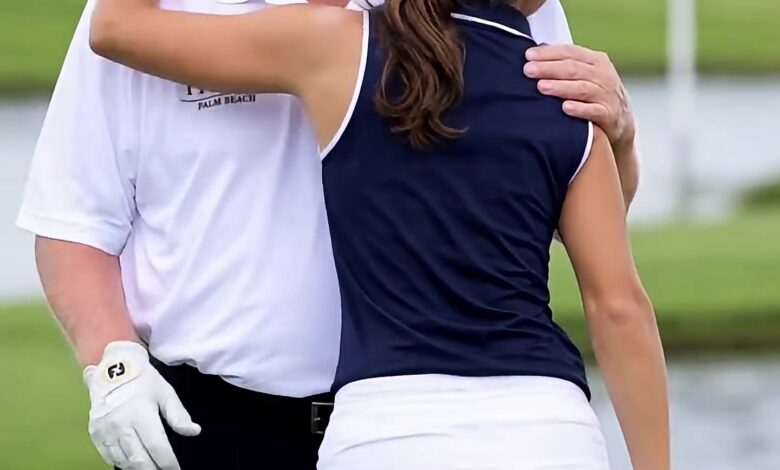

Kai’s description of her grandfather differs from the public image built through rallies, television, and political conflict. At home, she says, the relationship is shaped by ordinary family habits: conversations about school, teasing, encouragement, and competition on the golf course. Those details explain why she wanted people to see the private person she knows rather than only the political figure discussed every day.
Golf gives the two a shared language. Donald Trump has spent decades around the sport, while Kai has worked to build her own record through practice and tournament play. Their rounds are competitive, but they also provide time together away from formal events. She has said he does not simply let her win, a detail that reflects both his personality and her desire to earn success.
Her appearance at the Republican National Convention introduced her to a much larger audience. Speaking soon after the shooting placed her in an emotional position: she was addressing a national political gathering while reacting as a granddaughter who had nearly lost someone close to her. The moment made their bond visible without requiring her to adopt every part of his public role.
Kai is now trying to manage attention on her own terms. Her goals center on education and golf, and she has used social media to show training, family moments, and parts of teenage life. Carrying the Trump name guarantees scrutiny, yet her comments suggest she wants achievement to come from her own work.
The relationship she describes is therefore both unusual and familiar. Few teenagers have a grandfather who has served as president, but many recognize the mix of affection, pride, advice, and playful rivalry between generations. Behind the security, cameras, and political arguments, Kai’s account is ultimately about a granddaughter who sees family before fame.