
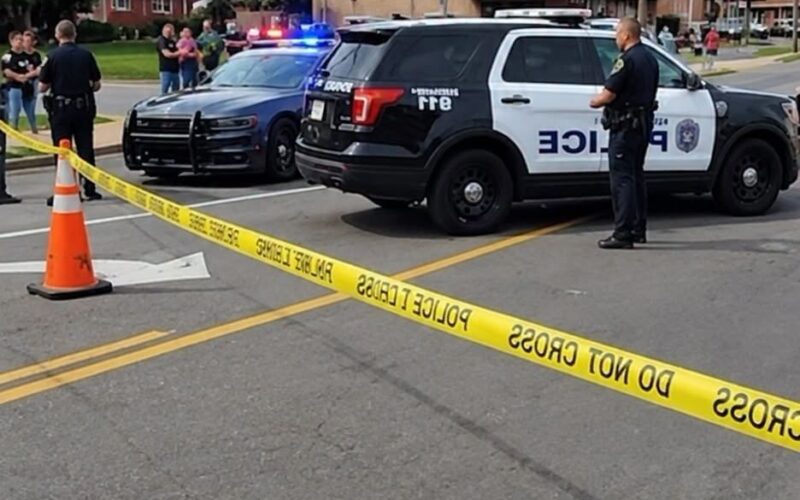

For people who happened to be nearby, the sudden appearance of police vehicles, emergency lights, and personnel created an atmosphere of uncertainty.
However, the visible response did not necessarily reveal exactly what authorities were dealing with.
Why Authorities Create Perimeters
When police respond to an incident that could present an unknown risk, establishing a perimeter can be an important precaution.
Restricting access allows emergency personnel to work without interference and gives authorities greater control over the area while they gather information.
It can also protect members of the public from accidentally entering a location where police or emergency crews are operating.
For that reason, officials may ask people to leave the area or remain indoors even before all details have been made public.
Residents Asked to Follow Instructions
People in the surrounding area were encouraged to follow official instructions and avoid unnecessary travel through the affected zone.
Businesses and transportation services may also experience temporary interruptions during a major emergency response.
Although closures can be inconvenient, attempting to bypass police barriers or entering restricted areas can create additional risks for both civilians and emergency workers.
The safest approach is generally to follow instructions from local authorities and wait for verified information.
Social Media Can Add to the Confusion
Large emergency responses often attract significant attention online.
Photos and videos can spread quickly, sometimes before authorities have released an official explanation.
That can lead to speculation about what is happening.
A dramatic photograph of police vehicles, for example, may show the scale of the response without explaining the reason for it.
This is why residents should be cautious about treating unverified social-media posts as confirmed information.
Official police, emergency-management, transportation, or local government channels are generally better sources for confirmed updates.
Why Details May Be Limited
Authorities do not always release every detail immediately.
During an active operation, information may be withheld temporarily for operational, investigative, or safety reasons.
That doesn’t necessarily mean officials are concealing something unusual. It can simply reflect the fact that emergency situations develop quickly and information can change as responders assess the circumstances.
As more facts become available, authorities may provide additional guidance to the public.
The Most Important Message
Whatever the specific circumstances of an emergency, the public’s role is relatively simple: stay away from restricted areas, follow official instructions, and avoid spreading information that has not been verified.
Emergency responders need room to work, and unnecessary crowds can make an already complicated situation more difficult to manage.
For people nearby, the sudden sight of police vehicles and emergency crews can understandably be unsettling.
But the presence of a large response alone does not establish what caused the incident or how serious the underlying situation ultimately is.
Stay Informed, but Don’t Speculate
Until authorities provide confirmed information, it is better to focus on practical safety instructions rather than rumors.
If you’re near an active emergency scene, give responders space, respect road closures, and rely on official updates for developments.
The situation may change quickly, but one message remains consistent:
If police ask the public to stay away, the safest choice is to keep your distance and allow emergency personnel to do their work.