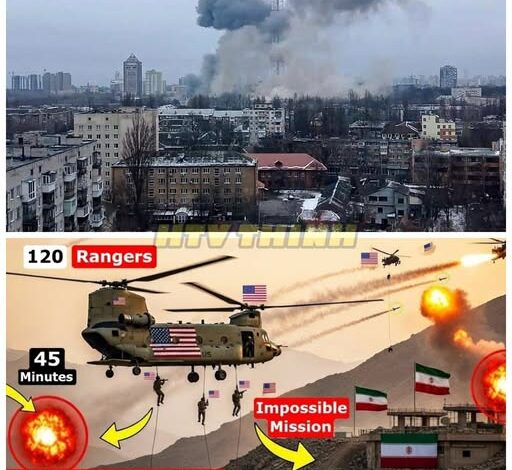
Elite Training and Preparation
The fictional team in this story represents soldiers similar to those trained in units like the 75th Ranger Regiment, known for their rigorous preparation and precision-based missions.
Unlike large conventional forces, small special operations teams are designed for fast, targeted actions. Their training often includes mountain navigation, survival in harsh environments, close-quarters combat, and intelligence recovery.
Before deployment, the team carefully inspected their gear. Their equipment included advanced night-vision optics, lightweight protective armor, suppressed weapons designed to reduce noise, and specialized tools for opening reinforced doors.
A Difficult Target
The objective was a hidden installation carved deep into a mountainside. From the outside, it appeared almost invisible—blending into the natural rock formations and snow-covered slopes.
Inside, however, the facility was believed to contain important communications equipment and stored data that could reveal valuable information.
Because of the difficult terrain and strong defenses, military planners concluded that a large operation would be too risky. Instead, a small, highly coordinated team would attempt a quiet infiltration.
The Insertion
Under the cover of darkness, helicopters flew low through the mountain valleys. The pilots had to carefully navigate unpredictable winds and steep cliffs while avoiding detection.
Once the aircraft reached the designated drop zone, the soldiers quickly disembarked and began moving silently across the frozen landscape.
For nearly twenty minutes, they advanced through the snow, avoiding observation posts and patrol routes. Their progress relied on careful timing and constant communication using hand signals and secure radio transmissions.
Entering the Facility
When the team reached the tunnel entrance leading into the installation, they prepared for the next phase.
A small breaching charge opened the reinforced door, and the mission clock began ticking.
Inside the facility, the environment changed dramatically. Concrete corridors and metal doors replaced the cold mountain air. Bright lights flickered overhead, and alarms soon began sounding as security forces realized the installation had been breached.
The team moved carefully through the corridors, securing key areas and preventing communications from reaching outside units.
A Race Against Time
The most critical task belonged to the mission’s technical specialist. While other members secured the surrounding rooms, the specialist connected a secure device to the facility’s data system.
Downloading large amounts of encrypted information can take time, and every minute increased the risk of confrontation with responding security forces.
Meanwhile, the rest of the team focused on controlling key intersections in the building to slow any counter-response.
Extraction
After what felt like an eternity—but was actually less than an hour—the technician signaled that the data transfer was complete.
The team began their withdrawal immediately.
Using coordinated movements, they retraced their path through the tunnels and exited the facility. Outside, helicopters were already approaching the extraction point.
Snow whipped through the air as the aircraft hovered just long enough for the team to climb aboard.
Moments later, the helicopters disappeared into the night sky as vehicles approached the mountain installation.
A Mission Measured in Minutes
The operation lasted just 45 minutes, but within that short time the team completed its objective and safely departed.
Stories like this fictional scenario capture public interest because they highlight qualities often associated with elite military units—teamwork, preparation, discipline, and the ability to perform under intense pressure.
While the events described here are fictional, the level of coordination and training required for complex operations in extreme environments reflects the professionalism expected of modern special operations forces.
In situations where every second counts, preparation and teamwork can make all the difference.