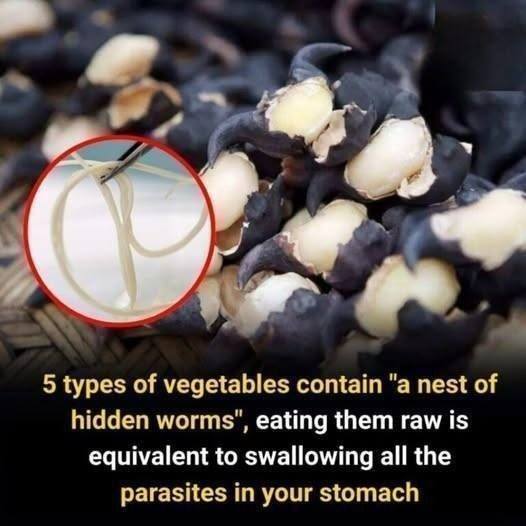
Parasites are often portrayed as something out of a horror story—tiny organisms that invade the body, steal nutrients, and cause illness. While that image may sound dramatic, the reality isn’t far off. For centuries, parasites have posed serious health risks to humans. Even today, nearly two billion people around the world are infected each year, and hundreds of thousands of lives are lost as a result.
Advances in sanitation and public health have helped many countries, including Vietnam, reduce the spread of several parasitic diseases. However, everyday habits—especially how food is prepared—can still create opportunities for infection. Certain vegetables, particularly those grown in wet or muddy environments, can become breeding grounds for parasites if they are eaten raw or undercooked.
Water chestnut, for example, commonly grows in swamps and rice paddies. Because of this environment, it can easily carry harmful bacteria or worms. Eating it raw may lead to digestive discomfort, especially for people with sensitive stomachs.
Water celery is another vegetable that thrives in damp soil and muddy water. These conditions can make it a potential host for liver flukes—parasites that may spread from livestock to humans when the plant is consumed without proper cooking.
Arrowhead, known for its nutritional value, can also provide a surface where parasites attach. If it isn’t cooked thoroughly, these organisms may enter the body and lead to infection.
Water caltrop, often enjoyed for its sweet, nutty flavor, is frequently eaten raw in some regions. However, it can harbor worms that may cause stomach pain, diarrhea, or even anemia if consumed without proper preparation.
Lotus root, which grows in muddy ponds, can also carry parasite eggs such as schistosomes. When eaten raw, these organisms may reach the intestines and potentially trigger digestive problems, including irritation or ulcers.
Fortunately, preventing parasitic infections is relatively simple. Washing vegetables thoroughly, cooking them at safe temperatures, and maintaining good kitchen hygiene can significantly reduce the risk. Peeling, boiling, or steaming vegetables—especially those grown in aquatic environments—helps eliminate many harmful organisms before they reach the plate.
Modern sanitation has lowered the overall risk, but awareness remains essential. Knowing which foods require extra care during preparation allows people to enjoy nutritious vegetables while protecting their health. After all, prevention through safe handling and cooking is far easier than dealing with illness later.
Have you ever heard of these vegetables being linked to parasites? Share your thoughts or food safety tips in the comments and help others stay informed.