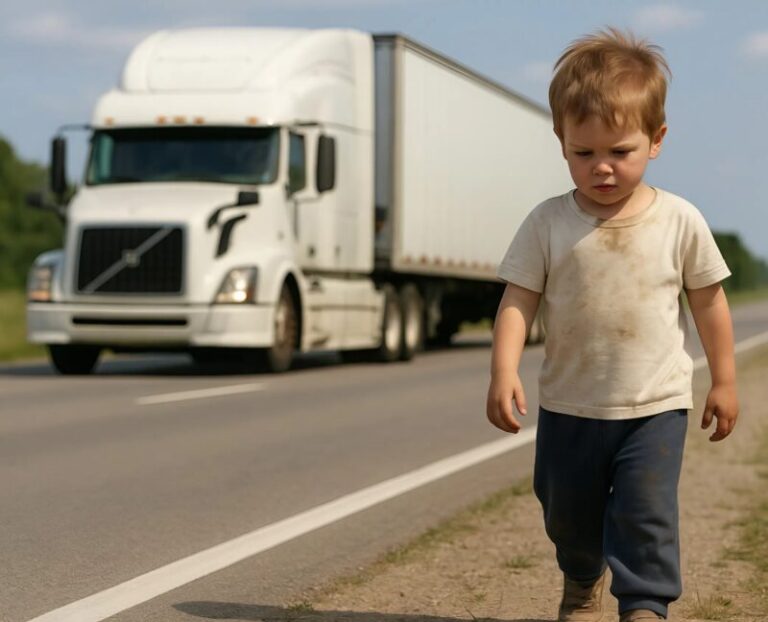
A routine patrol along a quiet stretch of highway was supposed to end like any other shift—uneventful, predictable, forgettable. But that night, it didn’t.
The officer first noticed something small, almost easy to miss in the blur of headlights and asphalt. A child. Alone. Walking too close to speeding traffic.
At first, it didn’t even feel real. A toddler, no more than three years old, swaying unsteadily at the edge of danger as cars rushed past him without slowing. The world around him moved too fast, too loud, too indifferent.
The officer slammed on the brakes.
By the time he reached the roadside, the boy was standing still, as if he had run out of strength to keep going. His clothes were torn and dirty, his face streaked with dust and tears that had already dried and been replaced more than once. He didn’t run toward help. He didn’t call out. He just looked up, lost in a silence that felt too heavy for someone so young.
“Hey… hey, it’s okay,” the officer said softly, lowering himself to the child’s level.
No response. Only trembling lips and a sudden burst of tears.
When asked where his parents were, the boy didn’t answer. He couldn’t. Whatever had brought him here had taken more from him than words could carry.
Carefully, the officer lifted him into his arms and rushed him into the patrol vehicle, shutting out the dangerous world of the highway behind them. Only then did the boy begin to calm, clinging weakly to the officer’s jacket as if it was the only solid thing left in his world.
At the nearest station, medical staff rushed to examine him. Dehydration. Minor cuts. Exhaustion. But alive. That was the first miracle.
Keep reading…