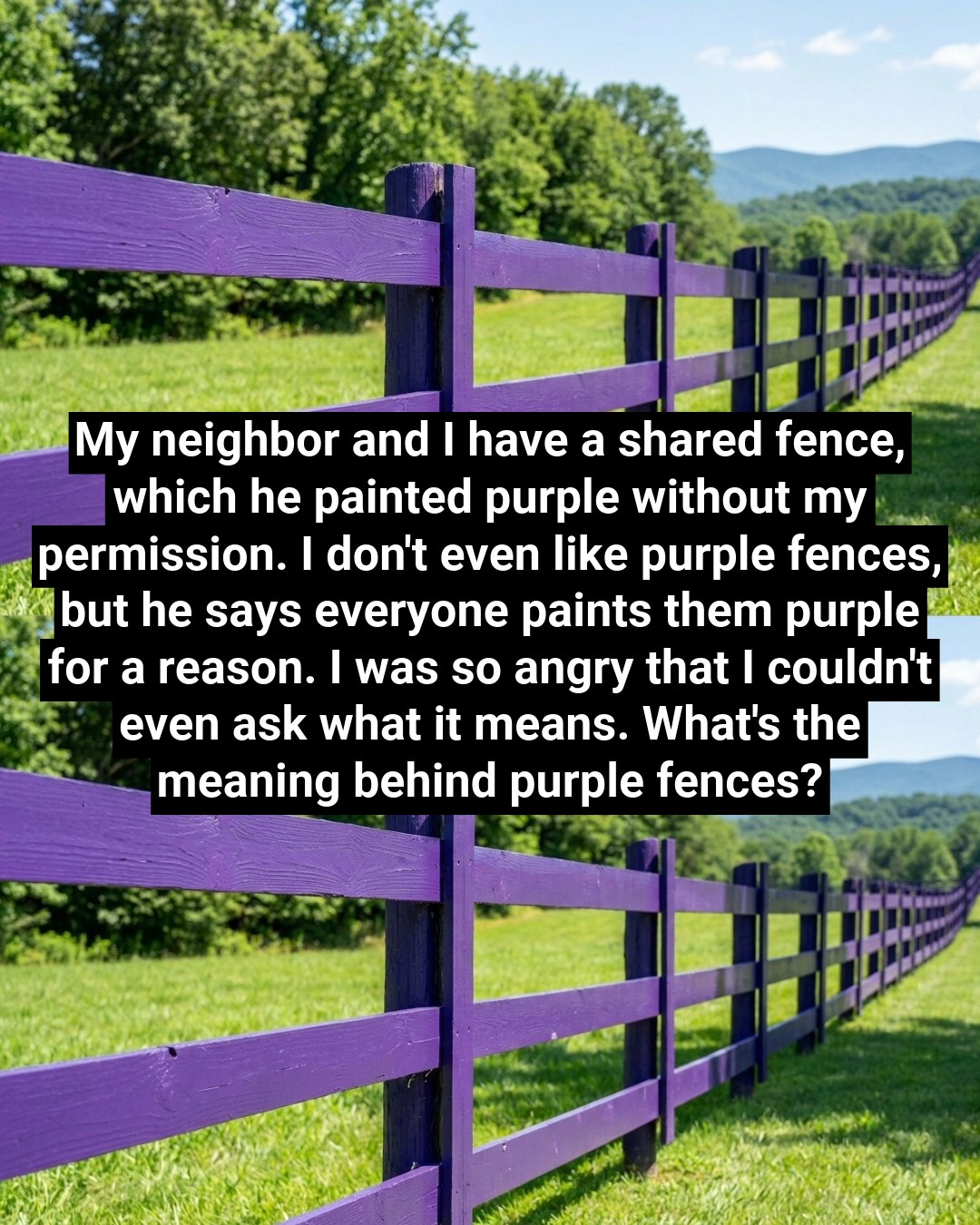
At first glance, a purple-painted fence might look like nothing more than an unusual design choice—something decorative, maybe even artistic. But in several U.S. states, that color can carry a meaning far more serious than aesthetics. It can serve as a clear legal boundary, signaling that the land beyond it is private property and not open to public access.
The system is simple but intentional. Instead of relying solely on traditional “No Trespassing” signs, some property owners use vertical purple markings painted on trees, posts, or fences. These marks are typically standardized: narrow vertical stripes placed at regular intervals and at a visible height. The goal is consistency—making the message recognizable even if a physical sign is damaged, removed, or overlooked.
For hunters, hikers, and anyone exploring rural or wooded areas, this detail matters. In states where “purple paint laws” are recognized, these markings carry legal authority similar to posted signage. In other words, crossing that boundary without permission is not considered casual wandering—it is treated as trespassing under the law.
The reason for this approach is practical. In large rural properties, signs can be expensive to maintain and easy to miss. Weather, wildlife, and time can all damage them. Paint, on the other hand, is more durable and can be applied across long stretches of land in a way that remains visible for years. It creates a consistent visual warning that doesn’t rely on words alone.
Keep reading…