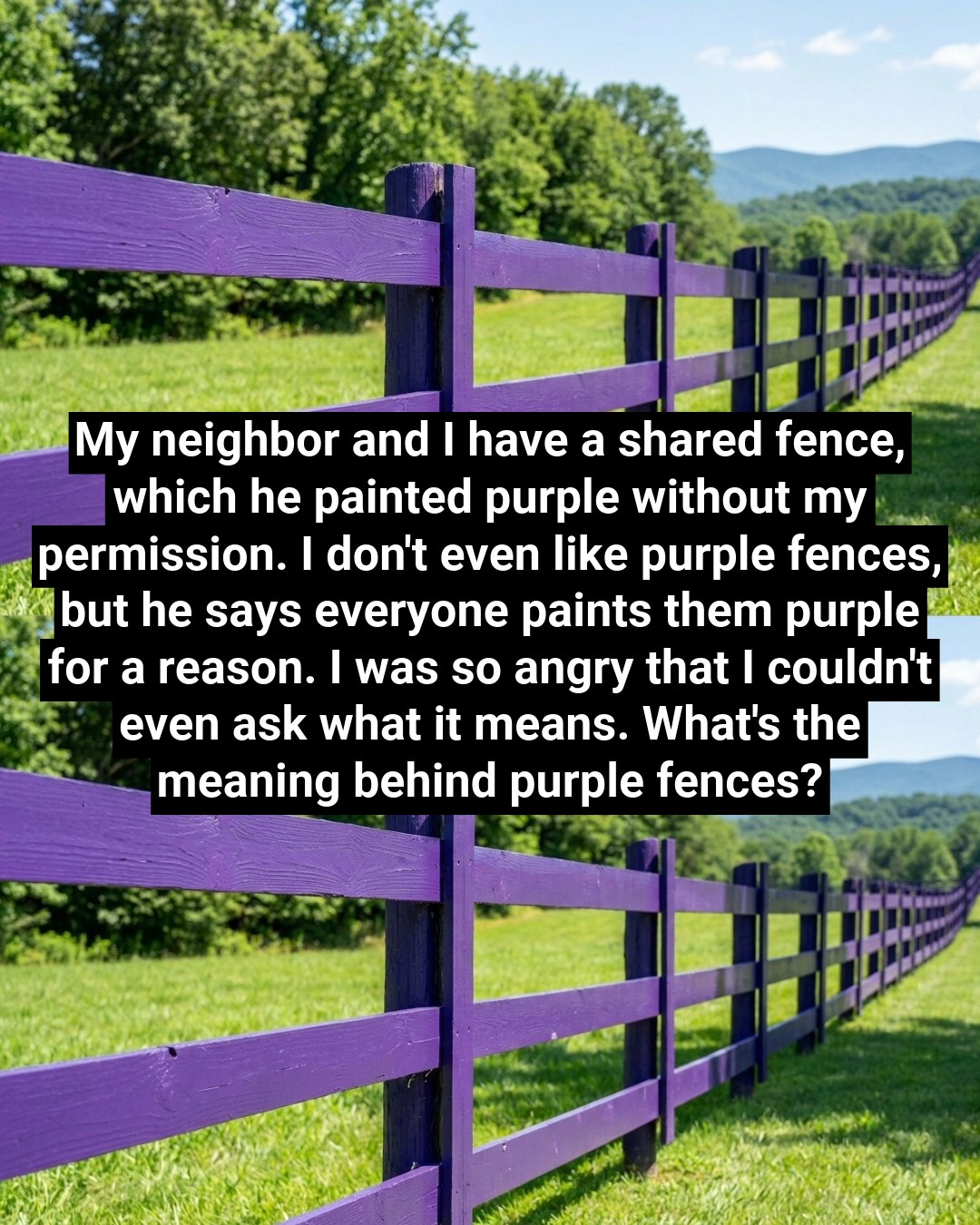
Still, many people are unaware of what the color actually means. A purple stripe on a tree or fence can easily be mistaken for marking utility work, trail indicators, or even random graffiti. That misunderstanding is where problems often begin. Someone unfamiliar with the law might step onto private land without realizing they are crossing a clearly marked boundary.
This is why awareness is so important. Outdoor safety is not just about weather, terrain, or wildlife—it also includes understanding property laws that vary from state to state. What is acceptable in one area may carry legal consequences in another.
For landowners, the system provides a practical way to protect property without constant maintenance of physical signs. For the public, it serves as a reminder that access is not always open, even when land appears empty or unguarded.
Ultimately, the purple fence or marking is less about color and more about communication. It quietly establishes a boundary that must be respected, whether noticed immediately or not.
If you spend time outdoors—whether hiking, hunting, or exploring unfamiliar areas—it’s worth learning these visual signals. A simple color on a fence or tree might be the only warning you see before stepping onto private land.
If you found this useful, stay informed about other lesser-known outdoor rules and signals that can help you explore safely and responsibly.