 Home & Living
I Found a Strange Little Tube on My Floor—What Could Be Hiding Inside?
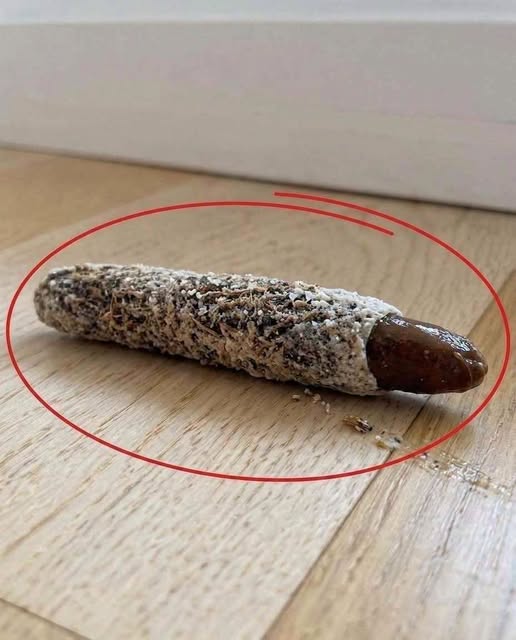
At first glance, it might look like a tiny piece of lint, a bit of dried plant material, or a small tube made from dust. But if you spot a narrow, brownish case lying near a wall or tucked beside a baseboard, it could be something more interesting: the portable shelter of an insect larva.
One possible explanation is a case-bearing moth larva, sometimes known as a household casebearer. These small creatures build protective coverings from silk and materials collected from their surroundings, creating cases that can blend in surprisingly well with household dust and debris.
Although the discovery may be unexpected, there is usually no need to panic. Learning what the object might be—and checking for other signs of insect activity—can help you decide whether any action is necessary.
What Is This Tiny Tube?
Some moth larvae create small, elongated cases that serve as both shelter and camouflage.
The case may contain silk mixed with dust, hair, fibers, and other tiny particles. Depending on the species and the materials available, it can appear gray, brown, or unevenly textured.
Household casebearers are known for producing narrow, spindle-shaped coverings that are open at both ends. The larva can extend part of its body through an opening to move around, then retreat inside when disturbed.
Because the outer surface resembles ordinary debris, these cases can easily go unnoticed until someone spots one on a floor, wall, or near a piece of furniture.
Why Would an Insect Carry Its Own Shelter?
The case is more than a random collection of dust.
For a case-bearing larva, it provides a mobile hiding place while the insect develops. Rather than remaining inside a fixed nest, the larva can move around while carrying its protective covering.
The materials on the outside can also help the case blend into its surroundings.
 Up Next: Page 2 of 3
This is a useful example of how small insects adapt to their...
If the object is a household casebearer case, it may turn up in places where dust, hair, fibers, and spider webs accumulate.
Continue Reading