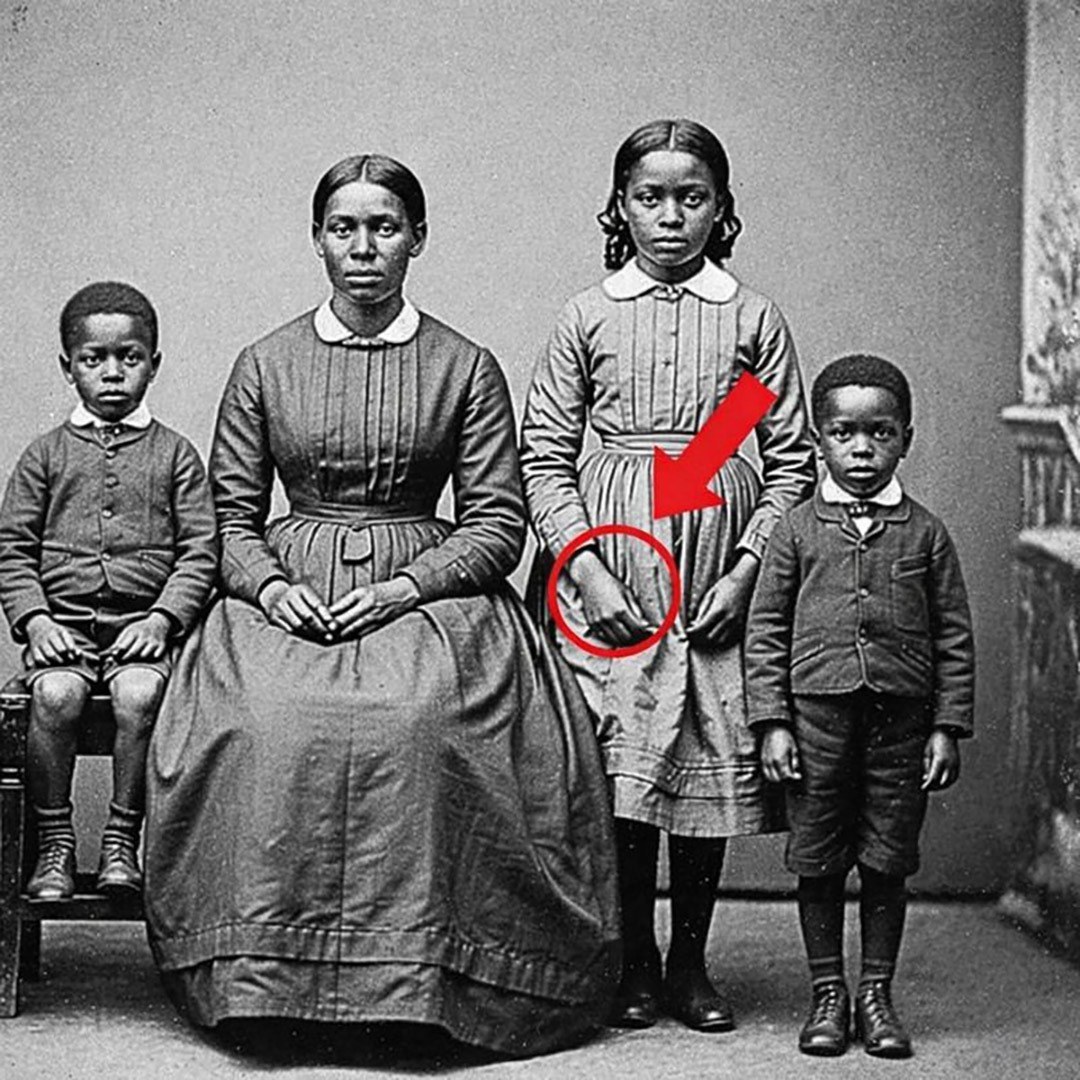
Time has a way of softening even the harshest truths, but some stories refuse to be quiet. One such story began with a sepia-toned photograph from 1872, long forgotten in the archives—a seemingly ordinary Victorian family portrait: a mother, father, and five children, dressed stiffly, staring solemnly at the camera. At first glance, it was just another relic of the post-Civil War era.
But historian Sarah Mitchell in Richmond, Virginia, saw more. While digitizing old records, she zoomed in on the children. One girl, standing near the center, had something that froze her blood: faint, circular marks on her wrist, etched deep enough to survive the decades. They weren’t fabric creases. They weren’t accidental. They were scars from iron shackles—evidence of a childhood shaped by slavery.
The photograph’s peaceful veneer shattered. It was no longer just a family record; it was a testament to survival. A nearly invisible stamp on the print read “Moon” and “Free,” leading Sarah to Josiah Henderson, a Reconstruction-era African American photographer who documented families reclaiming their freedom. Henderson’s studio was a haven where formerly enslaved families could claim their dignity and assert their existence in a world that had treated them as property.
Through careful research—census records, church ledgers, property deeds—Sarah traced the family: the Washingtons. James, a laborer, and Mary, his steadfast wife, had built a home and a future for their children. The girl with the marked wrists was Ruth. Her scars told a story of a childhood that had been controlled and constrained, yet here she stood, clean, dressed, and alive in a world she had fought to enter.
Continue reading on next page…