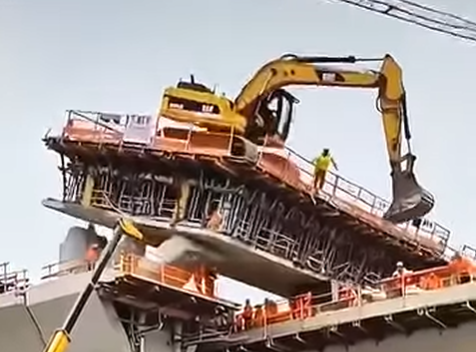
In civil engineering, a single second can mean the difference between routine work and disaster. That reality hit hard recently when an evacuation team narrowly escaped a structural failure on a major elevated highway. The sound of cracking concrete and groaning steel echoed like a warning from the past—evoking memories of the 2007 I-35W bridge collapse in Minneapolis. These incidents, decades apart, underscore the ongoing risks of aging infrastructure and the critical importance of safety protocols.
The highway section in question was under active renovation when chaos struck. Witnesses described a sudden, primal alarm as the roadway began to sag. Construction crews moved with practiced precision, abandoning lifts and scaffolding as alarms blared. Thanks to rapid-response training developed after past disasters, every team member escaped unharmed. The incident sparked urgent discussions about the hidden vulnerabilities in bridges and elevated roads traveled by millions every day.
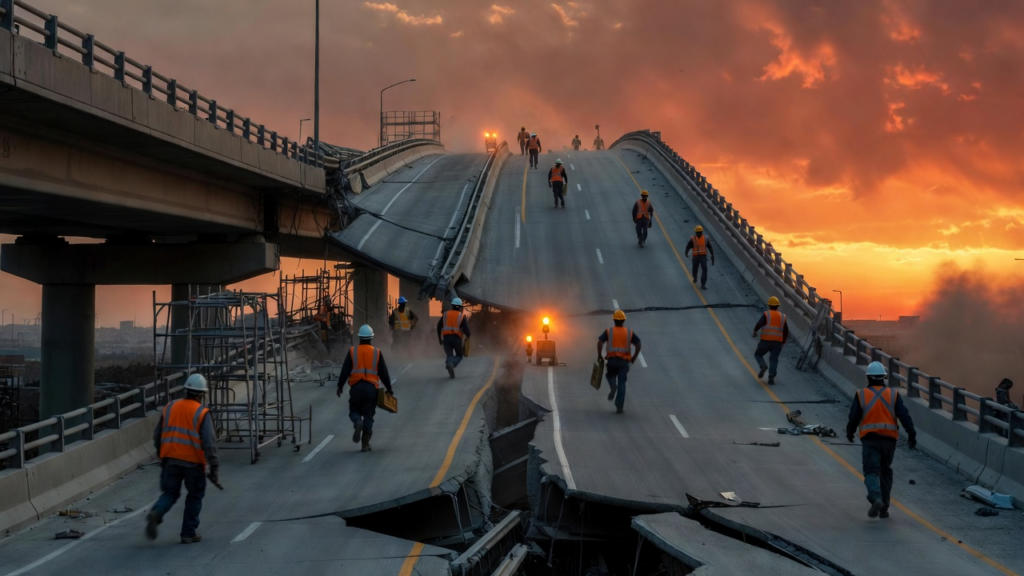
The I-35W collapse is a grim benchmark. On August 1, 2007, a steel-truss bridge over the Mississippi River gave way during evening rush hour, sending 100 vehicles into the water. Thirteen lives were lost, 145 injured, and a school bus teetered on a slab of broken concrete—its young passengers narrowly escaping. The NTSB investigation revealed a lethal design flaw: undersized gusset plates, half the thickness needed to support the bridge’s weight. Years of traffic, construction, and added load had created a ticking time bomb.
Continue reading on next page…