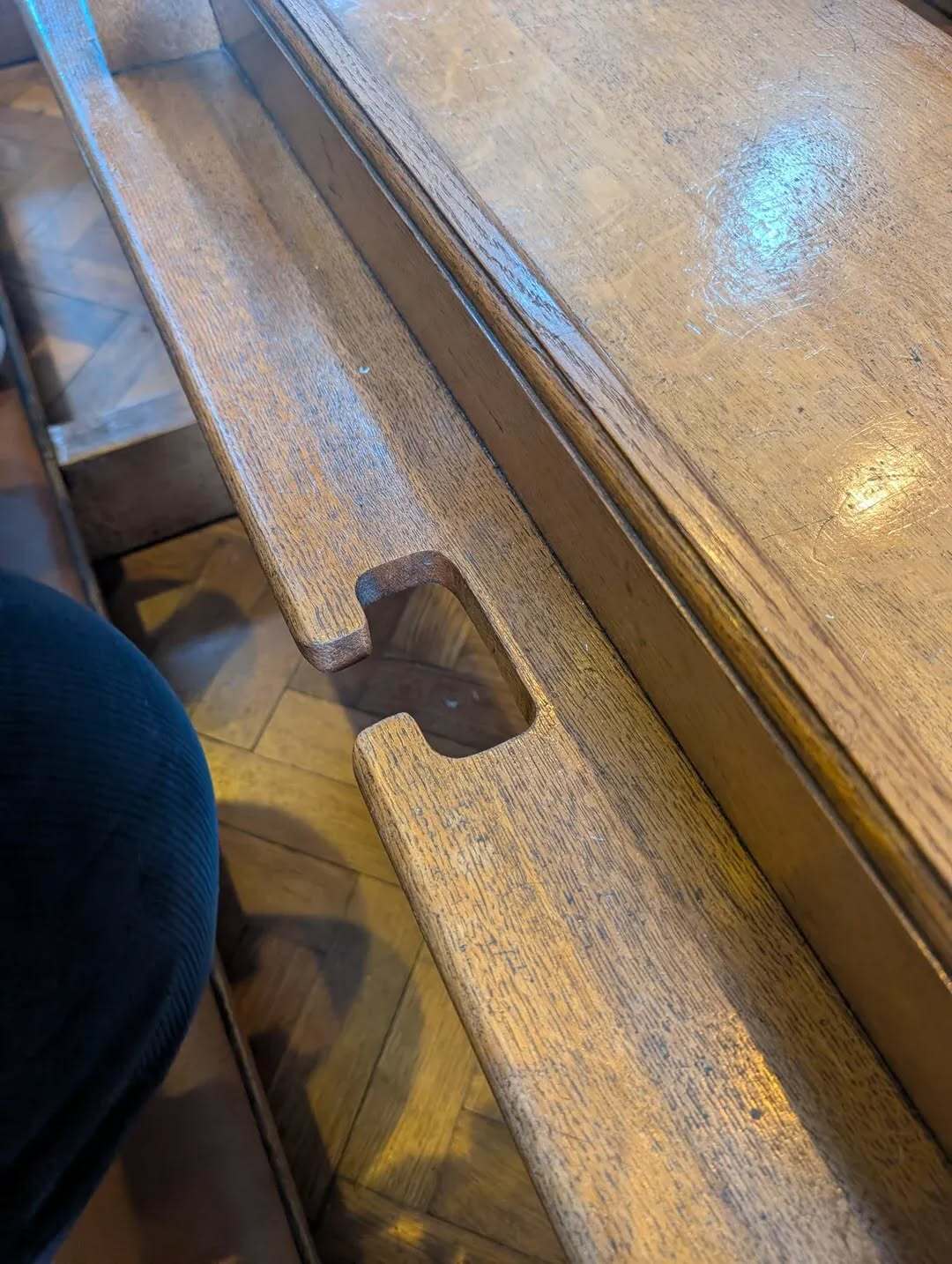
At first glance, it looks like nothing more than a simple wooden bench in a quiet church. But as with many ordinary objects, the smallest details often carry the deepest stories. Take the carved slot along the pew—it may seem like a minor design feature, but it reveals how thoughtfully these spaces were created for centuries of worshippers.
Churches have always been more than just buildings. They are sacred spaces of reflection, connection, and shared human experience. The smooth, worn wood of this pew tells a story of years of use: generations kneeling in prayer, families sitting side by side during weddings, grandparents whispering guidance to children during baptism, and quiet moments of personal contemplation. Each scratch, polish, and indentation is a testament to lives lived in devotion and community.
The carved opening in the bench, which might seem unusual today, served practical purposes rooted in tradition. Some pews were designed to hold hymnals or prayer guides, keeping them within easy reach during services. Others allowed space for personal belongings, or even facilitated easier movement or kneeling during prayer. These details may have been subtle, but they mattered deeply—helping worshippers focus, move comfortably, and participate fully in the rituals that defined their faith.
Over time, these features became part of the churchgoing experience, blending function with ceremony. Pews evolved alongside traditions, reflecting a thoughtful balance between comfort, usability, and spiritual engagement. They were silent facilitators of ritual, unnoticed by many, yet essential to the rhythm of worship.
Continue reading on next page…