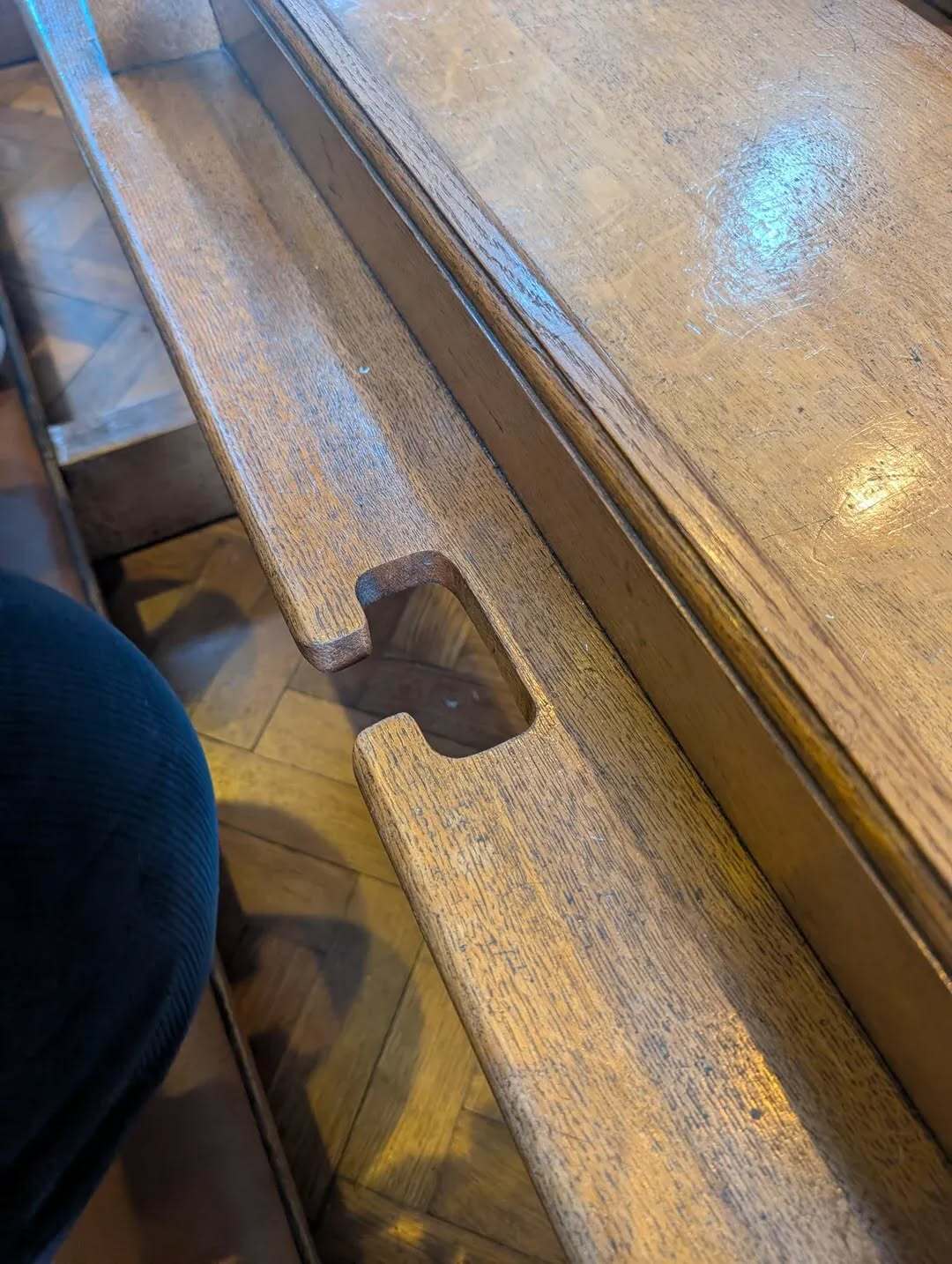
Beyond practicality, these benches carry profound emotional weight. Families may have sat in the same spot for decades, returning year after year for holidays, weddings, funerals, or quiet reflection. The polished surfaces, softened by countless hands and knees, are witnesses to the joys and sorrows of those who came before. Each mark in the wood—whether a scratch from a restless child or a polished curve from decades of use—holds a story, a memory, a fleeting moment of human life now preserved in time.
Even the smallest pews can evoke nostalgia, grounding visitors in a sense of continuity and belonging. They remind us that tradition isn’t just preserved in architecture or scripture—it lives in everyday details, in the objects that accompany us through life’s milestones. The humble pew becomes a symbol of connection across generations, of shared values, and of the quiet work of creating spaces where people can pause, reflect, and find solace.
In the end, what looks like a simple bench is anything but simple. It is craftsmanship, history, and community carved into wood. It is a reminder that even ordinary objects carry extraordinary meaning when viewed through the lens of care, memory, and purpose. In a world moving faster than ever, these small details invite us to slow down, pay attention, and appreciate the spaces that quietly shape our experiences and connect us to the past.
Have you ever noticed a small detail in a familiar space that tells a bigger story? Share your discoveries in the comments and celebrate the hidden stories all around us!