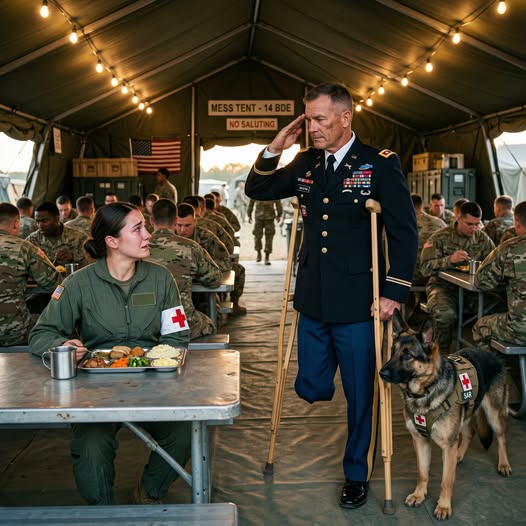
His aides were surprised, but the general paused long enough to look around the room. He noticed the same subtle disruptions I had seen—staff movement that seemed rushed and out of sync.
Trusting the situation, he quietly directed personnel to leave the mess hall in an orderly manner. Within minutes, nearly two hundred people had cleared the area without panic.
A Concerning Discovery
Once the hall was empty, I used a field test strip from my medical kit to check a bowl of leftover soup. The test showed signs of contamination—something that could have caused serious health issues if left unnoticed.
Because the situation was caught early, the base leadership was able to respond quickly and begin an investigation into what had caused the problem.
In a secure briefing room later that morning, General Vance asked me a simple question: how long had I been paying attention to these patterns?
I explained that during my assignment, I had been noting unusual details around certain facilities—things that didn’t match normal operations schedules. My goal wasn’t to accuse anyone, but to make sure potential issues were recognized before they could become real threats.
The Importance of Awareness
Shortly after the discovery, security teams began reviewing access logs and contractor records. The investigation uncovered irregular activity that required further review. Fortunately, early detection helped prevent a situation that could have disrupted operations on the base.
Moments like this highlight something often overlooked: safety doesn’t always depend on rank or title. Sometimes it comes from people who simply notice details others might miss.
For me, that moment also carried personal meaning. My father had served in the military years earlier, and growing up I learned the value of staying alert, disciplined, and prepared to act when something doesn’t feel right.
Lessons That Last Beyond One Day
In the months that followed, the incident became part of a broader training discussion at Fort Resolute. Leadership emphasized the importance of observation, communication, and teamwork—especially in environments where routine can make people less attentive.
Today, I help train new corpsmen and medics on more than just emergency care. We also talk about awareness, responsibility, and the role each person plays in maintaining safety.
Even Ranger sometimes joins the sessions, quietly watching from the side as trainees learn to trust both their training and their instincts.
A Reminder About Paying Attention
The experience reinforced a simple truth: important moments often begin with small observations. A shift in routine, a detail that doesn’t fit, or a quiet signal from someone—or even a trained dog—can make all the difference.
Staying alert isn’t just part of the job; it’s part of protecting the people around us.
Have you ever noticed a small detail that turned out to be more important than it first seemed? Share your story or thoughts in the comments—your perspective might inspire someone else to stay aware too.