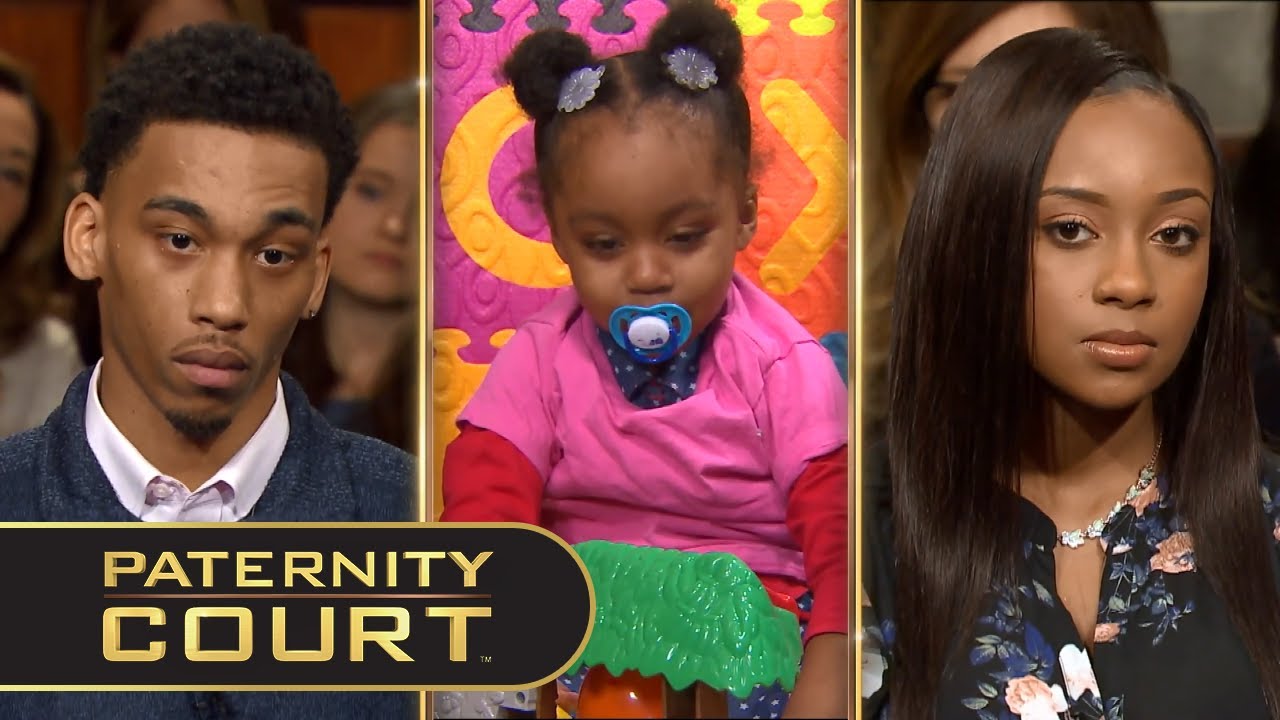
He spoke more calmly, focusing on the need for clarity rather than conflict. Despite the uncertainty, he admitted to forming a connection with the child. For him, the situation wasn’t just about biology—it was about understanding whether that bond had a deeper meaning and whether he needed to step into a permanent role as a father.
This contrast between the two men added another layer to the case.
One driven by doubt, the other by possibility.
As the courtroom discussion continued, it became clear that this wasn’t just about determining paternity—it was about how each individual would respond to the truth once it was revealed. Both men were facing a future that could shift dramatically depending on the results.
The mother, caught between them, shared her perspective.
She acknowledged the complexity of the situation and the emotional consequences of her past decisions. Her testimony reflected both regret and concern, but her focus remained on one thing—her daughter. She emphasized the importance of providing stability and clarity for Avah, regardless of how difficult the process might be.
“I just want what’s best for her,” she explained.
Her words shifted the tone of the room.
Suddenly, the focus moved away from blame and toward responsibility. This wasn’t just about who was right or wrong—it was about what needed to happen next for the child’s future.
The judge, experienced in handling sensitive cases like this, guided the conversation carefully.
Rather than allowing emotions to take over, the judge emphasized the importance of facts. In situations where timelines overlap and memories conflict, assumptions can easily lead to confusion. That’s why the court relies on one thing above all else—evidence.
And in this case, that meant a DNA test.
Both men understood what was at stake. The results would not only answer the question of paternity but also define their roles moving forward. For one man, it could mean stepping into fatherhood with full responsibility. For the other, it could mean letting go of a possibility that had been weighing on him.
As the moment of truth approached, the tension in the courtroom was undeniable.
Every statement, every reaction, led to this point.
When the results were finally revealed, the atmosphere shifted instantly. The answer was clear, leaving no room for doubt or interpretation. While the legal question had been resolved, the emotional impact of that answer was just beginning.
For both men, the outcome required adjustment.
One had to come to terms with the reality of fatherhood, while the other had to process the end of uncertainty. Neither outcome was simple, and both carried emotional weight that would extend beyond the courtroom.
The mother, too, faced the consequences of the situation.
While the truth brought clarity, it also reinforced the importance of the choices that led to this moment. She now had a clearer path forward for her daughter—but also a responsibility to ensure that path was stable and supportive.
This case highlights something important.
Paternity disputes are never just about biology. They are about people, emotions, and the ripple effects of decisions made in uncertain moments. They show how trust can be tested, how relationships can shift, and how the truth—no matter how difficult—remains essential.
For Avah, the answers provided a foundation.
For everyone else, it marked the beginning of a new chapter.
Because while the courtroom can deliver the truth, what comes next depends on how each person chooses to move forward.
What do you think?
If you were in this situation, would you focus on emotional connection or wait for proof before stepping into responsibility? Share your thoughts below and join the discussion.
FULL VIDEO: