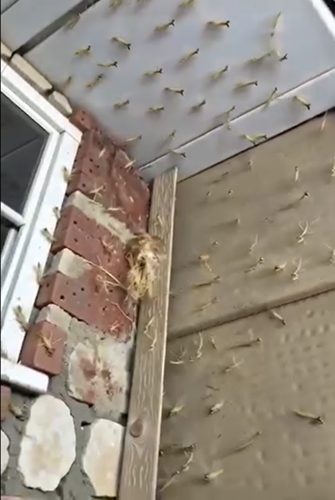
The moment felt peaceful and surprising at the same time — a quiet reminder that nature is always active, even in familiar places.
The Ootheca: Nature’s Protective Nursery
The young mantises had emerged from an egg case called an ootheca. This is a foam-like structure created by a female praying mantis to protect her eggs. After laying them, the material hardens into a durable casing that shields the developing insects from cold weather and predators.
These egg cases are often attached to sturdy surfaces such as branches, fence posts, shrubs, or even the sides of buildings. The eggs remain dormant through winter and hatch in spring when temperatures rise.
Realizing that an ootheca had been quietly attached near my doorway for months was a reminder of how much natural activity happens unnoticed around us.
The First Moments of Life
Newly hatched mantises are called nymphs. They resemble miniature adults, though much smaller and without wings. Unlike insects that go through a complete transformation, mantises grow by molting — shedding their outer layer several times as they develop.
Watching the nymphs disperse was fascinating. Some climbed toward the light. Others moved toward leaves and sheltered areas. At this stage, they are delicate and face many natural challenges in the environment, which makes witnessing a successful hatch feel especially meaningful.
Remarkable Physical Traits
Praying mantises are easy to recognize because of their unique posture. They hold their front legs folded in front of their bodies, which inspired their common name. These front legs are designed for catching prey, allowing them to grasp insects quickly and efficiently.
They also have large eyes and flexible necks that help them observe their surroundings. Even as nymphs, these features are visible in small form, giving a glimpse of the insect’s impressive adaptations.
The Role of Mantises in the Garden
Praying mantises play a helpful role in many outdoor spaces by feeding on a wide range of small insects. Gardeners often appreciate their presence because they can help reduce certain pest populations naturally.
Like many predators in nature, mantises are not selective and may consume a variety of insects. Still, their presence contributes to the balance of local ecosystems and adds to biodiversity in gardens and green spaces.
Seeing so many hatchlings nearby felt like a small promise of a lively, healthy environment around my home.
Observing Without Disturbing
If you ever notice mantis hatchlings near your home, it’s best to observe them without handling them. They are fragile at this stage and can be harmed easily.
Avoiding pesticides in areas where beneficial insects live can help support local wildlife. Providing plants and natural shelter gives young insects places to hide and grow.
Over time, the nymphs will continue to molt and grow, eventually becoming adult mantises by late summer.
A Gentle Reminder from Nature
That quiet morning felt like being invited into a private moment of nature’s cycle. Nothing dramatic happened — just dozens of tiny lives beginning their journey.
It reminded me that renewal often happens quietly and without notice. While we move through our routines, nature carries on its rhythms of growth and change.
Sometimes, all it takes is opening a door on an ordinary morning to discover something extraordinary.