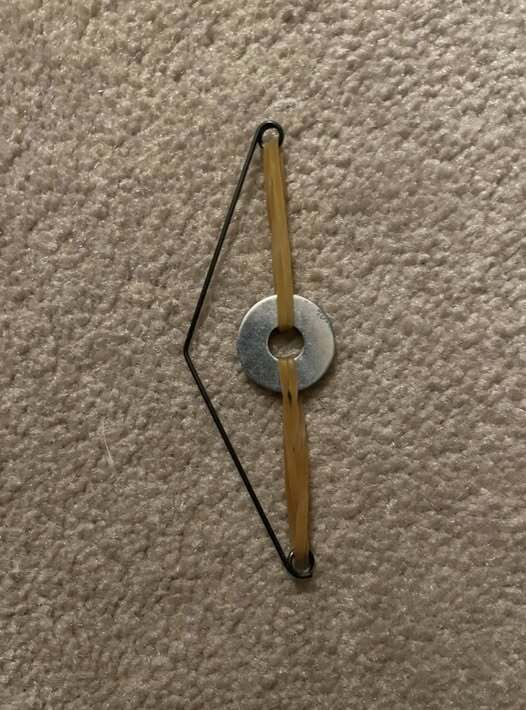
Tucked away in an old drawer, behind forgotten papers or tangled keepsakes, you might stumble across a curious little object—a bent wire frame, a stretched rubber band, maybe a small metal washer. At first glance, it looks like broken scrap.
But for collectors and nostalgia lovers, it often tells a different story.
This is the classic “rattlesnake envelope prank,” a vintage novelty device once designed to turn ordinary mail into a moment of surprise.
A simple idea with a big reaction
Despite its dramatic name, the prank has nothing to do with real snakes and carries no inherent danger when used properly. Its entire effect relies on timing and tension.
The device is compressed into a flat coil and hidden inside a standard envelope. When the recipient opens it, the stored tension is released instantly. The wire springs upward in a sudden motion, creating a quick burst of surprise before settling back down.
It’s simple, harmless, and memorable.
A relic from a different era of humor
Before digital jokes, viral videos, and online pranks, entertainment often came in physical form. Small novelty items like this were sold in joke shops, catalogs, and local stores—especially during the early to mid-1900s.
By the 1930s through the 1950s, envelope-based novelty pranks became especially popular. They were inexpensive, reusable, and easy to share among friends and family.
The appeal was straightforward: surprise someone, share a laugh, and move on.
No screens. No editing. Just a real moment.
Why it worked so well
The brilliance of the design lies in its simplicity. A few basic components—a coiled wire, a rubber band, and a small weight—store just enough tension to create a quick, controlled movement.
When the envelope is opened, that energy is released instantly. The reaction is immediate, often followed by laughter once the surprise is understood.
It was never about fear—it was about timing.
A playful part of everyday life
Keep reading…