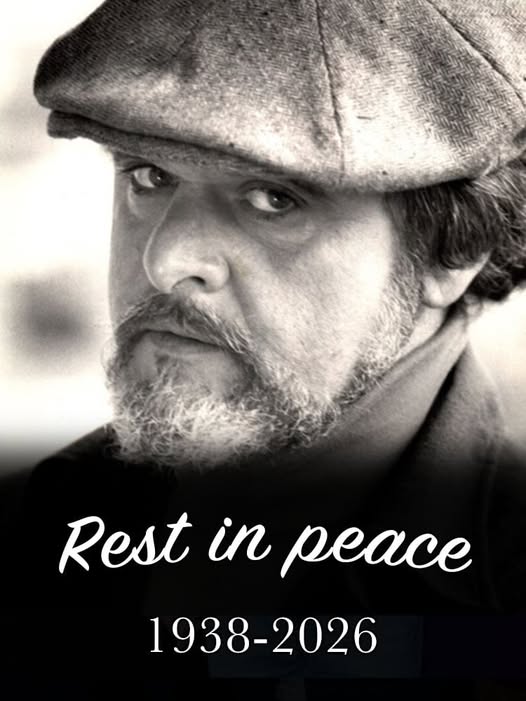
That kind of acting is easy to overlook, but hard to replace.
Some performers are remembered because they take over every frame. Others are remembered because they make the world around them feel real. Anderson belonged to that second group. His work helped build atmosphere, credibility, and emotional depth.
Still, acting was only one chapter of his life.
The more people learned about him, the more they discovered a man whose experiences reached far beyond entertainment.
A Life Rooted in Service and Discipline
Before he became known to audiences, Anderson served in the United States Army Finance Corps.
That part of his life reflected discipline, responsibility, and precision. Military service often demands structure and focus, and those qualities seemed to follow him into later chapters of his journey.
But Anderson was not someone who stayed locked into one path.
After his time in the military, he continued searching for knowledge and purpose. He pursued education, explored different cultures, and developed an understanding of communication that would later shape his work as a teacher, mentor, media professional, and performer.
His life was not built around one profession. It was built around curiosity.
Teaching Shakespeare and Opening Minds
One of the most meaningful parts of Anderson’s career was his work as an educator.
In Florida classrooms, he taught Shakespeare and helped students connect with literature that many young people often find difficult or intimidating. Instead of treating Shakespeare as something distant or overly academic, Anderson brought the material closer to students.
That matters.
A strong teacher does not simply explain words on a page. A strong teacher helps students understand why those words still matter.
Anderson’s work in education showed his respect for language, storytelling, and critical thinking. He understood that literature was not just about memorizing old plays. It was about human emotion, conflict, ambition, love, betrayal, power, and identity.
Those same themes would later appear in the characters and performances that audiences remembered him for.
Building Media Systems Across the World
Anderson’s life also took him into international media work, where his impact reached communities far from American film and television.
Through his work connected with Voice of America, he became involved in building and supporting television and radio systems in places such as South Vietnam and Iran.
This was not simple entertainment work. It was communication work in complex environments.
Media can shape how people receive information, understand events, and connect with the wider world. Anderson contributed to that process at important moments in history. His role was not only technical or administrative. He also mentored local staff, encouraged creative development, and helped others build confidence in their own skills.
That part of his story shows something important: Anderson was not only interested in being seen. He was interested in helping others find their own voice.
A Mentor Who Believed in Culture
Beyond broadcasting and media systems, Anderson also invested time in people.
He taught English, supported young artists, and encouraged involvement in theatre and the arts. His approach suggested that he saw culture as more than performance. He saw it as a way for people to understand one another.
That belief followed him throughout his life.
Whether he was teaching literature, supporting local media workers, directing theatre, or acting on screen, Anderson seemed drawn to the same core idea: stories matter.
Stories can educate. They can preserve memory. They can connect different communities. They can help people express what they cannot easily say in ordinary conversation.
Anderson’s legacy is partly built on that belief.
Returning to Theatre and Performance
After years of service, teaching, and international work, Anderson returned more deeply to the arts.
In West Virginia, he directed theatre productions and continued shaping stories from behind the scenes. His experience gave him a perspective that many artists never get. He had seen different cultures, worked in serious environments, taught students, and helped build communication systems.
That kind of life experience can change how a person understands character.
It likely gave him a sharper eye for human behavior, motivation, silence, and tension. Those qualities are valuable in theatre and film because believable storytelling depends on understanding people.
When Anderson later appeared on screen, he brought all of that with him.
He was not just performing lines. He was drawing from a life filled with observation, discipline, and emotional intelligence.
A Screen Presence Built on Quiet Strength
Anderson’s acting style was not loud or forced.
He brought quiet strength to his roles. He could portray authority without turning it into a caricature. He could show warmth without making it overly sentimental. His characters felt lived-in because he understood subtlety.
That is why his performances stayed with people.
In film and television, not every important role is the largest one. Sometimes a supporting character gives a scene its realism. Sometimes one calm presence makes an entire story feel more believable.
Anderson had that ability.
His performances reminded viewers that acting is not always about being flashy. Sometimes it is about control, timing, and truth.
The Man Behind the Work
Outside his professional life, Anderson was remembered as someone with wide interests and a generous spirit.
He enjoyed painting, music, nature, and animals. These details matter because they show a person who remained connected to creativity in many forms.
He did not seem limited to one identity.
He was a veteran. A teacher. A media builder. A mentor. A theatre director. An actor. An artist. A person who valued learning and expression.
Those who knew him personally often described him with warmth. Kindness, sincerity, and respect were part of how he moved through the world. That kind of character can leave just as strong an impact as public success.
For colleagues, students, friends, and viewers, Anderson’s legacy was not only about what he achieved. It was also about how he treated people along the way.
Why His Story Resonates After His Passing
The reaction to Dion Anderson’s passing showed how many people only knew a small part of who he was.
That happens often with actors, especially those remembered for specific roles. Audiences see the final product, but not the full life behind it. They recognize a face, a voice, or a character, but they may never know the years of experience that shaped the person.
Anderson’s story reminds readers that every public figure has layers beyond what appears on screen.
His life was not built around fame alone. It was built around contribution.
He served. He taught. He mentored. He created. He performed. He helped develop media in places where communication carried real importance. He encouraged others to think, speak, create, and participate.
That is a larger legacy than any single role.
A Legacy of Purpose, Curiosity, and Service
Dion Anderson’s life stands out because it was not narrow.
He kept moving through different fields, not randomly, but with a clear connection between them. Education, communication, theatre, media, and acting all share something in common: they depend on the power of expression.
Anderson seemed to understand that deeply.
He spent his life helping stories travel from one person to another. Sometimes that happened in a classroom. Sometimes it happened through radio and television. Sometimes it happened on stage. Sometimes it happened through a camera lens.
That is what makes his legacy meaningful.
He showed that a person does not have to be defined by only one title. A full life can include service, creativity, discipline, teaching, leadership, and art.
Remembering More Than a Familiar Face
Dion Anderson may be remembered by many for his film and television appearances, but his full story deserves a wider view.
He was not simply an actor who played memorable roles. He was a man who lived many lives in one lifetime.
His journey moved from military service to education, from international media work to theatre, from mentorship to screen performance. Each chapter added something to the next.
That is why his passing sparked reflection.
It reminded people that some legacies are quiet but powerful. They do not always come from headlines, awards, or constant public attention. Sometimes they come from a lifetime of steady contribution.
Anderson’s story is one of those legacies.
His work remains in the performances people remember, the students he taught, the communities he helped, and the people he encouraged along the way.
What do you remember most about Dion Anderson — his screen roles, his work behind the scenes, or the surprising depth of his life beyond Hollywood? Share your thoughts and join the conversation.