Waiting on the desk was a battered brown suitcase. Its corners were worn, and one latch had been repaired with wire.
“Ezra wanted you to have this,” the lawyer explained. “He left very specific instructions.”
Inside were dozens of envelopes arranged by year. Every one had my name written across the front.
The first letter described the Sunday we met. Ezra remembered that I had carried his bags inside without making him feel helpless. Another letter recalled the afternoon I stayed during a storm because he disliked being alone when thunder shook the windows.
He had documented moments I had completely forgotten.
A shared cup of coffee.
A repaired kitchen drawer.
A birthday cake left beside his door.
An afternoon spent listening to stories about Margaret.
To me, these were ordinary gestures. To Ezra, they were evidence that someone still noticed him.
At the bottom of the suitcase was a bank document and one final letter. Ezra had left me a modest amount of savings, asking that I use it to help older residents who had become isolated.
Before I could decide what to do, Ezra’s nephew appeared at my home.
He accused me of manipulating his uncle and demanded the suitcase. I showed him the lawyer’s documents, but I refused to surrender Ezra’s private letters.
The confrontation was painful, yet it made Ezra’s final message even clearer. A person can have relatives and still feel profoundly alone. Family is not defined only by names on a certificate. It is also built through attention, patience, and consistency.
Using Ezra’s gift, I created the Harrison Sunday Circle. Volunteers now deliver groceries, share meals, provide transportation, and spend time with elderly neighbors who might otherwise pass entire weeks without meaningful company.
The program began with four volunteers. It has continued to grow.
I did not inherit a mansion or some hidden fortune. I received something more personal: proof that quiet kindness can become an important part of another person’s life.
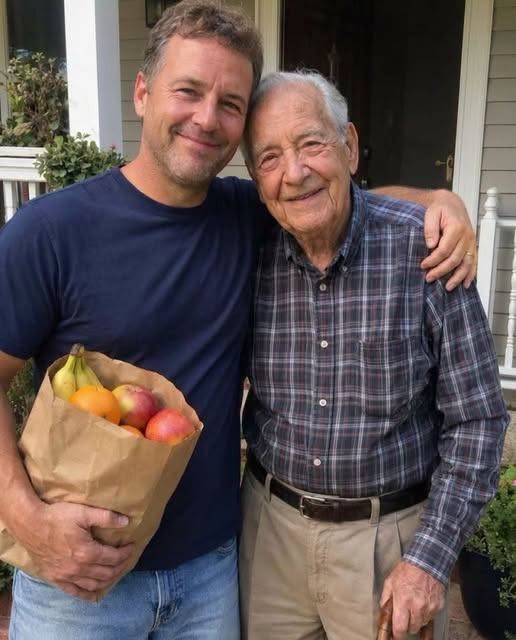
Ezra taught me that care does not need to be dramatic to matter. Sometimes it looks like carrying a grocery bag, remembering a birthday, or staying a little longer when someone needs to talk.
I still miss him every Sunday.
But whenever I knock on another neighbor’s door, I feel that our old routine continues. One grocery bag at a time, Ezra’s legacy reminds us that showing up can be its own form of love.
Have you ever received a small kindness that meant more than the giver realized? Share your experience in the comments.