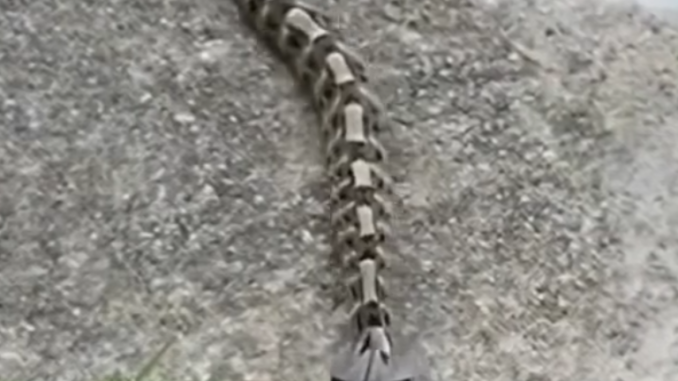
What may first appear to be a stick, vine, or piece of garden debris can occasionally turn out to be a resting snake, especially in areas with gardens, shrubs, rocks, or tall grass.
In many cases, snakes remain still because they rely on camouflage and prefer to avoid attention.
Why Snakes Visit Residential Areas
Snakes don’t typically enter yards to interact with people. They are usually searching for one of a few basic needs:
- Food, such as rodents or insects.
- Shelter beneath rocks, woodpiles, or dense vegetation.
- Warmth from sunny areas.
- A safe route while moving through their natural habitat.
These visits are often temporary, and many snakes leave the area on their own.
Stay Calm and Keep Your Distance
If you notice a snake, wildlife experts recommend avoiding sudden movements and giving the animal plenty of space.
Most snakes are not aggressive and will usually move away if they don’t feel threatened.
To stay safe:
- Keep children and pets away from the area.
- Do not try to touch, capture, or move the snake.
- Observe from a safe distance.
- Contact local animal control or a wildlife professional if assistance is needed.
Identifying a Snake Isn’t Always Easy
Many snake species have similar colors and patterns, making identification difficult without experience.
Lighting, vegetation, and the animal’s position can also make it harder to recognize specific features.
For this reason, it’s best to avoid making assumptions about whether a snake is harmless or venomous and instead allow trained professionals to assess the situation if necessary.
The Role Snakes Play in Nature
Snakes are an important part of many ecosystems.
They help control populations of rodents and other small animals, contributing to a balanced natural environment.
Because of this, many wildlife organizations encourage safe coexistence whenever possible.
Reducing the Chance of Future Encounters
While it’s impossible to eliminate wildlife completely, a few simple yard maintenance practices may reduce the likelihood of snakes staying nearby.
Helpful steps include:
- Keeping grass trimmed.
- Removing unnecessary piles of wood or debris.
- Sealing gaps around sheds and storage buildings.
- Limiting places where rodents can hide.
These measures can make outdoor spaces less attractive to wildlife while maintaining a healthy environment.
Living Alongside Nature
As communities continue to grow, interactions with local wildlife are becoming a normal part of everyday life.
Understanding animal behavior and responding thoughtfully helps create safer outcomes for both people and animals.
Knowledge and preparation are often more effective than fear when unexpected encounters occur.
Final Thoughts
Seeing a snake in your yard can be surprising, but it doesn’t automatically indicate danger.
By remaining calm, keeping a safe distance, and contacting local wildlife professionals when needed, homeowners can handle these situations safely and responsibly.
Learning more about local wildlife not only improves safety but also encourages greater appreciation for the natural world that surrounds our homes.