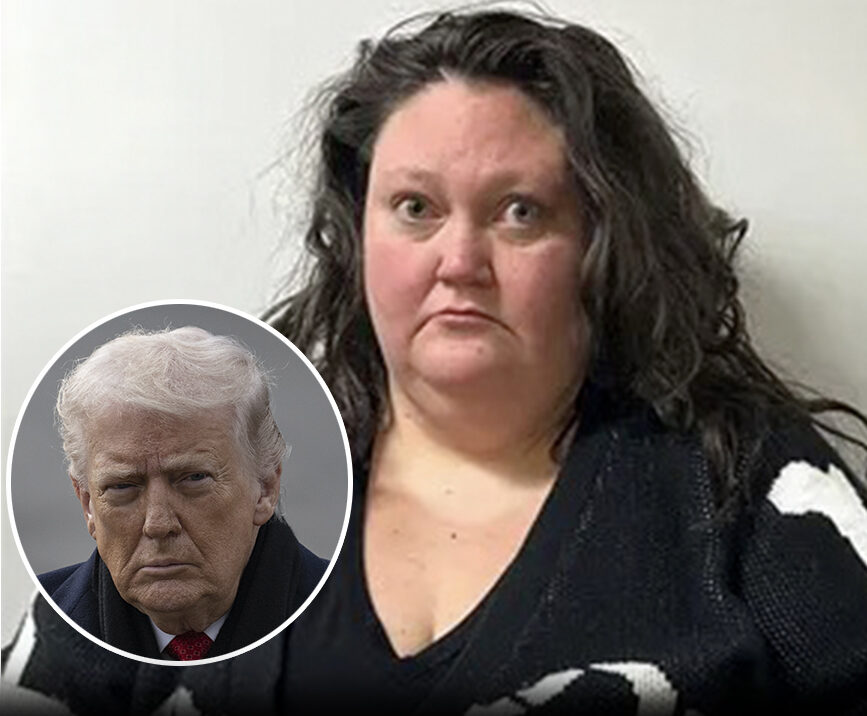
A quiet jail cell in Ripley, West Virginia, became the center of national attention this week after authorities arrested a local librarian over an online post they describe as a dangerous threat against former President Donald Trump. Officials say this isn’t about heated political opinion—it’s about words they consider a credible call for violence, shared publicly at a moment of high tension nationwide.
The woman at the center, identified as Morgan L. Morrow, had long been a familiar face in Ripley. Residents knew her as the librarian who checked out books, helped students with homework, and kept the library running smoothly. That image changed overnight when federal and state authorities announced her arrest on charges related to making a terroristic threat.
Investigators trace the case back to a single social media post. Officials say the caption, posted publicly on Instagram, crossed the line from criticism or satire into language interpreted as an explicit call for lethal action against a political figure. Within hours, screenshots circulated, tips poured in, and law enforcement acted quickly, citing concerns that even a brief delay could have serious consequences.
Authorities emphasize that Morrow didn’t need weapons or a detailed plan to raise alarm. In their view, intent can be inferred from the wording and the context in which it appeared. Prosecutors argue that threats aimed at public figures—especially during politically volatile times—can spark real-world violence, even if issued by a single individual.
Compounding the situation were comments from strangers on the post, some of which allegedly glorified violence or echoed similar sentiments. Law enforcement officials say this is an example of how quickly online spaces can escalate, turning a single post into a broader public safety concern.
Morrow was taken into custody without incident, and the library placed her on immediate leave. Administrators stressed that the institution does not condone threats or violence of any kind. Inside the building, the mood has been subdued, with staff declining interviews and patrons expressing disbelief that someone they knew in a quiet role could be linked to such serious allegations.
For Ripley residents, the sudden national attention has been jarring. Federal vehicles appeared on familiar streets, news crews set up outside local buildings, and neighbors struggled to reconcile the allegations with the person they thought they knew.
Legal experts say the case highlights the delicate balance between free speech and criminal threats online. Political expression—even extreme or offensive—remains protected, but prosecutors argue that protection ends when speech is specific, directed, and capable of inspiring real-world harm. Civil liberties advocates caution against overly aggressive enforcement, warning it could chill legitimate expression. Supporters of the charges counter that public safety demands swift action.
The arrest also fuels a growing debate about social media accountability. Investigators confirmed that the platform helped identify and preserve evidence, though many details remain sealed as the case moves forward. Morrow remains in custody, with prosecutors expected to rely heavily on digital evidence, while her defense plans to argue the language was exaggerated, metaphorical, or taken out of context.
Beyond the courtroom, the case serves as a stark reminder: in today’s digital age, words typed in seconds can ripple far beyond their intended audience. For Ripley, it’s no longer just a story about a librarian—it’s a lesson in how ordinary lives can be pulled into extraordinary circumstances when online speech intersects with national scrutiny.
What do you think? Could this be a warning about the power of words online? Share your thoughts and discuss with friends!