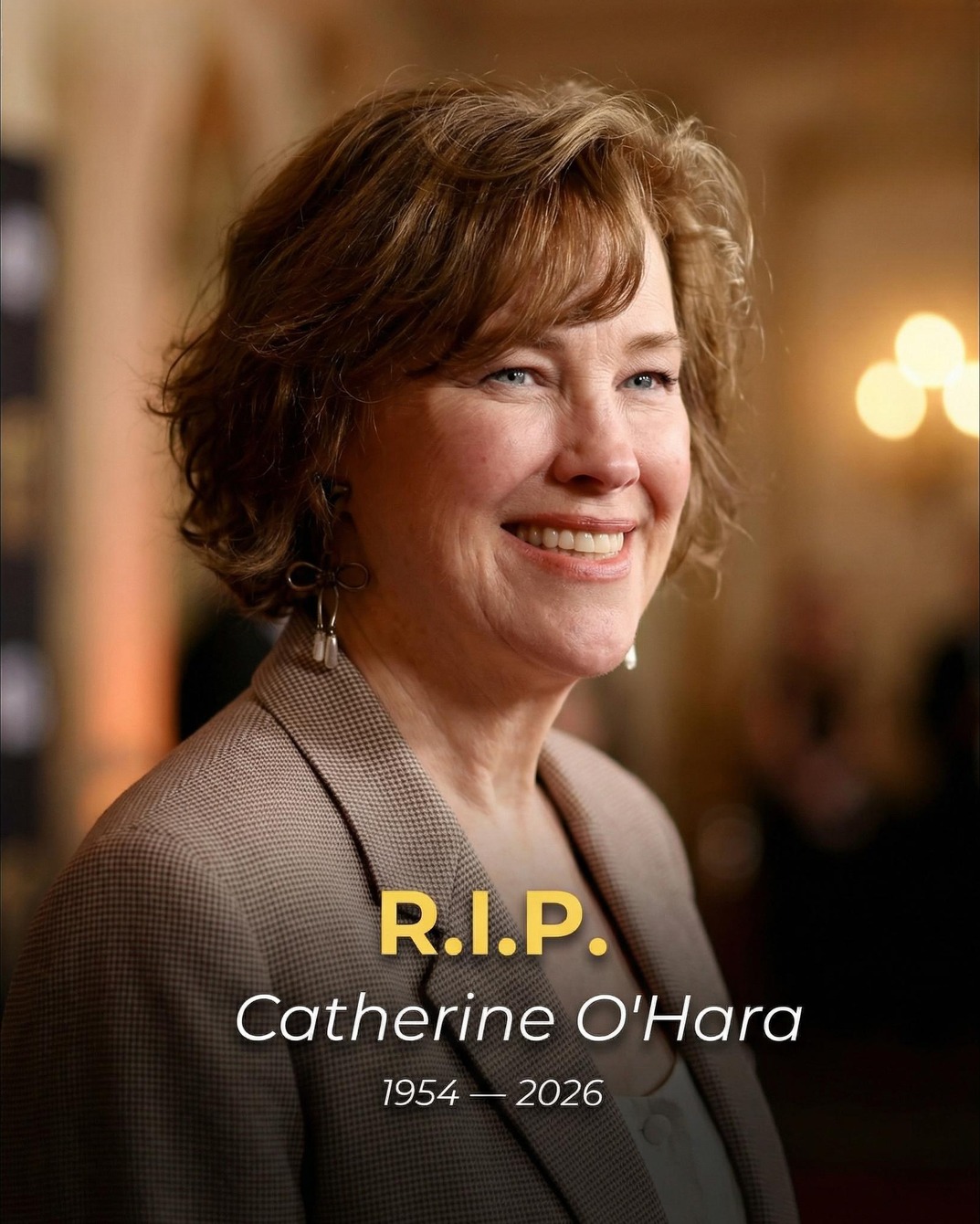
The global arts scene continues to celebrate Catherine O’Hara as one of the rare performers who reshaped how comedy and character work are understood. Across decades of film, television, and improvisation, she has built a reputation not just as a gifted actress, but as a creative force who effortlessly connects heightened absurdity with emotional truth. Few artists have managed to be both endlessly funny and quietly profound with the consistency O’Hara has achieved.
Born in 1954 in Toronto and raised in a bustling household of seven children, O’Hara’s sharp observational instincts were forged early. Growing up surrounded by strong personalities taught her how humor lives in nuance—tone, posture, timing—long before she ever stepped onto a professional stage. Her ascent was not instant or manufactured. Instead, it was shaped by trial, experimentation, and a willingness to embrace creative risk.
That foundation was solidified at Toronto’s legendary Second City, where live performance demanded fearlessness. Improvisation became her training ground, sharpening an approach that blended intellectual wit with physical expressiveness. It was there that she learned a defining lesson of her career: comedy works best when it is rooted in truth, no matter how outrageous the surface may seem.
Her breakout years on SCTV introduced audiences to a performer who refused to be boxed into conventional roles. Rather than relying on punchlines alone, O’Hara constructed characters with inner lives—strange, exaggerated, and deeply recognizable. Even at her most surreal, she conveyed something authentic, which set her apart from her peers and made her performances linger long after the sketch ended.
For mainstream audiences, she became a familiar presence through Home Alone, where her portrayal of Kate McCallister grounded a chaotic holiday comedy with real emotional urgency. In a film driven by spectacle, her performance anchored the story, transforming frantic parental panic into something heartfelt and enduring. That emotional credibility helped elevate the movie from seasonal entertainment to cultural staple.
Rather than settling into nostalgia, O’Hara repeatedly reinvented herself. Years later, she reintroduced her talent to a new generation through Schitt’s Creek, creating the unforgettable Moira Rose. With her theatrical diction, bold fashion, and unexpected vulnerability, Moira was a character that only O’Hara could bring to life. The role showcased a performer still evolving, still surprising audiences, and still pushing comedic boundaries well into the later stages of her career.
Her work in Christopher Guest’s mockumentaries—including Best in Show and A Mighty Wind—highlighted another strength: her ability to find humor without cruelty. O’Hara understands that comedy doesn’t require ridicule; it requires insight. By treating even the most delusional characters with empathy, she revealed the quiet poetry hidden inside human absurdity.
Beyond her screen work, O’Hara has built a career defined by balance and integrity. She has consistently chosen projects that align with her instincts rather than trends, maintaining a personal life rooted in family and creative partnership. That grounding has allowed her to approach each role with playfulness instead of desperation, confidence instead of spectacle.
Today, Catherine O’Hara’s influence is visible everywhere—from improvisational comedy stages to prestige television. She has shown that longevity in entertainment comes not from reinvention for its own sake, but from deepening one’s craft. Her characters continue to resonate because they are funny, flawed, and unmistakably human.
Catherine O’Hara didn’t just entertain audiences; she expanded the emotional range of comedy itself. Her work invites us to embrace eccentricity, honor vulnerability, and remember that the heart of every great joke is truth. In an industry that often favors imitation, she remains a singular original—and her legacy continues to inspire.