It was about identity.
As she spoke, emotion filled the room. She described growing up in a loving environment, yet always feeling that something didn’t fully add up. That quiet uncertainty followed her for years, becoming stronger as new information surfaced. Eventually, it became impossible to ignore.
“I need to know the truth,” she expressed.
Her words reflected more than curiosity—they revealed a need for clarity, closure, and understanding.
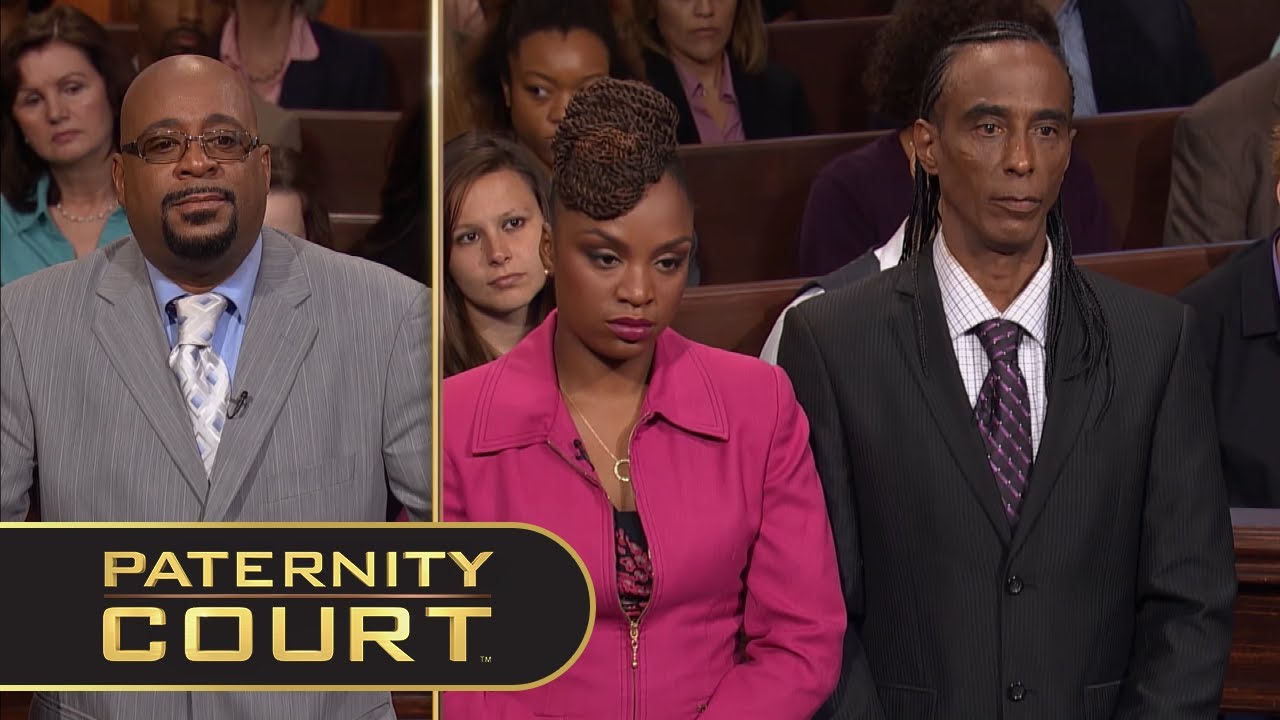
Across from her sat the man who had raised her.
For him, the situation was just as shocking. He had spent decades believing he was her biological father, never questioning his role in her life. The idea that this might not be true was both painful and confusing. He now found himself facing a reality he had never prepared for.
His reaction was raw.
He struggled to balance two truths: the bond he had built over years and the possibility that biology might tell a different story. For him, the question wasn’t just about DNA—it was about whether anything would change between them if the results revealed something unexpected.
As the case unfolded, the courtroom became a space for both individuals to process the emotional weight of the situation.
The woman spoke openly about how the uncertainty had affected her sense of self. Learning that her identity might be built on incomplete information forced her to reevaluate her past, her relationships, and even how she saw herself.
That kind of revelation isn’t easy.
It challenges everything.
At the same time, the man expressed his own pain—being part of a secret he never knew existed. He had lived his life believing in one version of the truth, only to now question whether that truth had been withheld from him all along.
The judge guided the conversation with care.
Rather than focusing solely on the technical side of the case, attention was also given to the emotional impact. Situations like this go beyond legal definitions—they reshape relationships, challenge identities, and force difficult conversations that many families avoid for years.
The discussion expanded beyond just one family.
It highlighted a broader reality—how common it is for families to carry secrets. Sometimes those secrets are kept with good intentions, but over time, they can create confusion and emotional distance. When they eventually come to light, the consequences can be profound.
As the moment of truth approached, the tension in the courtroom intensified.
The DNA results would answer the question that had lingered for decades. But everyone understood that the answer would bring more than just clarity—it would bring change.
When the results were revealed, the atmosphere shifted instantly.
The truth, once hidden for so long, was finally out in the open. While it resolved the question of paternity, it also marked the beginning of a new emotional journey for both individuals. Understanding the truth was one thing—processing it was another.
For the woman, it meant redefining her identity.
For the man, it meant understanding his role moving forward.
But one thing remained constant—the bond they had built over the years. Regardless of biology, the connection between them couldn’t simply be erased. That realization brought a sense of perspective to an otherwise overwhelming situation.
This case serves as a powerful reminder.
Truth can be difficult, but it is necessary. Living with uncertainty can shape a person’s life in ways they don’t fully understand until the answers are finally revealed. And while those answers may not always be easy to accept, they create an opportunity for growth, healing, and honesty.
In the end, this wasn’t just about discovering a biological fact.
It was about understanding what family really means.
Because sometimes, the truth changes everything—and sometimes, it simply helps you see everything more clearly.
What do you think?
If you discovered a major family secret like this, would you want to know the truth no matter the outcome? Share your thoughts below and join the conversation.
FULL VIDEO: