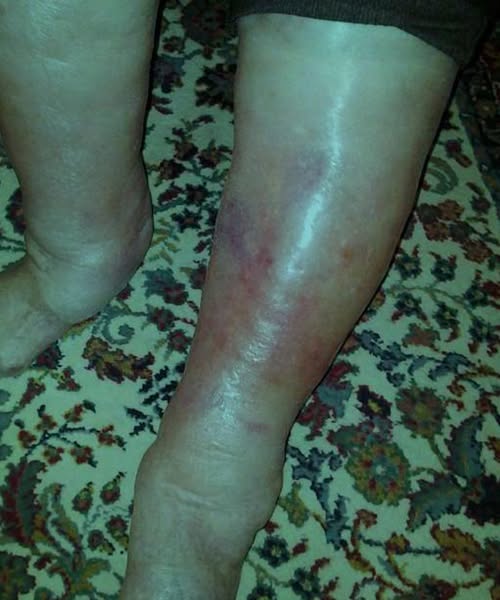
Once inside, the infection spreads through the lymphatic system, triggering inflammation and a strong immune response. The result is a patch of skin that becomes bright red, swollen, warm, and clearly defined from the surrounding area. Many people describe it as having a raised border, almost like it’s outlined.
Erysipelas most often affects the lower legs but can also appear on the face, especially around the cheeks and nose. When it occurs on the face, swelling can develop quickly and become more pronounced.
In addition to visible skin changes, the body often reacts with systemic symptoms. Fever, chills, fatigue, and a general feeling of illness can appear rapidly. These symptoms may seem unrelated at first, but they are often directly connected to the infection.
What makes this condition particularly concerning is how fast it can escalate. A small red patch in the morning can become significantly larger and more painful by evening. That’s why early recognition is critical.
Certain factors can increase the risk. People with skin conditions like eczema or athlete’s foot may have more entry points for bacteria. Conditions such as diabetes, obesity, or a weakened immune system can also make it harder for the body to fight infection. Poor circulation or lymphatic issues, like lymphedema, further raise the risk.
Diagnosis is usually straightforward for healthcare providers because of the infection’s distinct appearance and rapid onset. In some cases, additional tests may be done to ensure the infection hasn’t spread further.
Treatment typically involves antibiotics, either oral or intravenous depending on severity. Supportive care—such as rest, hydration, and elevating the affected area—can also help reduce swelling and speed recovery. Most people begin to improve within a few days, but completing the full course of treatment is essential to prevent recurrence.
If left untreated, erysipelas can lead to serious complications. The infection may spread deeper into the skin, form abscesses, or in severe cases enter the bloodstream, leading to Sepsis—a life-threatening condition.
The good news is that erysipelas is highly treatable when caught early. Awareness is the key. Paying attention to sudden skin changes—especially when paired with fever or fatigue—can make all the difference.
Simple habits also help reduce risk: keep your skin clean, treat minor wounds promptly, and seek medical advice if something doesn’t look right.
This condition is a powerful reminder that small symptoms shouldn’t always be ignored. Sometimes, your body is signaling something more serious beneath the surface.
Have you ever ignored a skin issue that turned out to be more serious? Share your experience or thoughts below—it might help someone else recognize the signs early.