Keanu Reeves has spent his career embodying the seemingly impossible. From bending the rules of reality in The Matrix, to surviving rooftop falls in John Wick, to preventing a bus from detonating in Speed, Reeves has become the face of cinematic endurance. For years, fans have watched him tackle punishing stunts, intricate fight sequences, and grueling training, walking away with little more than bruises and his signature modest grin. Yet, in a twist of irony befitting a screenplay, one of his most serious recent injuries didn’t happen amid a high-stakes action scene—it occurred during a quiet, off-camera moment on the set of a comedy.
The project was Good Fortune, directed by Aziz Ansari and starring Seth Rogen. Normally, a lighthearted comedy ranks far below an action blockbuster in terms of physical risk. But it was here that the seemingly invincible Reeves encountered an unexpected foe: a simple piece of carpet. He explained that the accident took place right after a cold plunge, a health ritual he shared with his co-stars. Feeling refreshed but slightly stiff, he was walking across the floor when his foot caught on the carpet’s edge.
What followed was more than a stumble. Reeves’ knee gave way under the force, resulting in a serious patellar fracture. A broken kneecap is intensely painful and can severely limit mobility, often requiring surgery and extensive rehabilitation. For an actor whose career relies heavily on agility and physical presence, the timing could have been disastrous.
During an appearance on The Late Show with Stephen Colbert, Reeves recounted the incident with his usual mix of humility and dry humor. Rather than lamenting being felled by a rug after years of performing death-defying stunts, he laughed at the absurdity. Fans were charmed by his self-deprecation, reinforcing his reputation as one of Hollywood’s most grounded stars.
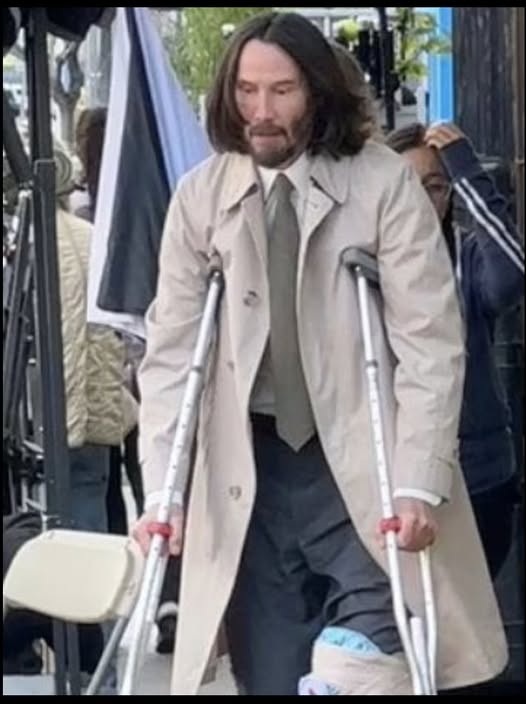
Despite the severity of the injury, Reeves didn’t step away from the production. He returned to the Good Fortune set on crutches, knee heavily braced, yet fully engaged with the cast and crew. While he couldn’t perform certain physical scenes, his presence lifted morale and demonstrated a rare level of dedication.
Recovering from a shattered kneecap is a slow and demanding process. It requires regaining range of motion while allowing the bone to heal under the stress of movement. For Reeves, then in his late fifties, the stakes were particularly high. Some wondered if this would mark a shift to less active roles. However, his previous experiences—including a serious motorcycle accident and years of action-heavy work—suggested he would not be sidelined.
By 2026, Reeves seems to have fully regained his mobility. He’s back to working on new projects with the same controlled grace and energy that have always defined his performances. His recovery stands as a testament not only to physical resilience but also to mental determination.
The incident is a reminder that even the most prepared among us can be sidelined by unexpected accidents. We often brace ourselves for major challenges, yet it’s the small, mundane moments that can catch us off guard. Reeves’ story highlights the universal vulnerability inherent to life, regardless of fame or physical prowess.
Equally compelling is the quiet manner in which he approached his rehabilitation. Unlike many celebrities who publicize personal struggles, Reeves handled his injury privately, maintaining professionalism and returning to work without fanfare. He met his challenge with patience and persistence, turning a potential setback into an example of understated resilience.
Today, as he moves through sets with his iconic stride, one can imagine he is more mindful of rugs and obstacles. But the spark in his eyes remains unchanged. He has once again overcome the impossible—not by dodging bullets, but by reclaiming his strength one deliberate step at a time. His triumph is subtle yet profound, proving that true fortitude lies not in avoiding falls, but in how we rise after them.