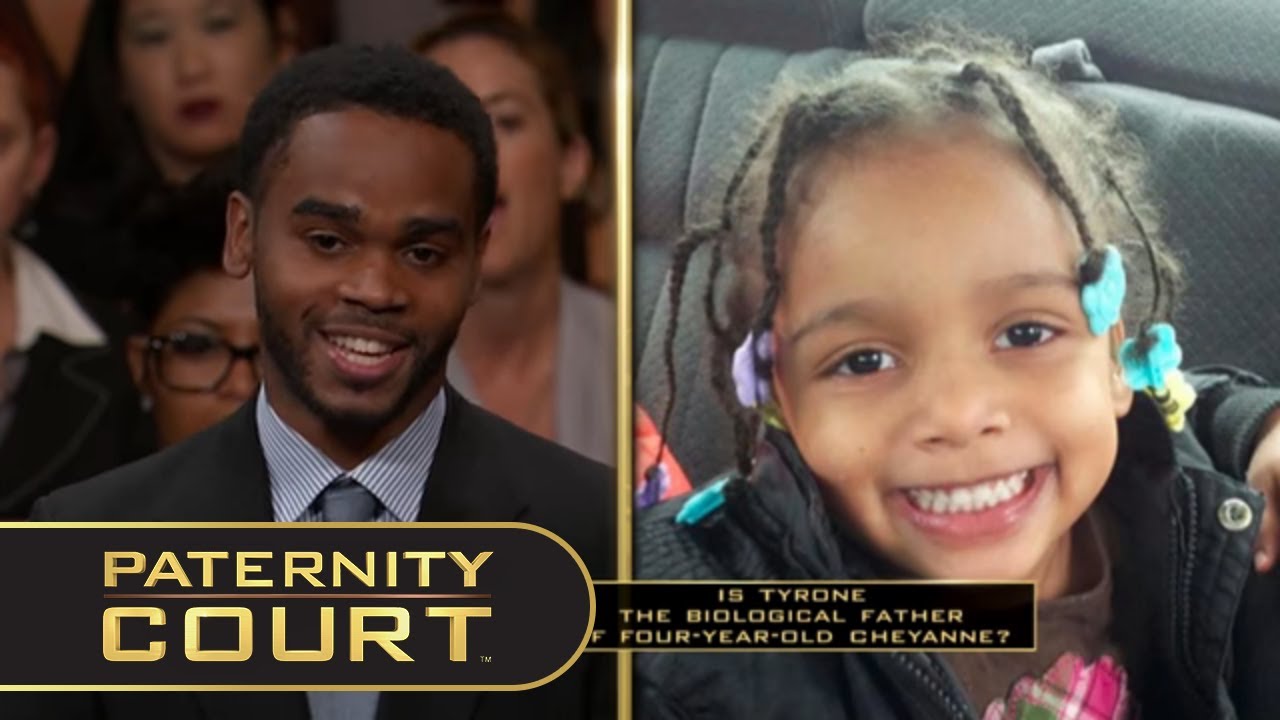
The mother expressed uncertainty about the child’s paternity, a doubt rooted in the complicated history of their relationship. Past mistakes had created a situation where clarity no longer existed, and that uncertainty had lingered for years. It wasn’t just about the past—it was about understanding the truth in the present.
For Tyrone, the situation was equally difficult.
He had built a bond with the child over time, stepping into the role of a father figure regardless of what biology might say. But the possibility that he might not be the biological father brought a wave of emotions—confusion, frustration, and concern about what the future might hold.
This wasn’t just a legal question.
It was personal.
As the case progressed, it became clear that infidelity had played a major role in the breakdown of trust between them. The mother acknowledged being involved with other partners during the relationship, which added complexity to the timeline and made the question of paternity far less certain.
That revelation shifted everything.
The courtroom atmosphere grew more intense as both sides tried to process the situation. What once may have been a straightforward relationship had turned into a web of doubt and unresolved emotions. Each statement added another layer to an already complicated story.
At the center of it all was the child.
Cheyanne, too young to understand the situation, represented everything at stake. Her identity, her sense of belonging, and her future depended on the outcome of the case. While the adults navigated their differences, the focus remained on what would provide her with the most stability moving forward.
The judge made that point clear.
Throughout the proceedings, the emphasis was placed not only on determining biological truth but also on understanding the emotional responsibility that comes with parenthood. Being a parent, the court highlighted, is not defined by DNA alone—it’s shaped by presence, care, and commitment.
Still, the need for clarity could not be ignored.
A DNA test was ordered, marking the turning point of the case. Both individuals understood that the results would provide a definitive answer—one that could not be questioned or reinterpreted. It would bring an end to years of uncertainty.
But answers don’t always bring immediate peace.
As the moment of truth approached, the tension in the courtroom was undeniable. Both parties were forced to confront the possibility of outcomes that could change their roles in the child’s life forever. For one, it could mean confirmation and responsibility. For the other, it could mean redefining a relationship that had already been built over time.
When the results were revealed, the atmosphere shifted.
The legal question was answered—but the emotional journey was far from over. Whether confirming or denying biological connection, the outcome required both individuals to process what it meant for their future and for the child at the center of it all.
Because in cases like this, the impact goes beyond the courtroom.
Trust, once broken, takes time to rebuild. Relationships, once strained, require effort to repair. And for the child, the goal remains the same—to grow up in an environment that provides love, stability, and support.
This case highlights a powerful truth.
Paternity disputes are not just about science—they are about people. They reflect how choices, especially in relationships, can have long-term consequences. They show how important honesty and communication are, and how quickly things can become complicated when those elements are missing.
In the end, the court provides clarity.
But what happens next depends on the people involved.
Because while DNA may define biology, it is actions that define parenthood.
What’s your opinion?
Do you think being a parent is about biology or about the role someone plays in a child’s life? Share your thoughts below and join the discussion.
FULL VIDEO: