Into the Unknown
The day began with clear skies and crisp air. The man, in his late thirties, had spent years exploring mountains, valleys, and rivers. He carried a flashlight, a sturdy backpack, and a curiosity for geology as he entered a network of rarely visited caves known for ancient rock formations.
After hours of hiking, he found a hidden cave entrance. Cool, damp air drifted from within. Switching on his flashlight, he admired walls patterned with earthy reds, creams, and silvers. The quiet was absolute, broken only by the occasional drip of water.
The First Signs
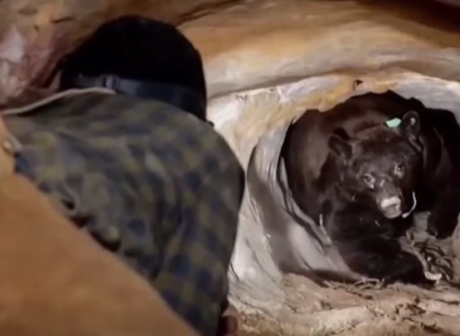
As he ventured deeper, the chamber opened into a larger space. That’s when he noticed movement at the edge of his vision. Two glowing eyes reflected back from the far corner — a bear, either a black bear or a young grizzly. Its thick fur and muscular shoulders were clearly visible, even in the dim light.
In that moment, the hiker froze. He recalled wildlife safety guidelines: stay calm, avoid sudden movements, and retreat slowly. Speaking softly to himself helped keep panic at bay.
A Peaceful Retreat
Remarkably, the bear did not charge. It lifted its head, exhaled, and turned away, retreating deeper into the cave until it vanished into the darkness. Experts suggest several reasons for this behavior: the bear may have already eaten, sensed no threat, or responded to the man’s calm energy and slow movements.
Lessons from the Encounter
The hiker’s experience highlights several important safety tips for anyone exploring bear territory:
- Be Prepared: Carry essentials like bear spray, a whistle, and a first-aid kit.
- Understand Bear Behavior: Observe signs of agitation and respect the animal’s space.
- Avoid Surprises: Make noise in open terrain and move cautiously in confined spaces.
- Know How to React: Do not run, avoid direct eye contact, speak calmly, and back away slowly.
- Respect Wildlife: Remember you are in the animal’s habitat, and your presence should not provoke it.
Respect and Survival
For the hiker, the encounter became a powerful reminder of respect for nature. “It wasn’t fear I felt,” he later reflected. “It was more like respect. That bear could have ended the story, but it didn’t. We both walked away.”
Wildlife experts emphasize that coexistence requires awareness, caution, and adaptability. Bears play an important role in forest ecosystems, helping maintain balance by dispersing seeds and controlling insects.
Stories like this teach us that survival isn’t always about confrontation. Sometimes it’s about knowing when to step back, stay calm, and let nature take its course.