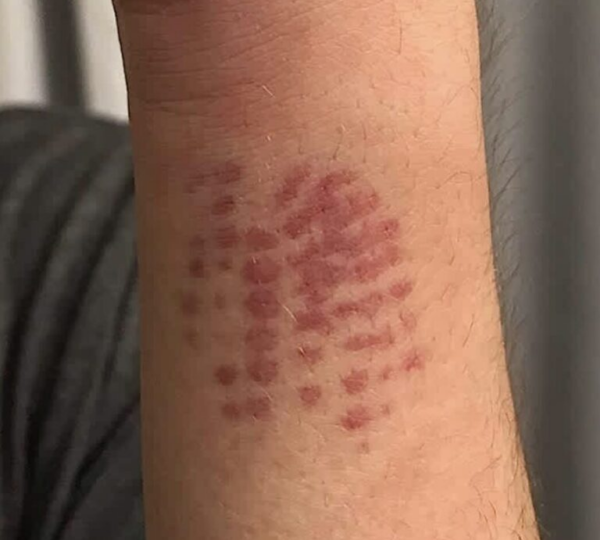
What Happened
According to the family, 15-year-old Logan was helping gather tree branches and yard debris during a volunteer activity when he suddenly felt a sharp sting on his arm.
At first, the discomfort seemed minor.
However, within minutes, a painful rash began spreading across his skin, and additional symptoms soon followed.
Family members reported that Logan later experienced:
- Severe pain
- Redness and swelling
- Lightheadedness
- Increasing discomfort spreading beyond the sting area
Concerned by the rapid progression of symptoms, the family decided to seek emergency medical attention.
The Insect Was Identified as a Venomous Caterpillar
After searching the area carefully, family members located the insect responsible.
Despite its fuzzy and harmless-looking appearance, experts later identified it as a venomous caterpillar species capable of causing painful reactions in humans.
Medical experts explain that some caterpillars possess venomous spines or hairs that release irritants when touched.
Doctors Warn Against Ignoring Serious Reactions
Healthcare professionals note that while many insect stings can be treated with basic first aid, severe or rapidly spreading reactions require immediate medical evaluation.
Symptoms that may require urgent care include:
- Rapidly spreading rash
- Severe pain
- Difficulty breathing
- Dizziness or fainting
- Swelling beyond the sting site
- Chest discomfort
Doctors also caution against relying solely on home remedies when symptoms escalate quickly.
Why Awareness Matters
Entomologists and public health experts say many people are unfamiliar with venomous caterpillar species because they are less widely recognized than bees, wasps, or spiders.
Some species are commonly found in:
- Gardens
- Wooded areas
- Brush piles
- Tree branches
- Outdoor work sites
Experts recommend teaching children not to touch unfamiliar insects, even if they appear harmless or “cute.”
Outdoor Safety Tips From Experts
Specialists suggest several ways to reduce the risk of harmful insect encounters:
- Wear gloves while handling branches or yard debris
- Use long sleeves during outdoor work
- Avoid touching unfamiliar caterpillars or insects
- Teach children outdoor safety habits early
- Seek medical care if severe symptoms develop
Photographing the insect when safely possible may also help doctors identify the source more quickly.
Social Media Helped Spread Awareness
The family later shared their experience online to encourage awareness and prevention.
Many viewers responded by researching venomous insects found in their own regions and discussing outdoor safety with family members.
Experts say responsible awareness campaigns can help people recognize symptoms earlier and seek treatment before complications worsen.
Final Thoughts
While outdoor activities remain healthy and rewarding, specialists remind the public that awareness and caution are important when interacting with wildlife and unfamiliar insects.
Medical experts emphasize that prompt treatment and accurate information can make a major difference in preventing more serious outcomes.
The family says they hope sharing their experience will encourage others to stay informed, remain observant outdoors, and take unusual reactions seriously.