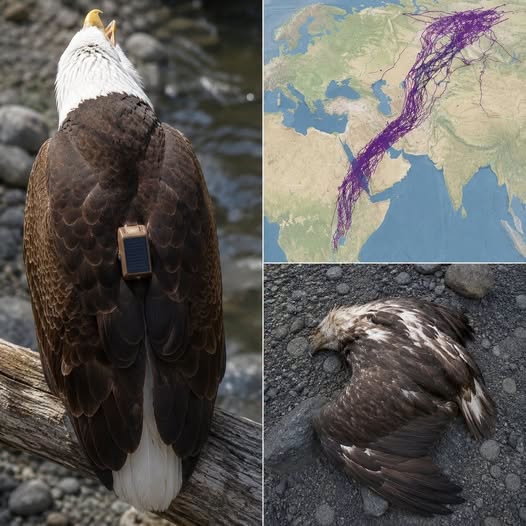
Why Scientists Track Migrating Birds
Modern tracking technology has transformed wildlife research. Small GPS devices allow scientists to study animals in their natural surroundings while collecting detailed information about movement patterns.
For migratory birds, this data can reveal:
- Important migration routes
- Feeding and resting areas
- Breeding locations
- Environmental challenges along the journey
Eagles are particularly interesting to researchers because many species travel long distances and must respond to changing weather, landscapes, and food availability.
Understanding their movements helps conservation groups identify areas that may need protection.
The Eagle’s Unexpected Travel Strategy
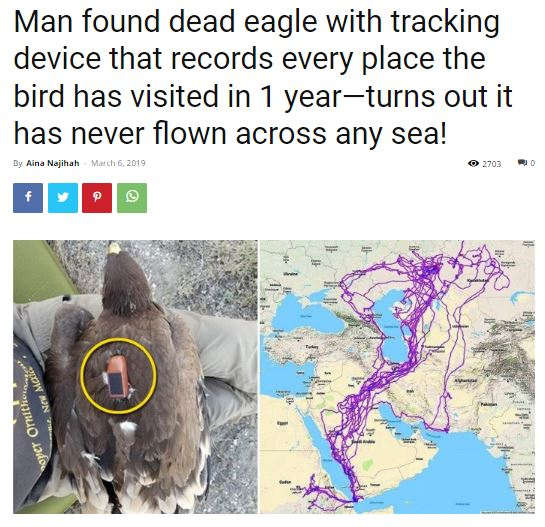
One of the most interesting observations from long-term tracking was that the eagle did not always choose the shortest possible route.
Instead, the bird often followed paths shaped by natural conditions, such as mountain ranges, coastlines, and areas where flying required less energy.
While these routes may appear longer, they can provide important advantages.
For soaring birds, the best path is not always the most direct one. The most efficient route is often the one that allows them to conserve energy and take advantage of favorable conditions.
How Eagles Use Nature to Fly Efficiently
Large birds of prey rely heavily on thermals—rising columns of warm air created when sunlight heats the ground.
By using these natural air currents, eagles can gain altitude and glide for long distances without constantly flapping their wings.
This technique helps reduce energy use during long migrations.
Areas with limited thermal activity, such as large stretches of open water, can create additional challenges. Many soaring birds adjust their routes to avoid conditions that require more effort.
How Migrating Birds Navigate
Scientists believe birds use a combination of skills and environmental signals to find their way.
Possible navigation methods include:
- Recognizing familiar landscapes
- Following the position of the sun
- Detecting Earth’s magnetic field
- Responding to wind patterns
- Using memories from previous journeys
Older birds may improve their routes through experience, learning which paths provide the best opportunities for survival.
A Journey That Captured Public Attention
While the research provided important scientific information, the eagle’s journey also inspired many people because it represented adaptability and persistence.
The bird’s migration showed that survival is often about making smart adjustments rather than simply moving as quickly as possible.
Its ability to respond to changing conditions demonstrated the importance of flexibility in the natural world.
Why Eagles Continue to Fascinate Humans
Across many cultures, eagles have long been associated with qualities such as strength, freedom, awareness, and resilience.
Their ability to travel great distances and navigate challenging environments has made them symbols of endurance and determination.
Long-term studies like this one help people better understand these impressive animals while highlighting the complexity of the ecosystems they depend on.
How Technology Helps Protect Wildlife
GPS tracking has become an important tool in conservation efforts. By learning where animals travel, researchers can identify habitats that are essential for survival.
Migration studies also show how connected different environments are. A single bird may depend on multiple regions throughout its life cycle, making habitat protection a global responsibility.
Final Thoughts
The long journey of a tracked eagle reveals an important lesson from nature: success is not always about taking the fastest path.
Adaptation, patience, and awareness of surroundings can be just as important as speed.
As scientists continue studying wildlife, each discovery brings a deeper understanding of the incredible abilities animals have developed over generations—and why protecting their environments matters for the future.